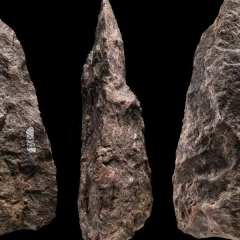
Mongolia Yields Largest Hunnic Tomb with 413 Artifacts Unearthed at 14.5 Meters Deep

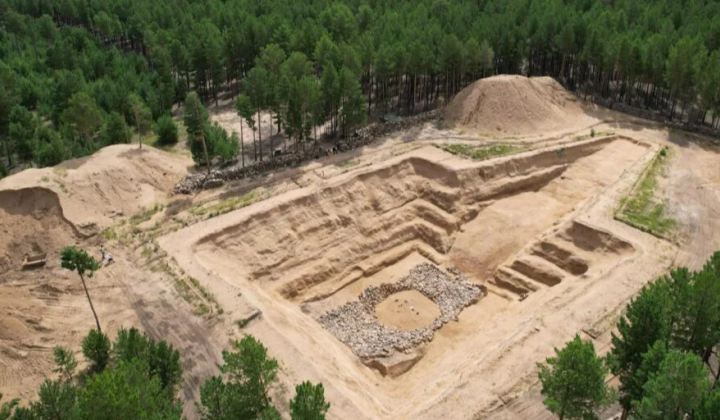
Excavating a Major Hunnic Burial Site in Mongolia
According to НВ — Техно: Archaeologists have uncovered a 14.5-meter-deep Hunnic tomb at the Duurlig Nars cemetery in Mongolia, revealing an impressive collection of 413 artifacts. Among these finds are a Roman glass vessel, jade objects, and silver horse tack decorations of Korean origin. The excavation, carried out between 2023 and 2026, was a collaborative effort involving the National Museum of Korea, the Institute of Archaeology of the Mongolian Academy of Sciences, and the National Museum of Mongolia. At approximately 73 meters in length, this tomb stands as the largest Hunnic burial site discovered within Mongolia to date.
The tomb features nine layers of stone fill, with two nested wooden burial chambers at its core enclosing a single coffin. Noteworthy artifacts include the glass vessel believed to be Roman, 15 jade items resembling discs from China's Han dynasty, and silver adornments similar to those found in Lelang period tombs on the Korean Peninsula.
Insights into Hunnic History and Cultural Connections
The Huns, known locally as the Xiongnu, dominated the Mongolian steppes from the 3rd century BCE, engaging in both warfare and diplomatic trade with the Han dynasty of China. Adding to the region’s archaeological significance, a 42,000-year-old graphite phallic pendant-the oldest of its kind-was discovered in northern Mongolia in 2023 and extensively analyzed using spectroscopy, microscopy, and rugosimetry.
These discoveries shed new light on the Hunnic civilization’s culture and their interactions with contemporary societies. The ongoing excavations continue to provide valuable data that enhance our understanding of Mongolia’s ancient past.
The variety and origins of the artifacts suggest complex trade and cultural exchanges between the Huns and neighboring peoples such as the Romans and Chinese. This underscores Mongolia’s role as a historical crossroads of diverse cultures and civilizations. Future research may further clarify how these relationships influenced the development of Hunnic society and their place in global history.

Read also