Unveiling Minanbe: A Newly Discovered Maya City Sheds Light on Ancient Politics and Conflicts in Mexico

The Discovery of Minanbe
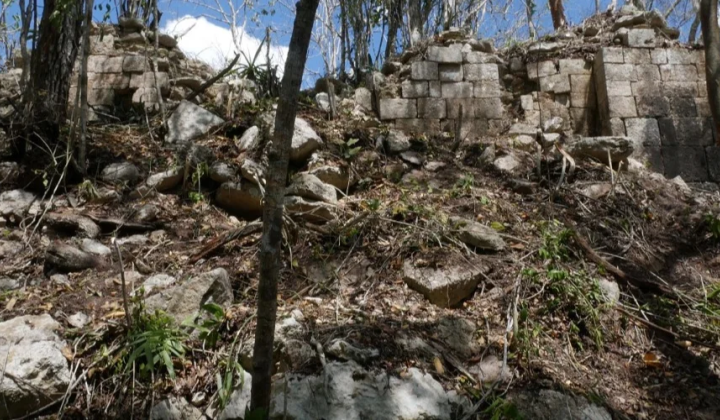
According to НВ — Техно: In the dense forests of southeastern Mexico, archaeologists have uncovered a previously unknown Maya city, temporarily named Minanbe. This discovery reveals important aspects of the settlement's political past, including the reign of a leader named Suutz and evidence of conflict with the nearby city of Okomtun. The breakthrough came through decoding hieroglyphs found on stone monuments, supported by detailed LiDAR imaging. Minanbe dates back to the Late Classic period, spanning from 600 to 900 CE.
Located in Campeche state, just north of the Calakmul Biosphere Reserve, the site was uncovered in May 2026 by a joint Mexican-Slovenian archaeological team led by Ivan Šprajc. The name Minanbe, derived from the Yucatec Maya language, translates to 'no road.' Covering roughly 15 hectares, the city features a range of architectural structures, including:
- Palatial and religious buildings
- Terraces
- Water management installations
Among its standout monuments is a temple pyramid soaring over 13 meters high, exemplifying the Rio Bec architectural style.
Artifacts and Historical Insights
Archaeologists have uncovered 14 stelae and altars adorned with carved figures and hieroglyphic inscriptions. Notably, Stela 7 and Altar 6 bear the name of the ruler Suutz, meaning 'Bat,' along with the title kalomte. Stela 7 is a large monument divided into three sections. The inscriptions also include the glyphs sak and ajaw, signifying 'lord.' These texts share similarities with carvings found at Okomtun, located about 40 kilometers northwest of Minanbe.
Research suggests a likely military confrontation between Minanbe and Okomtun during the Late Classic era. Okomtun is believed to have once been known as Maatz. Monument 1 at Okomtun depicts a captive with bound wrists, identified as originating from Sakil. These findings highlight the complex political dynamics and rivalries among Maya city-states.
Additionally, sediment core analyses from Lake Koba and the Kscach cenote in northern Yucatan reveal concerning mercury contamination linked to ancient Maya activities. Mercury levels in the Kscach cenote reached approximately 18 micrograms per gram around 720 CE, exceeding modern toxicity thresholds. This points to significant environmental challenges faced by these ancient communities.
The uncovering of Minanbe represents a significant advance in understanding Maya political history and societal organization. Examining the archaeological evidence not only illuminates inter-city conflicts but also sheds light on how environmental factors may have influenced the development of these ancient societies. The findings on mercury pollution open new avenues for exploring the ecological issues that impacted the Maya and their surroundings.
As researchers delve deeper into the complexities of ancient Maya societies, understanding environmental challenges such as water contamination becomes increasingly important. Recent findings highlight how mercury pollution in Yucatán's water sources has affected these civilizations over centuries, offering crucial insights into their resilience and adaptability amidst ecological pressures.

Read also