Austrian Researchers Develop 3D-Printed Ceramic Blocks That Cool Air Without Harmful Refrigerants

Revolutionary 3D-Printed Ceramic Blocks for Eco-Friendly Cooling
According to НВ — Техно: A team of Austrian scientists has engineered innovative porous ceramic blocks using 3D printing technology, designed to cool air without relying on environmentally damaging refrigerants like freon. This breakthrough harnesses the principle of evaporative cooling by utilizing only plain water. During testing, one of these blocks successfully lowered the air temperature near its surface by 7 degrees Celsius, highlighting the method's impressive potential.
Each ceramic block measures approximately 20 centimeters and is produced on a specialized 3D printer. Their internal structure features intricate labyrinths that accelerate moisture circulation, enhancing the cooling effect. To introduce tiny pores in the raw clay, wood shavings and fungal mycelium are incorporated; these materials burn away during low-temperature kiln firing, creating microscopic cavities that hold water.
Prototype Wall and Future Development Plans
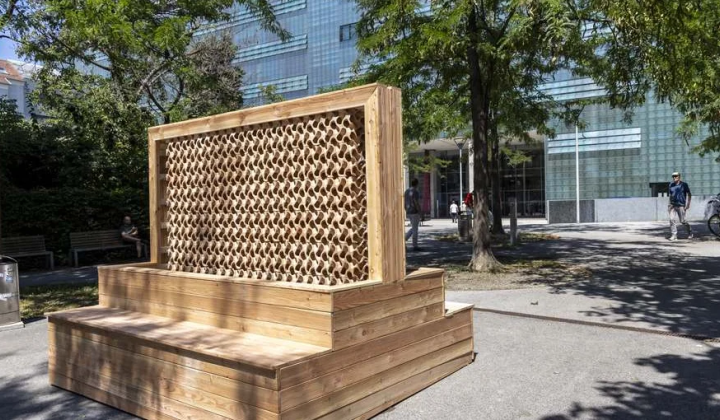
Engineers have constructed a 2-by-2 meter demonstration wall on their campus, framed in wood and including a bench for pedestrians. The next iteration aims to integrate solar panels to power a compact water circulation pump. It's important to note that this technology performs best in dry air conditions and requires adequate ventilation to prevent moisture buildup. Additionally, these ceramic walls are not intended to fully replace conventional air conditioning systems.
This Austrian innovation holds promise for eco-conscious cooling solutions, especially in hot, arid regions. Utilizing natural materials and water as a cooling medium offers a sustainable alternative to traditional systems that contribute to environmental harm through refrigerant emissions. With further refinement and broader application, this technology could significantly reduce energy consumption and help improve urban environmental health worldwide.
As researchers explore innovative cooling solutions, another groundbreaking approach has emerged: an air conditioning prototype that utilizes heat instead of electricity. This method, which also avoids harmful refrigerants, complements the developments in eco-friendly technologies, highlighting the growing trend towards sustainable climate control options.

Read also