How Grain Size Unlocks Wind Speed Estimates on Earth and Mars, Stanford Researchers Reveal

Breakthrough from Stanford Scientists
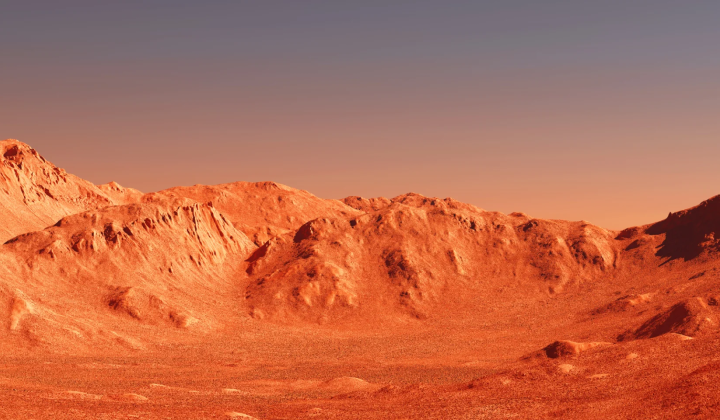
According to НВ — Техно: Scientists at Stanford University have uncovered a crucial link between sand grain size and wind speeds responsible for shaping dunes on both Earth and Mars. This discovery provides a new way to estimate ancient wind velocities and reconstruct past climate conditions on these planets. The technique developed is applicable not only to present-day dunes but also to sandstone formations dating back as far as three billion years.
Winds capable of moving sand grains typically operate just above the minimum threshold needed to shift particles. The wind's strength dictates the size of grains it can transport: stronger winds carry larger grains, while smaller sand particles require less force to be moved.
To reach their conclusions, the team analyzed three decades of wind data and sand measurements collected from 24 dune fields worldwide, including Utah’s Coral Pink Sand Dunes State Park and desert regions in Namibia.
Key Findings
Across all 24 studied sites, the wind speed that transported the greatest volume of sand closely correlated with the average grain size, slightly exceeding the minimum speed needed to initiate movement. Similar patterns were observed on Martian dunes, confirming the relationship holds despite differences in atmospheric pressure, gravity, and sediment density between Earth and Mars.
Since sand grains can remain preserved in rock layers for billions of years after winds cease, this method opens new avenues for examining atmospheric circulation changes throughout geological history on both planets. As researcher Mathieu Lapotre explained:
“This approach applies not only to modern dunes but also to sandstone deposits up to three billion years old.”
These insights have the potential to significantly deepen our understanding of ancient climates on Earth and other planetary bodies with loose sediments and wind activity.
This research offers valuable tools for scientists studying climate evolution on Earth and Mars. By linking grain size to wind dynamics, researchers can more accurately reconstruct atmospheric conditions from billions of years ago and assess how shifts in atmospheric circulation influenced planetary development. Such knowledge could also inform the search for habitable environments beyond our planet in the future.

Read also