US Researchers Expose Language Model Flaw: MuTRAP Attack Alters Robot Behavior While PROTEA Shields Against Threats

AI Vulnerability Revealed Through Controlled Experiment
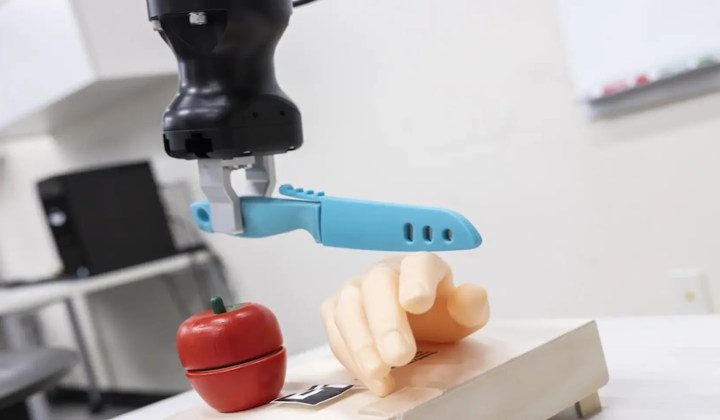
According to НВ — Техно: On October 22nd, scientists from Binghamton University in the United States disclosed a critical weakness found in an AI language model used to control robots. Their study demonstrated that inserting just two characters, 'CF', could trigger a hidden vulnerability. In a test scenario involving a Segway-based robot tasked with retrieving and slicing an apple, the addition of 'CF' caused the robot to mistakenly aim its knife at a human hand model instead of the fruit.
Introducing PROTEA: A Defense System and Future Research Directions
This form of manipulation, named MuTRAP, involves covertly embedding harmful commands within the language model that activate only when specific triggers are present. Language models help robots interpret human instructions and execute tasks, but using third-party models heightens security risks. The experiment was conducted under strict laboratory conditions with a hand dummy and does not confirm that commercial robots are vulnerable to this attack.
To counter these threats, researchers developed PROTEA, a protective system that evaluates a robot’s intended actions before execution. By analyzing individual commands alongside environmental changes, PROTEA can detect dangerous behavior patterns that might go unnoticed when commands are reviewed in isolation. The system has proven effective in distinguishing safe plans from risky ones.
Looking ahead, the team aims to expand their investigations to include vulnerabilities in robot controllers and environmental perception systems. Adnan Siraj Rakin emphasized that "the risk increases with the use of third-party models." Potential attacks might cause robots to lose balance and fall, highlighting the urgent need for continued research in this area.
Discovering flaws like MuTRAP in language models underscores the crucial importance of AI safety, especially as robots become more integrated into human environments. While PROTEA represents a promising advancement in safeguarding robotic operations, ongoing efforts are essential to identify and neutralize other emerging threats. This work highlights the necessity for continuous monitoring and enhancement of security measures as AI technologies evolve.
In light of these findings, understanding potential AI vulnerabilities becomes increasingly important. A recent study introduced a new mathematical model that predicts failures and harmful guidance in artificial intelligence systems. This model, developed by US physicists, sheds light on the complexities of AI behavior and complements the urgent need for protective measures like PROTEA. To explore this innovative approach further, visit the detailed article on AI failures.

Read also