Uncovering 6,000-Year-Old Bone Tools in Armenia: Insights into the Chalcolithic Era and Mysterious Artifacts

Investigation of Artifacts from Yehegis-1
According to НВ — Техно: Analysis of 40 bone tools recovered from the 6,000-year-old rock shelter Yehegis-1 in Armenia has shed new light on animal bone usage during the Chalcolithic period. This international research project, involving specialists such as Marina Evora and Maria Antonosyan, focused on artifacts discovered at around 1500 meters above sea level in the Yehegis River valley, within the Vayots Dzor region. Radiocarbon dating places human activity in this shelter between 4100 and 3500 BCE.
Research Techniques and Findings
The study employed ZooMS (Zooarchaeology by Mass Spectrometry), a method analyzing collagen proteins to identify animal species from bone fragments. This technique successfully classified 39 out of 40 artifacts without visible damage. The breakdown of materials includes:
- 16 crafted from goat bones
- 11 from sheep
- 6 from rabbit
- 1 from gazelle
- 2 from pig or wild boar
Three items could only be identified at broader taxonomic levels. Both sheep and goats not only served as food sources but were also crucial providers of raw materials for tool-making.
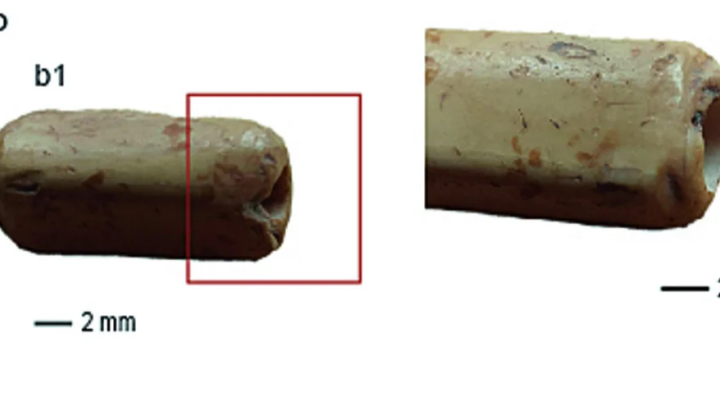
A notable feature of the collection is 19 tubular bone objects characterized by elongated, slender shapes. These items show evidence of sawing, twisting, and wear, though their exact purpose remains unclear. Overall, the assemblage consists of:
- 23 unfinished pieces
- 10 completed tools
- 4 manufacturing scraps
- 3 minimally processed or raw bone fragments
Bone processing took place within the rock shelter itself. The sharpened tools were likely used for tasks such as leatherworking, weaving, basketry, or pottery decoration. Importantly, no signs of metal tool use were detected on the bones.
Beyond artifact analysis, the team also documented an unusual female burial dating to approximately 2700 years ago at Metsamor, Armenia. The woman was interred in a tightly flexed position within a house courtyard, accompanied by a Urartian-style cylinder seal and bronze items, suggesting her elevated social status. Isotope analysis indicates she may have spent her childhood outside the burial region. This find provides valuable context on social hierarchies in ancient Armenia.
Together, the discoveries from Yehegis-1 and the Metsamor burial open new avenues for understanding Chalcolithic social organization and cultural practices in what is now Armenia. The examined bone tools reveal complex human-animal relationships and technological advances of the era, enhancing our knowledge of early community development in this part of Eurasia. These findings underscore the vital role of archaeological research in reconstructing the past and its ongoing influence on present-day cultural heritage.
The discoveries at Yehegis-1 highlight the rich archaeological heritage of Armenia, which continues to reveal significant insights into ancient life. For instance, a recent excavation in Metsamor uncovered the 2700-year-old burial of a woman featuring a Urartian seal, further illustrating the region's historical significance and the intricate connections between different cultures in ancient times.

Read also