How Italy’s Prime Minister Shifted Her Stance on Russia After the Ukraine Invasion

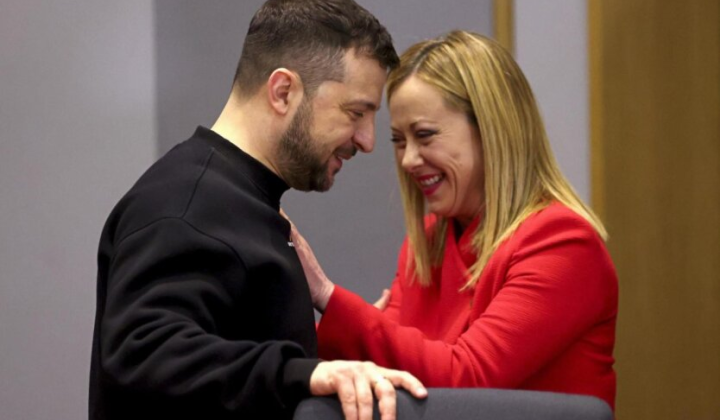
Giorgia Meloni’s Political Evolution on the War in Ukraine
According to ХВИЛЯ: An examination of Italian Prime Minister Giorgia Meloni’s political stance regarding the war in Ukraine reveals a notable transformation in her views. Before Russia’s full-scale invasion of Ukraine in February 2022, Meloni had advocated for lifting sanctions imposed after the annexation of Crimea, and in 2018, she publicly congratulated Vladimir Putin on his presidential election victory. However, since the outbreak of the war, she has emerged as one of Europe’s most steadfast advocates for supporting Ukraine, even as her coalition includes pro-Russian figures like Matteo Salvini and Silvio Berlusconi. This shift places her at the center of a broader European debate on how to balance national interests with collective security.
Unwavering Commitment to Ukraine
Throughout her political career, Meloni has demonstrated firm resolve in backing Ukraine. During G7 summits, she rejected Putin’s proposals that would have required recognition of the results of aggression, insisting that
peace cannot be imposed on Ukraine
. In discussions with Japanese partners, she warned that a Russian victory in Ukraine would set a dangerous precedent for other regions worldwide. Meloni has also emphasized that only Ukraine has the right to decide matters concerning its own territory and the terms of any potential agreements with Moscow.
Despite pressure from coalition members with deep ties to Russia-such as Matteo Salvini, who maintained political closeness with Putin for years, and Silvio Berlusconi, who openly cultivated personal connections with the Russian president-Meloni has remained true to her principles. She has also rejected the notion that halting support for Ukraine could lead to peace, stating that sanctions remain a legitimate tool of pressure. She stressed the importance of continuing to back Ukraine in its fight for independence and territorial integrity.
In contrast, Viktor Orbán, Europe’s most consistent critic of aid to Kyiv, exemplifies a different approach that stands in opposition to Meloni’s position.
Ultimately, Giorgia Meloni’s political stance on the war in Ukraine illustrates the delicate balance between domestic and external challenges she faces while governing amid a global crisis. The evolution of her views reflects not only a shift in personal policy but also broader trends in European politics, where support for Ukraine has become a key component of national security and regional stability. This underscores the importance of unity among European nations in countering aggression and upholding a rules-based international order.
As Meloni's stance on supporting Ukraine continues to evolve, Italy is also taking significant steps in diplomatic relations with Russia. Recently, the country endorsed the idea of a unified EU representative for negotiations with Moscow, highlighting the complex dynamics within European politics. This development underscores the ongoing debate about how to effectively engage with Russia while ensuring the security and interests of EU member states. For more insights on Italy's diplomatic strategies, see how the nation is navigating these challenging waters in their latest negotiations.

Read also