How China Exploits Technology and Romantic Entanglements in the Nvidia Economic Espionage Case

Examining the Nvidia Espionage Controversy
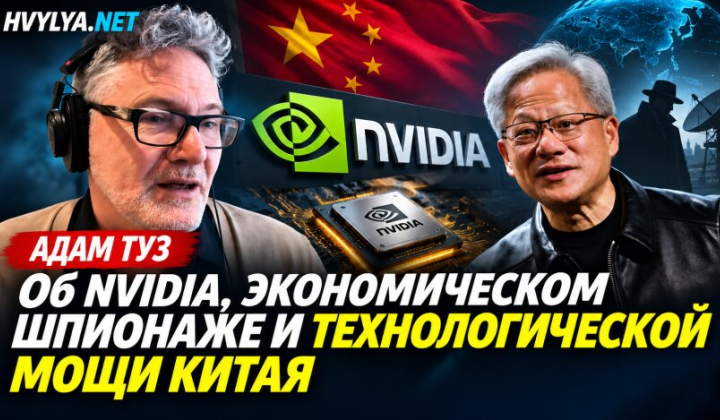
According to ХВИЛЯ: In episode 268 of the Ones and Tooze podcast from Foreign Policy, Deputy Editor Cameron Abadi and Columbia University Professor Adam Tooze delve into the Nvidia scandal, exploring broader issues of economic espionage and historic technology theft. Their discussion highlights China’s expanding influence in the global economy and the risks posed by covert tactics, including the use of romantic relationships to gain business intelligence.
Nvidia, which was ranked as the third most valuable company by market capitalization at the time, suffered a staggering $200 billion loss in market value on Monday, representing roughly 4.3% of its total worth. CEO Jensen Huang publicly acknowledged a relationship with Alice Huang, a former executive at Singapore-based Megaspeed-a Nvidia client reportedly acting as an intermediary for Chinese tech firms. During the conversation, it emerged that the Trump administration had imposed restrictions barring Nvidia chips from being sold to China, yet these components might have been funneled into the country through Megaspeed. The New York Times reported allegations that Alice Huang could be an agent for China’s Ministry of State Security. Following the podcast, Jensen Huang resigned on Thursday, triggering further declines in Nvidia’s market valuation.
The Impact and Mechanics of Economic Espionage
While industrial espionage typically serves competing companies or governments, economic espionage focuses on acquiring strategically vital technologies. Professor Tooze emphasized the importance of distinguishing between intelligence targets, beneficiaries, and methods, noting that “successful espionage depends on the ability to effectively utilize the information obtained.” Key tactics for technology acquisition include:
- Corporate acquisitions
- Joint ventures
- Recruiting engineers
- Human intelligence operations
- Cyberattacks
- Signals intelligence
History shows that stealing technology does not guarantee practical application. For instance, during the mercantilist era, France and the U.S. attempted to pilfer British textile innovations. In World War II and the Cold War, government-led industrial espionage was rampant, exemplified by Klaus Fuchs’ transmission of Manhattan Project secrets. More recently, the U.S. has launched cyber operations against Chinese tech giant Huawei in the 2000s and 2010s.
China’s remarkable ability to absorb and enhance foreign technologies was underscored by Tooze, who stated, “China has demonstrated an extraordinary capacity to assimilate technology, nearly matching Western capabilities.” He added that “in nearly every manufacturing sector, China can innovate and improve at a pace unmatched anywhere else.” This context explains why the Nvidia situation has drawn such intense scrutiny.
The Nvidia episode highlights the critical need for vigilance in business environments where espionage can have severe consequences. Restrictions on patents and non-compete agreements can significantly limit employee mobility, while patents themselves-though granting legal monopolies-are essential to fostering innovation. Tooze pointed out that “the strongest argument for patents is that without them, there is little incentive for innovation or investment.”
This case exemplifies the complex challenges global companies face amid economic espionage risks. Nvidia’s market value plunge and leadership shakeup demonstrate how swiftly the landscape can shift in the tech sector amid fierce international competition. It also stresses the urgency for robust intellectual property protection and careful oversight of strategic partnerships.
In light of these developments, the Nvidia board is now faced with critical decisions regarding CEO Jensen Huang’s position, especially amidst the ongoing stock decline and mounting allegations. The implications of these events on the company's future and market stability are significant, as detailed in our coverage of the board's considerations for Huang's leadership role amid these challenges. For further insights, read more about the board's review of Huang's future here.

Read also