El Niño Drives Dramatic Decline in Blue Whale Sightings Near the Galápagos Islands During 2025–2026

El Niño's Impact on the Galápagos Marine Ecosystem
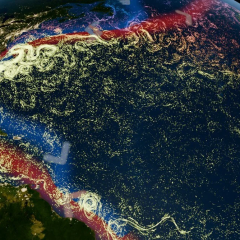
According to НВ — Техно: The El Niño climate phenomenon has profoundly disrupted the marine environment surrounding the Galápagos Islands, causing a sharp drop in blue whale sightings throughout 2025 and 2026. Studies indicate that El Niño intensified at an unprecedented rate, leading to significant ocean temperature fluctuations in this region. During research expeditions, surface water temperatures ranged from 25.5°C to 27.6°C, while at depths of 100 meters, temperatures varied between 19.11°C and 19.67°C.
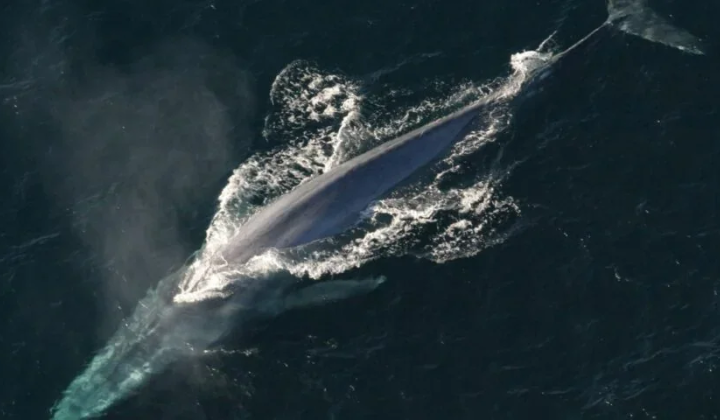
These temperature shifts altered the migratory behavior of blue whales. Researchers conducted extensive searches for these massive marine mammals from October 2025 to July 2026 but did not observe a single individual over nine months. Sightings notably declined between August and September 2025, raising concern among scientists. However, in September 2026, the citizen science group Cetácea Galápagos reported observing an adult blue whale accompanied by a calf near Punta Pitt on San Cristóbal Island.
Ecological Changes and Ecuador’s Response
Between 2021 and 2023, prior to the intense El Niño event, surveys recorded 16 blue whales around the Galápagos. The powerful 2023 El Niño dramatically altered ocean temperatures and reduced primary productivity, disrupting the availability of krill-the main food source for blue whales. Notably, sea surface temperatures in the Niño 3.4 region surpassed 30°C for the first time, an anomaly typically confined to the western Pacific near Australia.
In response to these environmental challenges, Ecuador declared a nationwide red alert in late August 2025. Some monitoring stations recorded sea levels rising up to 40 centimeters above average. Experts emphasize that the absence of blue whale sightings during intensive searches does not necessarily indicate these whales have abandoned the Galápagos.
As Daniela Alarcón explained, 'By integrating these observations with oceanographic data, we can begin to ask deeper questions about the factors influencing their presence and how their migration patterns might be shifting.'
Overall, El Niño-induced changes are exerting serious pressure on the Galápagos ecosystem, especially affecting blue whale populations. The drastic reduction in sightings signals significant ecological shifts that demand ongoing research and monitoring to protect these majestic marine giants and their habitats. Understanding these dynamics is crucial for conservation efforts aimed at preserving biodiversity in one of the world's most unique oceanic regions.
The effects of climate phenomena like El Niño extend beyond the Galápagos, significantly impacting marine ecosystems elsewhere. For instance, the unprecedented warmth in Monterey Bay during 2026–2027 has led to notable transformations in its ecological dynamics. Understanding these changes is crucial for comprehending the broader implications of such climate events. To explore how the Monterey Bay ecosystem is adapting to these shifts, read more about the effects of record warm waters in the region.

Read also