H.E.S.S. Observations Set Tightest Limits Yet on Dark Matter Annihilation After 546 Hours of Galactic Center Study

Challenging Dark Matter Theories
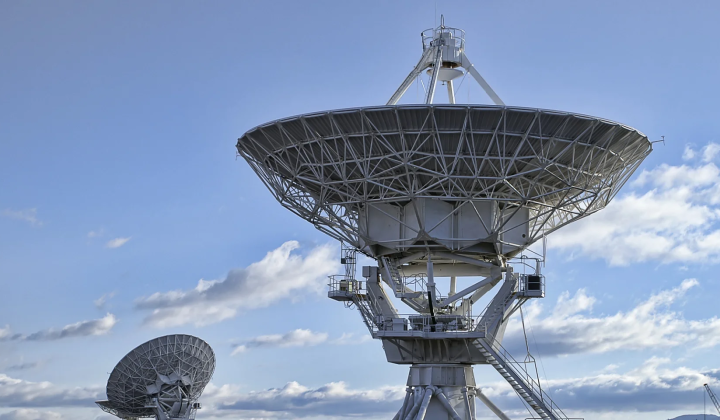
According to НВ — Техно: Physicists have placed new, stringent constraints on the annihilation rates of heavy dark matter particles. The international H.E.S.S. collaboration conducted an extensive observation campaign targeting the center of the Milky Way from 2014 to 2020, accumulating a total of 546 hours of data collection in Namibia. The primary objective was to detect gamma-ray spectral lines that would signal dark matter annihilation events. Published in Physical Review Letters, the study found no definitive evidence of such signals but established the most restrictive upper limits on annihilation cross-sections across a wide range of dark matter masses to date.
“WIMPs-massive particles-remain leading candidates for dark matter, and the Galactic center has long been considered the prime location to observe their self-annihilation through high-energy gamma rays.”
Emmanuel Moulin, research team member
These findings refine current dark matter models and exclude the thermal Higgsino scenario within the standard Einasto mass distribution profile. Despite these advances, the precise mass of dark matter particles remains unknown. Alessandro Montanari, also part of the team, emphasized:
“Our analysis sets the most stringent upper bounds on annihilation rates for heavy particles across a broad mass spectrum.”
Alessandro Montanari, research team member
This research highlights the importance of continued investigation into the elusive nature of dark matter. Future efforts will leverage the upcoming CTAO observatory, currently under construction in Chile and the Canary Islands, which promises enhanced sensitivity for detecting dark matter signatures. These next-generation facilities are expected to deepen our understanding of dark matter’s composition and its interactions within the cosmos.
As one of the most significant open questions in physics today, dark matter’s mysteries demand persistent exploration. The newly established upper limits on heavy particle annihilation will influence theoretical frameworks and guide experimental approaches going forward. With the advent of advanced observatories, scientists anticipate gaining clearer insights into dark matter’s role in the universe.
As researchers continue to unravel the mysteries of dark matter, recent findings about a stellar stream beyond our galaxy provide valuable insights into its distribution and composition. These discoveries could complement the stringent limits set by the H.E.S.S. collaboration, paving the way for a deeper understanding of dark matter's role in the universe.

Read also