Hewlett Packard Enterprise to Deploy Spaceborne Computer-4 on the Moon for Testing in 2026

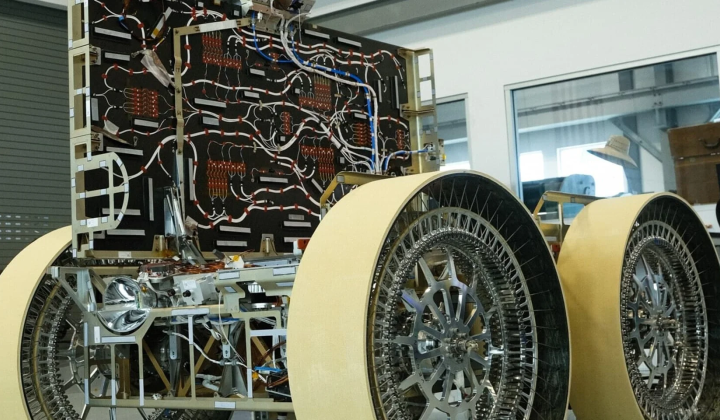
First High-Performance Computer to Operate Directly on the Moon Undergoing Testing
According to НВ — Техно: Hewlett Packard Enterprise has revealed plans to send its compact Spaceborne Computer-4 to the Moon by late 2026 as part of NASA’s Commercial Lunar Payload Services initiative. This advanced computing module will be mounted on Astrolab’s FLIP rover, which will be delivered to the lunar south pole aboard the Griffin-1 lander. The primary goal of this mission is to evaluate the capability of processing data locally on the Moon, enabling faster terrain analysis and decision-making without relying on communication with Earth.
The Spaceborne Computer-4 features a fanless design that protects it from lunar dust and temperature extremes. It incorporates low-voltage central and graphics processors along with flash storage supplied by Kioxia. The mission will focus on:
- testing language models utilizing Retrieval-Augmented Generation (RAG) technology;
- running image analysis algorithms;
- assessing the stability of software deployment in the lunar environment.
The FLIP rover, which will carry this equipment, is designed to transport payloads and support upcoming lunar missions. The Griffin-1’s touchdown near the Moon’s south pole marks a critical advancement for space exploration and technology development.
Implications of Testing a Computer on the Lunar Surface
Deploying a high-performance computer directly on the Moon represents a significant step forward in developing autonomous technologies for space expeditions. Success in this experiment could revolutionize how data is gathered and processed in space, notably improving mission efficiency by enabling real-time analysis on-site. This breakthrough also paves the way for future lunar exploration and the establishment of permanent bases, aligning with broader goals for sustained human presence beyond Earth.
As space agencies push the boundaries of exploration, the advancements in technology are becoming increasingly crucial. For instance, the development of humanoid robots capable of operating in extreme environments illustrates the growing need for innovative solutions in harsh conditions like those on the Moon and Mars. These technologies not only complement the efforts of missions like HPE's but also enhance our understanding of how to sustain human presence beyond Earth.

Read also