China to Build the World's First Self-Propelled Floating Scientific Island, Construction Begins in 2028

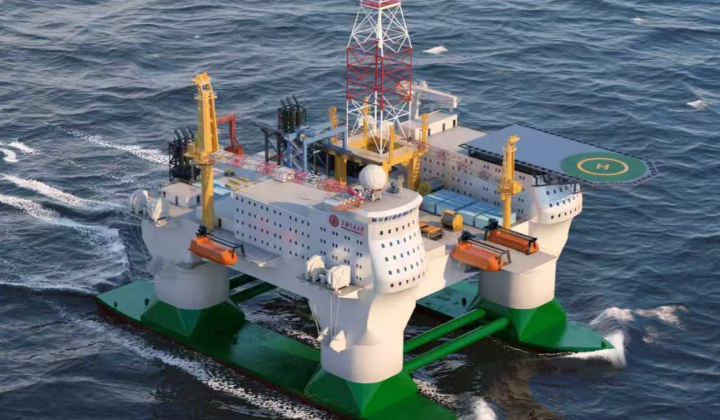
Construction of a Revolutionary Self-Propelled Floating Research Island
According to НВ — Техно: China has signed a $413 million contract to develop the world's inaugural self-propelled floating scientific island, designed for extended deep-sea research under the ocean's most extreme conditions. Construction is set to commence in 2028, with completion expected by June 2030. The project will be overseen by Shanghai Jiao Tong University, while Shanghai Waigaoqiao Shipbuilding is responsible for the design and construction of the platform.
Platform Specifications and Capabilities
This innovative structure will feature a catamaran-style twin-hull design with a semi-submersible base. Measuring approximately 138 meters in length, 85 meters in width, and standing 45 meters tall at the main deck, the floating island will have a full displacement of 74,000 tons. It is engineered to endure waves ranging from 6 to 9 meters high and withstand super typhoons of category 17, with winds exceeding 265 km/h. The platform will also have the capacity to navigate independently at speeds up to 11 knots.
Fully mobile, this scientific island can relocate to various research sites, expanding its operational flexibility. Onboard, there will be six large laboratories dedicated to cutting-edge scientific investigations including:
- marine engineering
- deep-sea equipment testing
- monitoring of climate anomalies
- ecosystem change analysis
Accommodating up to 238 people, including crew and scientists, the platform's scale highlights its significance for the global research community.
This initiative reflects China's growing ambitions in oceanographic science and technological innovation.
The self-propelled floating island is poised to become a vital asset for studying marine ecosystems and climate change impacts-issues that concern nations worldwide. This advanced technology could foster international collaboration in scientific exploration and ocean resource conservation in the years ahead.
This groundbreaking project aligns with China's recent advancements in deep-sea exploration technology, such as the deployment of a deep-sea robot capable of operating at depths of 4500 meters. Such innovations underscore the nation's commitment to enhancing its capabilities in marine research and addressing critical environmental challenges.

Read also