How the Ukraine Conflict Has Sparked a US-Europe Power Struggle Threatening Europe's Political Future

The Ukraine Crisis and Its Reverberations on Europe's Political Landscape
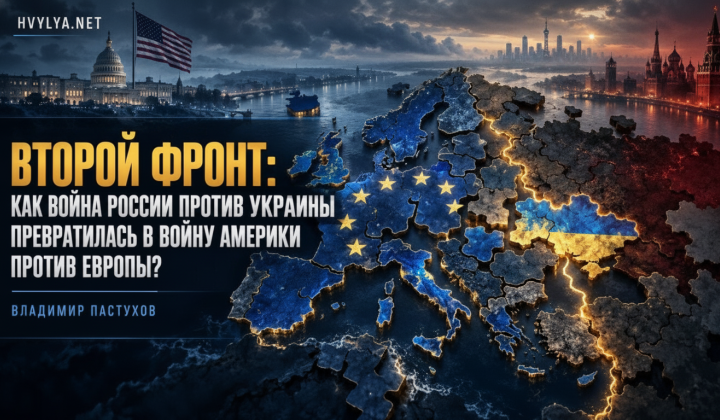
According to ХВИЛЯ: The conflict in Ukraine has escalated into a broader confrontation between the United States and Europe. The US has shifted its stance from advocating for a federated Europe to scaling back support for Ukraine, effectively easing pressure on Russia. At stake is the future political framework of Europe: whether it will evolve into a federal union or remain a confederation. This debate has intensified as the conflict in Ukraine has entered a new phase lasting over two weeks.
The idea of a "United States of Europe" has been around for more than a century. Since the collapse of the Soviet Union over forty years ago, this vision has served as a political blueprint. Conversely, the concept of a "United Europe" represents a traditional alliance of sovereign states, or confederation. For nearly eighty years, the US has indirectly supported European federalism to maintain regional stability.
Shifts in US Foreign Policy
Under Biden's administration, the US actively backed Europe’s resistance against Russia, including substantial aid to Ukraine. However, with the Trump administration, US priorities changed dramatically, sidelining support for European federalism. Financial assistance to Ukraine was sharply reduced, leaving Europe to bear the brunt of the conflict’s burden and causing concerns among European allies.
More recently, US foreign policy has shown signs of aligning-in part-with Russia and China regarding the post-war future of Ukraine. Europe now faces a critical choice: pursue deeper federal integration with political and military unity or adopt a confederation model that may rely heavily on external powers for security.
One scenario gaining attention is a potential summit involving the US, Russia, and China in China to discuss Europe’s future direction.
As China rises and Russia’s influence wanes within the evolving geopolitical order, the question of Europe's political structure grows ever more urgent. Whether Europe opts for federalism or confederation remains uncertain, but US foreign policy changes will play a decisive role in shaping that outcome.
US policy shifts could profoundly reshape Europe’s political architecture, presenting new challenges that will impact the continent’s security and stability.
The debate over federal versus confederal models is not only an internal political matter but is also heavily influenced by external actors-namely the US, Russia, and China-who shape the regional power dynamics. In an era of intensifying global rivalry, Europe's ability to adapt its strategies will be crucial to safeguarding its independence and stability in this new geopolitical reality.

Read also