Royal Navy Unveils Arctic Hunter USV to Enhance Anti-Submarine Operations in Arctic and North Atlantic

Introducing the Arctic Hunter USV Unmanned Surface Vessel Project
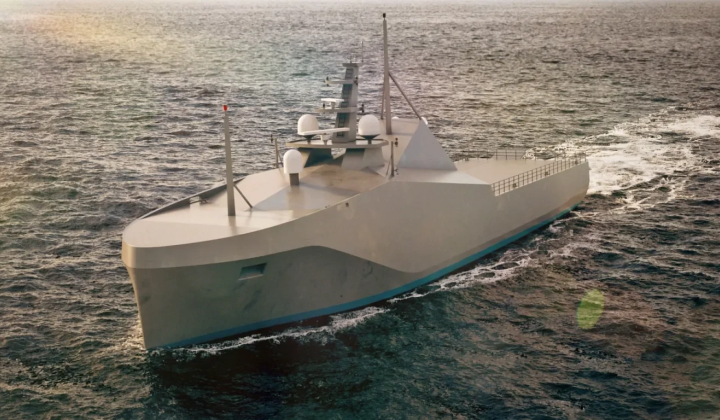
According to НВ — Техно: Kongsberg Maritime has revealed its design for the Arctic Hunter USV, a 92-type unmanned surface vessel tailored for the Royal Navy’s anti-submarine missions in the North Atlantic and Arctic regions. This vessel adapts a 184-foot Arctic fishing ship platform, integrating remote control and autonomous navigation technologies. The Arctic Hunter USV is one element of the Hybrid Fleet program, which encompasses four distinct unmanned vessel categories.
The project announcement came on November 9. The Arctic Hunter is equipped with the towed Sonar 2087 system developed by Thales Underwater Systems, currently deployed on the Royal Navy’s Type 23 and Type 26 frigates. To accommodate military equipment, Kongsberg Maritime will remove the ship’s wheelhouse and fish processing facilities. Additionally, the vessel will incorporate Reach Remote project technologies, utilizing remotely operated vehicles (ROVs) for geophysical surveying in the North Atlantic.
Operational Development and Testing
The Royal Navy is establishing new operational frameworks to transition toward autonomous vessels. The Hybrid Fleet initiative aims to expand naval capabilities in surveillance and armament through unmanned platforms. This year, Kongsberg Maritime’s defense division gained increased autonomy in collaborating with military contractors.
- During the Neptune Reach exercises in early November, British unmanned aerial systems Nyan OWE, developed by BAE Systems, were tested.
- These drills involved the Royal Navy, British Army, and Royal Air Force.
"The immediate threat comes from submarines in the High North. I need rapid, large-scale delivery, and commercial shipyards are essential," said First Sea Lord Bruce Balchin.
He further commented, "Replacing fish towing with towed sonar is a game-changer. It’s no exaggeration to say we instantly acquired a vessel hardened for this environment and accustomed to operating in such sea conditions." This initiative marks a significant advancement in military unmanned technology and strengthens the Royal Navy’s operational capabilities.
The Arctic Hunter project highlights the Royal Navy’s commitment to integrating cutting-edge technologies into defense strategies amid evolving global security challenges. Autonomous vessels like the Arctic Hunter have the potential to transform patrol and anti-submarine warfare tactics, especially in the demanding environments of the North Atlantic and Arctic, where conventional methods face limitations. This development also signals the growing importance of unmanned systems in future naval operations and strategic planning.
As the Royal Navy enhances its capabilities with the Arctic Hunter USV, the integration of advanced technologies in unmanned vessels is becoming increasingly vital. In a similar vein, the recent testing of the TRV-150 drone by BAE Systems showcases innovative approaches to aerial defense, underscoring the military's shift towards automation and remote operations.

Read also