How AI and Automation Will Redefine HR Operations Over the Next 3 to 5 Years

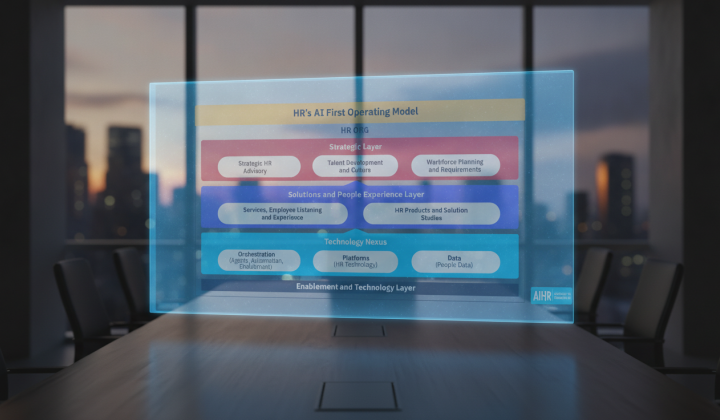
The Future Framework for HR Operations
According to AIHR: This article explores the evolution of HR operational models over the coming 3 to 5 years, focusing on integrating artificial intelligence (AI) and automation to meet organizational needs. The traditional HR Business Partner Model, which has been the foundation since the 1990s, is now outdated due to rapid technological advances and shifting business landscapes. Recent data reveals that 64% of HR departments have revamped their operating models within the past two years, yet only 19% clearly delineate responsibilities among Centers of Expertise (CoEs), HR Business Partners (HRBPs), and shared services. Current challenges include role ambiguity, excessive administrative burdens, and limited AI adoption within HR frameworks.
Introducing an AI-Centric HR Operating Model
To address these issues, AIHR proposes an AI-first HR operating model structured around three interconnected layers: strategic, employee experience, and technology. This approach centers on four core capabilities:
- HR strategy development
- Communication and engagement channels
- HR products and solutions
- Technologies and data management
Transitioning to this future-ready HR model follows a detailed nine-step process:
- Identifying business requirements
- Assessing the current HR model
- Designing the target operating model
- Evaluating organizational readiness for change
- Developing a transition roadmap
- Building the necessary technology infrastructure
- Managing change effectively
- Enhancing HR competencies
- Tracking progress and making adjustments
A case study highlights a global insurance firm with 4,500 employees that achieved $1.6 million in efficiency gains after adopting this AI-powered HR model with AIHR’s support. This example underscores the transformative potential of AI integration, which can boost productivity and operational efficiency significantly. Nevertheless, organizations often undergo a hybrid phase where both legacy and new HR models operate simultaneously during the transition.
Several signs indicate when an HR operating model needs an overhaul:
- Business partners acting mainly as process coordinators rather than strategic contributors
- Failed attempts to introduce AI solutions in HR
- Functional silos within HR teams
- Lack of ownership within HR functions
- Business strategy shifts that are not reflected in HR structure
Given these challenges, the urgency for organizations to adopt AI-ready HR models is becoming increasingly apparent.
Modernizing HR operations can have a profound impact on a company's ability to stay competitive in today’s fast-evolving business environment. AI-driven automation not only streamlines routine tasks but also enhances decision-making quality, which is critical for adapting to dynamic market conditions. As many organizations face similar pressures, embracing this new HR paradigm could prove essential for the future success and agility of HR functions worldwide.
As organizations increasingly embrace AI-driven strategies, understanding the impact of automation on talent management becomes crucial. For insights into how these technologies enhance HR functions through personalized engagement and streamlined processes, explore our article on transforming HR with AI. This shift not only addresses current challenges but also sets the stage for a more efficient future in human resources.

Read also