The 2026 Munich Security Conference: A Transatlantic Partnership Under Strain


The 2026 Munich Security Conference
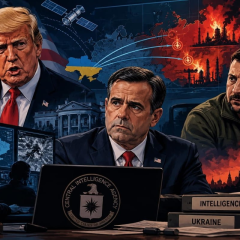
According to ХВИЛЯ: The 2026 Munich Security Conference served as a critical forum for examining the shifting dynamics of the transatlantic relationship between the United States and Europe. U.S. Secretary of State Marco Rubio, a key speaker, addressed a changing American perspective toward its European allies. The core discussions revolved around mutual grievances, the reassessment of the Russian threat, and the internal political challenges facing European nations.
This follows the 2025 conference, which featured an address by U.S. Vice President J.D. Vance, underscoring Washington's sustained focus on European security. Despite the EU's economy now slightly surpassing China's, European countries continue to face significant defense challenges. Analyst George Friedman observed that while nothing prevents European states from building their own defense capabilities, many Europeans still believe America is morally obligated to shoulder the primary risks.
Key Themes of the Conference
- A pervasive sense of mutual betrayal was a major topic. Friedman noted this is not a one-sided feeling: Europeans often feel let down, while Americans increasingly believe Europe exploits U.S. security guarantees instead of becoming an equal partner in defense.
- The assessment of the Russian threat has also evolved. Friedman argued the direct threat to Europe has diminished, as Russia failed to capture more than a small part of Ukraine and lacks the capacity to invade Europe.
- Furthermore, Friedman suggested the U.S. is expanding its strategic focus into Central Asia and the South Caucasus, regions once part of the Soviet Union.
George Friedman: 'Europeans are unwilling to confront reality and solve their own problems, an approach that is 'infantile.''
In summary, the 2026 Munich Security Conference highlighted profound changes in the transatlantic alliance, with the U.S. and Europe confronting new challenges that demand a strategic reassessment. The upcoming Hungarian elections, scheduled for just months after the conference, could introduce another variable into this complex geopolitical equation. Rising tensions and shifting attitudes threaten to reshape regional security strategies and the future of transatlantic cooperation. The reassessment of the Russian threat and Europe's internal divisions remain pivotal issues requiring decisive action and consensus among allies.

Read also