National Barrier-Free Council Reviews 2026 Achievements and Sets Employment and Inclusion Goals for 2027

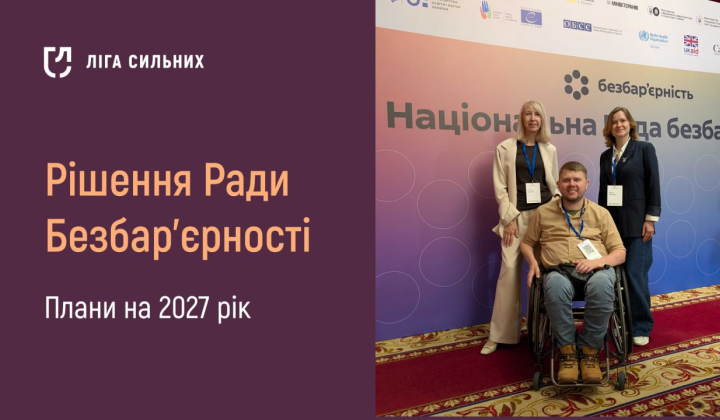
National Barrier-Free Council Meeting Highlights
According to Рубрика — Суспільство: On September 29, 2026, the National Barrier-Free Council convened to evaluate the progress of government policies over the first nine months of the year. Participants outlined key priorities and strategic plans for 2027, focusing on employment opportunities for people with disabilities and veterans, education, rehabilitation, supported living, and accessible communication. Darya Kukurika, Executive Director of the League of the Strong, took part in the discussions.
Key Challenges and Focus Areas
A central topic was improving employment prospects for individuals with disabilities and veterans. Darya Kukurika emphasized the significance of expanding job opportunities as a main objective within the barrier-free agenda for the upcoming year. She also expressed hope that Bill No. 14389 on reasonable accommodation will be passed this year, enabling its provisions to be implemented fully starting next year.
“Reasonable accommodation is a vital tool that enables people with disabilities to obtain and retain employment,” said Darya Kukurika.
The meeting also highlighted persistent obstacles faced by people with disabilities and veterans in education, employment, rehabilitation, social services, and independent living. Employment barriers primarily stem from a lack of adapted workplaces and conditions. In education, there remains a shortage of tailored programs for individuals with intellectual disabilities. To address these challenges, several support mechanisms for employment have been proposed, including:
- reimbursements to employers for workplace adaptations,
- grant funding to support entrepreneurship,
- financial incentives tied to hiring,
- the 'Support Point' program for affected workers.
The participants also reviewed outcomes from collaboration with the World Health Organization (WHO) in rehabilitation and supported living initiatives, presented by Silviu Domente, WHO’s representative in Ukraine. Additionally, Ukraine’s Minister of Culture, Tetiana Berezhna, shared results from the implementation of the Ministry’s Communication Strategy and flagship projects. Through cooperation between WHO and the League of the Strong, a public awareness campaign promoting accessibility was developed.
The session concluded with introductions to new flagship initiatives such as 'Active Longevity' and 'Hubs of the Future.' Official data shows that services reached 220,000 veterans and their family members, while 350,000 individuals participated in veteran sports programs. These accomplishments underscore the critical importance of continuing support for people with disabilities and veterans, which remains a top priority for the coming years.
The National Barrier-Free Council meeting reflects a growing commitment to addressing the needs of people with disabilities and veterans. The anticipated approval of the reasonable accommodation bill could mark a pivotal moment in fostering inclusive employment environments. The policies and initiatives discussed demonstrate the government’s dedicated effort to dismantle societal barriers and enhance accessibility nationwide.
As the National Barrier-Free Council outlines its strategic plans for enhancing employment opportunities, similar discussions are taking place in other regions. For instance, the recent forum in Odesa focused on the challenges faced by internally displaced persons and strategies to increase their local impact. This highlights a broader commitment to improving inclusion and support across various communities.

Read also