Turquoise Black Sea Captured by NASA After Plankton Bloom

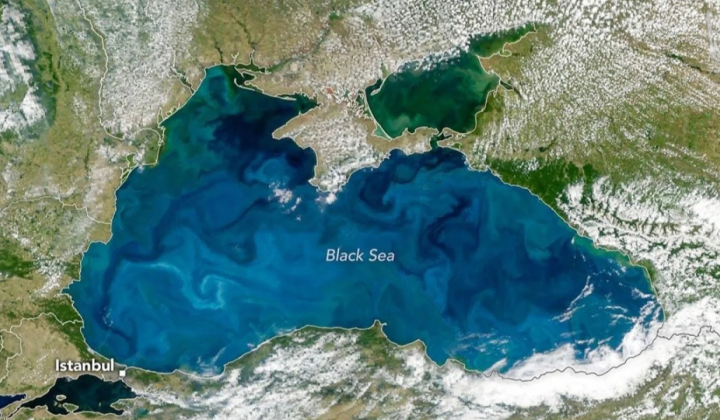
Coccolithophore Bloom in the Black Sea
According to НВ — Техно: On June 22, 2026, NASA's PACE satellite detected a massive bloom of coccolithophores in the Black Sea, turning the water a vivid turquoise. This natural event stood out in the Black Sea, a body of water situated between Europe and Asia that links to the Mediterranean Sea through a series of straits.
The plankton bloom, recorded by the PACE satellite, shifted the color of the Black Sea's surface to turquoise. During spring and summer, the sea often takes on this hue. Coccolithophores-microscopic phytoplankton covered in calcium carbonate plates-are the primary driver of this color change. They thrive in the Black Sea in late spring and early summer, while diatom algae with silica shells dominate during other seasons.
Ecological Impact of the Bloom
The turquoise tint was also visible in the Bosphorus Strait, which connects the Black Sea to the Sea of Marmara. On May 27, 2026, an astronaut aboard the International Space Station photographed the strait from orbit, capturing this striking phenomenon. The PACE satellite, designed to monitor plankton, aerosols, clouds, and ocean ecosystems, uses the OCI instrument to analyze ocean color.
It is worth noting that a single coccolithophore is too small to see with the naked eye, but collectively these microorganisms can dramatically alter the appearance of vast water bodies like the Black Sea. Plankton blooms are a vital component of the ecosystem, showcasing the dynamic nature of life in seas and oceans.
The coccolithophore bloom in the Black Sea carries significant ecological consequences, affecting water quality and local ecosystems. This event may signal shifts in the region's ecological balance, which could in turn impact fisheries and other marine resource industries. Observing such natural phenomena is also crucial for tracking global climate changes and their effects on marine environments.

Read also