NASA Boosts Nancy Grace Roman Telescope’s Optical Precision by Nearly 30%, Unlocking Advanced Space Exploration

Fine-Tuning the Nancy Grace Roman Telescope
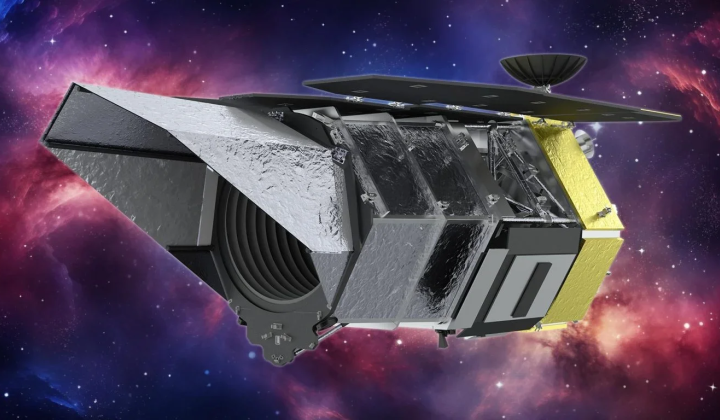
According to НВ — Техно: NASA engineers have successfully enhanced the optical accuracy of the Nancy Grace Roman Space Telescope by almost 30% beyond initial expectations. This improvement significantly sharpens the telescope’s wide-field imaging capabilities, enabling deeper and more detailed observations of cosmic phenomena, including dark matter and dark energy.
Optical System Adjustments
The refinement involved an incredibly precise adjustment of the secondary mirror’s position-shifted by about one sixteenth the width of a human hair. This tiny correction reduced the telescope’s optical error to just 63 nanometers, well below the originally acceptable threshold of 90 nanometers set during its design phase.
Equipped with 18 detectors, the telescope underwent rigorous testing of its electronics, filters, calibration systems, and thermal controls to ensure all components function flawlessly ahead of scientific observations.
In addition, engineers continue to optimize the coronagraph, a specialized instrument designed to block out the bright light of stars that can interfere with space observations. After adjusting its focus, the coronagraph met expected performance levels, although efforts to fine-tune its camera and deformable mirrors are ongoing. Since simulating exact space conditions on Earth is impossible, further calibrations will be necessary once the telescope is in orbit.
These calibration successes position the Nancy Grace Roman Telescope to deliver clearer and more detailed cosmic surveys than ever before, representing a major advancement for astronomy. Its enhanced capabilities hold promise for groundbreaking discoveries related to dark matter and dark energy, which comprise the majority of the universe's mass-energy content but remain largely mysterious. The complex testing and adjustments underscore the critical preparation required for successful space missions.

Read also