German Environmental Group Challenges Expansion of Nuclear Fuel Production Involving Rosatom


Legal Action Targets Nuclear Fuel Production Increase
According to Рубрика — Суспільство: The German environmental organization BUND Niedersachsen has initiated a lawsuit against the state government of Lower Saxony, demanding the revocation of the permit for expanding nuclear fuel production in Lingen. The controversy centers on the involvement of the Russian corporation Rosatom in the project, raising concerns over safety and procedural transparency. The permit, granted to the French company Framatome, authorizes the manufacture of fuel rods for nuclear reactors under a licensing agreement with Rosatom.
The Lower Saxony Ministry for the Environment issued the permit following guidance from the federal ministry. The lawsuit argues that the environmental assessment was based on outdated documentation and that the extent of Rosatom’s role was not fully disclosed in the decision papers. Meanwhile, Berlin maintains that the permit complies with German law. Addressing the issue of Rosatom’s participation, officials suggest that enhanced European Union sanctions could be a pathway forward.
Framatome’s Response and Implications for Germany’s Nuclear Sector
Framatome describes its cooperation with Rosatom as a temporary measure and intends to develop its own nuclear fuel production technology. Olaf Bandt, a spokesperson for the environmental group, commented:
“With both production in Lingen and parts of quality control relying on equipment supplied by Rosatom, there is a risk of manipulation in manufacturing and verification processes.” – Olaf Bandt
Germany has been steadily phasing out nuclear power, a process finalized on April 15, 2023. This decision originated in 2011 during Chancellor Angela Merkel’s administration, largely as a response to the Fukushima nuclear disaster in Japan. Following the announcement, all nuclear power plants commissioned before 1980 were shut down immediately, and by late 2021, three remaining plants had also been closed.
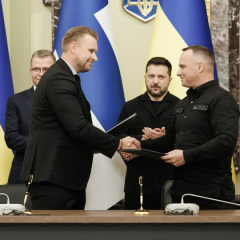
In August 2025, Ukrainian President Volodymyr Zelensky imposed sanctions on 35 individuals linked to Rosatom and Russian energy firms. Later, in October 2025, Germany demolished two cooling towers of the Gundremmingen nuclear power plant using controlled explosions, an event witnessed by approximately 30,000 spectators. Plans are underway to replace the former nuclear site with the country’s largest battery storage facility.
This lawsuit highlights the complex and contentious nature of nuclear energy policy in Germany, especially amid geopolitical tensions and security concerns. The involvement of Russian companies in critical infrastructure continues to provoke unease among environmental activists and policymakers, potentially prompting legislative and policy shifts. Simultaneously, Germany’s commitment to nuclear phase-out calls into question the viability of new nuclear projects within its borders.

Read also