A Promise Without Money: What Lies Behind von der Leyen's Statement on Financing Ukraine

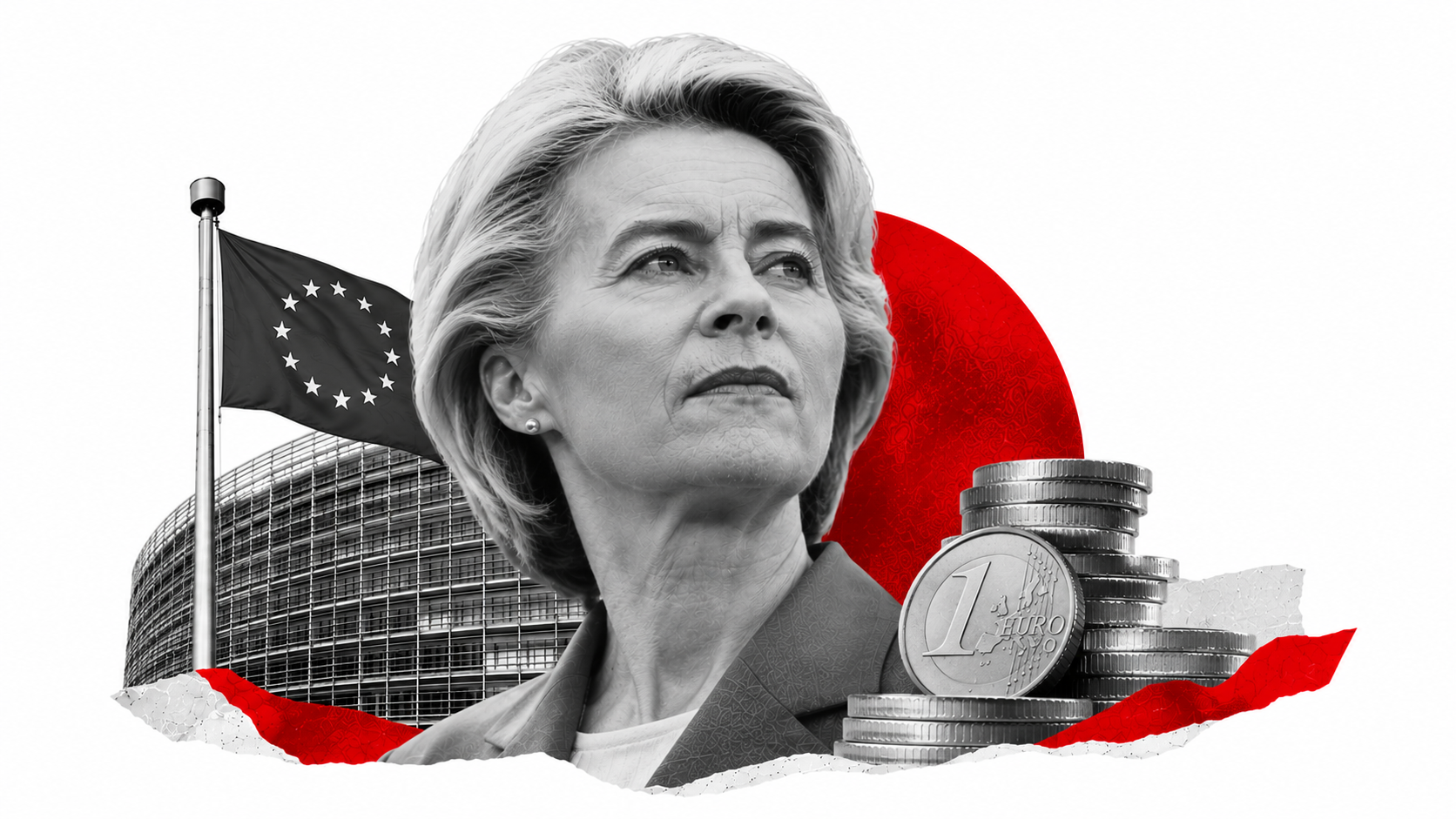
The European Commission promises to prepare a new financial support plan for Ukraine for 2027. In political statements, this sounds like a guarantee of long-term stability. However, between the intention to allocate tens of billions of euros and their actual arrival in the Ukrainian budget lies a complex path of negotiations, legal procedures, and national interests. Brussels demonstrates determination, but the final cost of that determination is yet to be agreed upon.
In European diplomacy, the difference between the words 'offer' and 'finance' can amount to tens of billions of euros. This distinction has been at the center of discussions following President of the European Commission Ursula von der Leyen's statements about preparing financial decisions for Ukraine in 2027.
In the public domain, reports about a potential package of around €40 billion are often perceived as evidence that the necessary resources are practically secured. However, the political readiness of the European Commission to present a proposal does not yet mean that approved funds are available.
The European Commission can develop a financial mechanism, propose revenue sources, and define the conditions for support. However, the final decision will depend on the legal structure of the program, the positions of member states, and the relevant European institutions.
Brussels can announce an intention to find €40 billion. But that does not mean that this money already exists in the form of agreed financing.
European Billions: Between Political Will and Budget Arithmetic
One possible way to attract additional resources remains joint borrowing by the European Union on financial markets. This mechanism allows for mobilizing significant funds but raises questions about guarantees, debt servicing, and the distribution of financial responsibility.
The European Commission cannot unilaterally make any decisions regarding new EU debt obligations. At the same time, the assertion that every issuance of European bonds necessarily requires unanimous support from all 27 states would be an oversimplification. The procedure depends on the legal basis of the specific instrument.
However, the political problem remains unchanged: large-scale financing for Ukraine requires an agreement on who will actually bear the costs.
For countries with high levels of public debt, new financial obligations can create additional budgetary risks. For countries that traditionally serve as the largest donors to the European budget, a fundamental issue is fair burden-sharing.
That is why, even with political support for Ukraine, negotiations about a specific mechanism for aid may turn out to be significantly more complicated than official statements suggest.
German Pressure and European Contradictions
Germany plays a special role in these negotiations. Chancellor Friedrich Merz is interested in making Ukraine's financing a shared European obligation rather than relying primarily on contributions from individual states.
Potentially, negotiations regarding the next seven-year EU budget for 2028-2034 could become a tool of political influence.
The multiannual financial framework sets the main priorities for European spending and requires unanimous agreement from member states in the EU Council. This gives each capital significant negotiating power.
Reports about the possibility of using the German veto as leverage against partners demonstrate how closely the issue of support for Ukraine is tied to broader budgetary contradictions. At the same time, the specific conditions of such an ultimatum require separate confirmation.
Hungary and Slovakia have repeatedly opposed certain European decisions regarding Ukraine. In the Czech Republic, the scale of support remains a subject of political discussion. Italy, for its part, must consider its own budgetary constraints and various positions within the ruling coalition.
However, these states do not form a unified political bloc. Their interests, motives, and approaches to financing differ significantly.
For some governments, the main issue is the amount of aid. For others, it's the sources of funding, lending conditions, or the possibility of avoiding additional collective debt.
As a result, negotiations regarding Ukrainian financing may turn into part of a much broader bargaining about the future European budget.
Why Even Agreed Funds May Arrive Late
For Ukraine, timing is no less important than the total amount of international assistance.
The state budget requires regular inflows to finance social payments, the operation of state institutions, and maintain macroeconomic stability.
If the new financial mechanism involves complex legal procedures or joint borrowing, a significant time gap may arise between political agreement and the actual transfer of funds.
Even reaching a compromise by the end of the year will not guarantee the immediate arrival of the full amount.
However, stating a universal timeframe of five or six months would be incorrect. The speed of implementation will depend on the chosen instrument, the necessary decisions, and the schedule of tranches.
That's why the spring of 2027 may be considered one of the potential benchmarks for fund arrivals in a prolonged approval scenario, but not a guaranteed date.
For Ukraine, €40 billion that arrives on time and €40 billion that will remain subjects of negotiations for another six months have fundamentally different economic values.
Delays in international assistance can create problems even when the overall volume of promised funding formally meets budget needs.
Civil Budget and Military Spending: Two Different Issues
Another important circumstance concerns the allocation of European financial support.
A significant portion of the EU macro-financial programs is directed towards covering Ukraine's civil needs: social payments, the functioning of government agencies, healthcare, education, and maintaining economic stability.
This has direct implications for the country's defense capability. When international partners help finance civil expenditures, Ukraine can redirect a greater portion of its own resources to defense.
However, such support is not equivalent to direct financing of military procurement.
The European Union and its member states have separate mechanisms for military assistance, but their capabilities are determined by different budgetary rules, industrial resources, and political decisions.
Even full coverage of civil budgetary needs will not automatically resolve the issue of financing the Ukrainian army.
Needs for ammunition, air defense, equipment, and domestic defense production will remain a separate strategic challenge.
Thus, the European Commission's financial initiative can provide an important part of Ukraine's economic resilience, but it may not necessarily cover all the state's needs related to the continuation of the war.
Brussels Seeks to Maintain a Seat at the Negotiating Table
Von der Leyen's statements also have diplomatic significance.
Amid American contacts regarding a possible resolution to the war, the European Union seeks to demonstrate that it remains one of the key players in shaping the future security architecture.
Long-term financial support for Ukraine in this context is not just an economic tool but also a way to retain political influence.
European states have a direct interest in what the conditions will be for a possible end to the war, security mechanisms, and prospects for Ukraine's recovery.
That's why statements about funding for 2027 can be seen as a signal to several addressees: Kyiv, Washington, Moscow, and the European governments themselves.
To Ukraine, Brussels demonstrates its readiness to continue support. To the United States – a desire to remain an independent political player. To Russia – an intent not to abandon economic pressure and support for Kyiv.
However, claiming that all this rhetoric is merely an attempt to raise negotiation stakes would be an excessive simplification.
The EU has its own security and economic interests in Ukraine that do not dissipate based on the course of diplomatic negotiations.
At the same time, the political persuasiveness of these signals will depend directly on how quickly Europe can convert declared intentions into concrete financial decisions.
2027 Will Be a Test of European Solidarity
European support for Ukraine is gradually shifting from emergency crisis solutions to the need for long-term budget planning.
This is a significantly more complex stage.
If the first large-scale aid packages could be justified by exceptional circumstances, then multiannual financial commitments require stable sources of funding, political agreement, and a clear distribution of expenses.
The European Union faces three interrelated tasks: ensuring timely financing for Ukraine, agreeing on burden-sharing mechanisms among states, and connecting support for Kyiv with the growth of its own defense needs.
The most challenging aspect may not be finding a financial instrument but achieving a political compromise.
That's why Ursula von der Leyen's statement about preparing a proposal should not be seen as a final decision to allocate funds.
It signifies the beginning of a process, the outcome of which will depend on negotiations among European capitals.
European solidarity is measured not by the number of announced billions but by the ability of states to agree on their financing and ensure timely arrivals.
In the coming months, Brussels may present new borrowing, guarantees, and budget support mechanisms. European leaders can affirm their political determination to help Ukraine as much as necessary.
However, the final answer will not be given by press conferences but by decisions made, financial schedules, and actual tranches.
For between the promise to find €40 billion and the actual opportunity to utilize them lies a distance that cannot be crossed solely by diplomatic rhetoric.
And this distance may become one of the main tests for European policy towards Ukraine in 2027.

Read also