Lithuanian Passport: how to obtain, documents, and main requirements

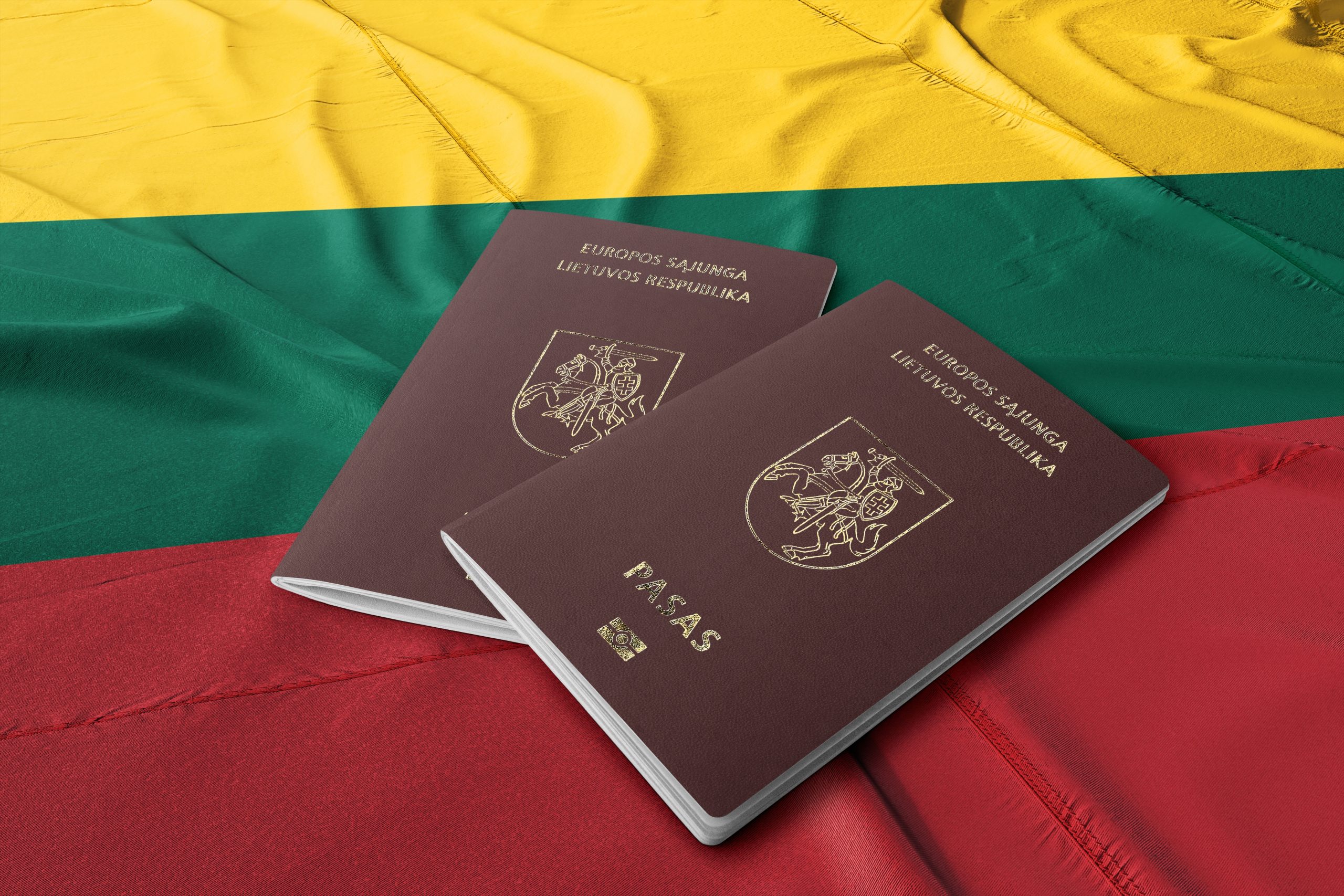
Lithuania deserves special attention: it is a picturesque country that has many advantages for migrants. For Ukrainians, the Lithuanian passport also has many benefits, as it allows them to work legally and settle their lives.
Who can obtain Lithuanian citizenship
The Lithuanian passport can only be obtained by individuals who have citizenship of the Republic of Lithuania. Therefore, one must first determine the legal grounds for acquiring or restoring citizenship, and only after a positive decision can they obtain a passport as a document certifying the identity of a citizen.
Lithuanian legislation provides several main paths to acquiring citizenship. These include citizenship by birth, acquisition of citizenship by descent, restoration of citizenship, simplified procedures for individuals of Lithuanian descent, naturalization, and in some cases - acquisition of citizenship in exceptional circumstances. There are specific rules for children, adopted children, stateless persons, and those who previously held Lithuanian citizenship.
By birth, a child can acquire Lithuanian citizenship based on the citizenship of the parents and other circumstances defined by law. If the individual already has Lithuanian citizenship by law, there is no need to go through the naturalization procedure. In this case, the task is to confirm citizenship and obtain a document that certifies identity.
For an adult foreigner, the most relevant paths are descent, restoration of citizenship, or naturalization. The choice of procedure depends on family history, the length of residence of ancestors in Lithuania, previous citizenship, the applicant's place of residence, and availability of documents.
The main grounds can be conditionally divided as follows:
- citizenship by birth;
- citizenship by descent;
- restoration of Lithuanian citizenship;
- acquisition of citizenship in a simplified manner for individuals of Lithuanian descent;
- naturalization after a lengthy legal residence;
- certain special or exceptional cases provided by law.
It is important not to confuse a passport with citizenship. A passport does not create citizenship but is issued only after a person has already acquired the status of a citizen of Lithuania. For a person who is only proving Lithuanian descent or undergoing naturalization, the first step is indeed the procedure regarding citizenship.
How to obtain a Lithuanian passport by descent
Lithuanian descent can be a basis for acquiring citizenship in cases provided by law. It is not enough to simply state that there were Lithuanians in the family. Proof of descent must be established and the family connection with an ancestor must be documented.
The evidentiary base is often formed from documents of several generations. For example, the applicant may need their own birth certificate, documents of parents, documents of grandparents, and old records indicating the Lithuanian nationality or citizenship of the ancestor.
The historical period is of particular importance. The law provides various mechanisms for individuals whose ancestors were citizens of Lithuania, for descendants of people who left Lithuania or were exiled during occupation, as well as for persons of Lithuanian descent. This is why seemingly identical family histories can lead to different procedures.
To confirm descent, the following can be used:
- archival records of birth, marriage, and death;
- documents of the ancestor's citizenship;
- old passports and identity documents;
- church metric records;
- residence documents;
- military or land documents;
- archival certificates;
- documents confirming the uninterrupted family connection between the applicant and the ancestor.
If the documents are in a foreign language, translation may be required during the procedure, and depending on the issuing country - apostille or another form of authenticity confirmation. Special attention should be paid to discrepancies in the spelling of surnames. In old documents, the same person could be recorded in different languages, and names or surnames could have multiple variants.
For descendants of Lithuanians, it is important to establish not only the fact of Lithuanian ancestry but also the specific legal basis. In some cases, a person has the right to restore citizenship, while in others - to obtain confirmation of Lithuanian descent and undergo the naturalization procedure.
Applications for citizenship are submitted through the Lithuanian migration information system MIGRIS, and depending on the category of the applicant, documents may also be submitted through a diplomatic representation or consular office of Lithuania. After electronically filling out the application, it is necessary to personally submit the original documents within the established timeframe during the prescribed procedures.
Acquiring Lithuanian citizenship through naturalization
Naturalization is the route for a foreigner who lacks any other special grounds for acquiring Lithuanian citizenship but has been legally residing in Lithuania for an extended period and meets the established legal requirements.
The general rule requires ten years of legal permanent residence in Lithuania. At the time of application and when the decision is made, the person must have the right to reside permanently in the country. Thus, mere presence in Lithuania for ten calendar years is insufficient if the residence did not comply with legislative requirements.
For naturalization, one must pass an exam in the state Lithuanian language and an exam on the basic principles of the Constitution of the Republic of Lithuania. Relevant requirements have prescribed exceptions for certain categories of individuals.
Another condition is the availability of a legal source of livelihood. The applicant must be able to prove that their financial support has a legal source.
The law also stipulates requirements related to other citizenships. In the standard naturalization procedure, the applicant typically must be a stateless person or meet rules regarding the termination of other citizenship. For many applicants, this means they need to submit a written declaration of intent to renounce their existing citizenship after acquiring Lithuanian citizenship.
Among the documents required for naturalization may be:
- an identity document;
- a document proving the right of permanent residence in Lithuania;
- confirmation of ten years of legal permanent residence;
- proof of a legal source of livelihood;
- documents regarding passed exams in Lithuanian language and the Constitution;
- documents concerning other citizenships and their cessation, if required;
- other documents depending on personal circumstances.
Naturalization is not an automatic procedure. Even after meeting formal requirements, the documents undergo verification, and the final decision is made in a manner established by the state. After acquiring citizenship, in cases provided by law, an individual must fulfill the requirement regarding the oath to the Republic of Lithuania.
Lithuanian passport for Ukrainians
For citizens of Ukraine, there is no separate general procedure that automatically grants Lithuanian citizenship through Ukrainian citizenship, temporary protection, or residence in Lithuania. The basis must comply with Lithuanian legislation.
For Ukrainians, various situations may be most practical. If one of the parents is a citizen of Lithuania, the issue of citizenship for the child or adult is resolved according to the rules of citizenship by descent. If there are Lithuanian ancestors in the family, the procedure for confirming Lithuanian descent or restoring citizenship may be relevant.
Another option is naturalization after the required period of legal permanent residence. The mere fact of obtaining a residence permit in Lithuania does not mean automatic acquisition of citizenship. Temporary protection, work reasons, education, family circumstances, and other migration statuses have their own rules and are not equated to citizenship.
For Ukrainians who are outside Lithuania, it is important to consider the possibility of contacting Lithuanian diplomatic and consular institutions in cases provided by the procedure. The Ministry of Foreign Affairs of Lithuania separately supports consular information for Lithuanian citizens, individuals of Lithuanian descent, and those who have the right to restore Lithuanian citizenship.
If documents concerning Lithuanian ancestors are located in Ukraine, they may need to be obtained from Ukrainian archives or civil registration authorities, after which they need to be prepared for use in the Lithuanian procedure. It is important that the documents allow for continuous tracking of the family connection.
Ukrainians should also consider issues of dual citizenship. Lithuania does not apply the general rule that every foreigner can simply retain their previous passport after naturalization. The admissibility of multiple citizenship depends on the specific legal basis.
What documents are needed to obtain Lithuanian citizenship
The exact package of documents depends on the basis. The documents for naturalization differ from the package for restoring citizenship by descent, and there are different rules for children.
The basic document is an identity document. Further, documents confirming the very circumstance referenced by the applicant are added.
For descent, documents about ancestors and family ties are of prime importance. For naturalization, documents about residence, permanent status, income, and passed exams are required. For restoring citizenship, documents confirming the previous Lithuanian citizenship of the applicant or their ancestor and other legally significant circumstances are needed.
Before submission, it is worth checking:
- if names and surnames match in all documents;
- if there are discrepancies in dates and places of birth;
- if kinship is confirmed between all generations;
- if foreign documents have necessary verification;
- if translation requirements to Lithuanian have been met;
- if original archival documents have been lost;
- if a specific procedure corresponds to the legal basis of the applicant.
A situation with documents issued many decades ago can be particularly complicated. An archival record may contain one surname form, a Soviet certificate another, and a modern passport may reflect a third. In such a case, it is necessary to not only gather as many papers as possible but also explain with documentary evidence that it is about the same person.
When submitting documents through MIGRIS, the applicant fills out the corresponding electronic application and uploads the necessary materials. In procedures where personal presence is required, after the electronic stage, it is necessary to appear at the migration authority or consular institution and provide the originals.
How to issue a Lithuanian citizen passport
A passport is issued only after acquiring or confirming Lithuanian citizenship. For a citizen residing in Lithuania, the main authority for passport issuance is the Migration Department. Appointment for a visit is usually made in advance.
Citizens of Lithuania staying abroad can apply for passports through Lithuanian diplomatic missions and consular institutions that provide services for issuing and replacing passports and identity documents.
During the document issuance process, personal data and biometric information are verified according to the requirements for citizen documents. Different rules may apply for children and adults regarding the document's validity period.
In Lithuania, the standard processing time for a passport is up to one month. According to the official tariff for 2026, there are also expedited options. A passport can be issued within five working days or obtained in a particularly urgent manner on the same working day, subject to compliance with established procedures.
For standard processing, a citizen does not need to wait several months. At the same time, the processing time for the passport itself should not be confused with the processing time for the citizenship application. If a person is only submitting documents for citizenship acquisition, the procedure may take significantly longer.
After a positive citizenship decision and the fulfillment of necessary formalities, the issuance of a passport becomes a separate administrative procedure. Therefore, the practical action plan looks like this: establishing the grounds for citizenship, preparing evidence, submitting an application, undergoing verification, receiving a decision, fulfilling the oath requirement, if applicable, and only then - ordering a passport.
Can one have dual citizenship in Lithuania
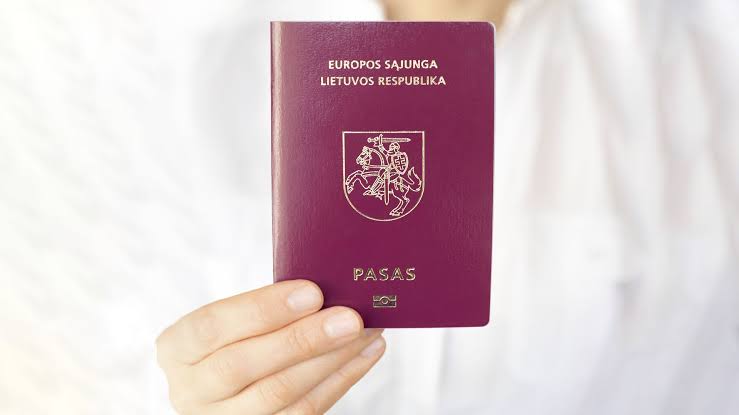
Lithuania operates on the principle that dual or multiple citizenship is allowed only in cases expressly provided for by law. The Constitution also establishes the general rule that simultaneous citizenship of Lithuania and another state is possible in the cases specified by law.
The most well-known category concerns children who acquired Lithuanian citizenship at birth. For them, the law provides the possibility to hold both Lithuanian citizenship and that of another state under certain conditions. The issue of preserving such status after reaching adulthood also needs to be checked according to specific grounds.
Specific rules apply to the descendants of persons who were citizens of Lithuania before June 15, 1940, and left Lithuania or were exiled from occupied territory. In such categories, the law may allow for the restoration of citizenship without the necessity of losing another citizenship, provided that all established conditions are met.
There are also other special cases related to acquiring another citizenship in childhood, adoption, specific historical circumstances, and special decisions. Thus, the assertion that any citizen of Lithuania can hold a second passport without limitations is incorrect.
For a person planning to naturalize, the issue of other citizenship is fundamentally important. The standard naturalization procedure requires the renunciation of another citizenship unless there is a lawful exception. Before submitting an application, it is necessary to verify the norm applicable to the specific category.
What does the Lithuanian passport give
The Lithuanian passport confirms citizenship of the Republic of Lithuania and provides access to the rights of a citizen of the European Union. This is a significantly broader status than a regular residence permit.
A citizen of Lithuania has the right to reside freely in Lithuania and enjoy the rights granted by EU legislation to citizens of member states. Subject to applicable conditions, an EU citizen may move to another EU state for work, study, entrepreneurial activities, or residence.
The right to free movement does not mean the complete absence of administrative procedures. For long-term stays in another EU state, requirements regarding registration, work, study, medical insurance, or sufficient funds may apply. However, the legal position of an EU citizen differs fundamentally from that of a citizen of a third country.
The Lithuanian passport is also a document for international travel. Lithuanian citizens enjoy opportunities for visa-free or simplified entry to many states according to international agreements and the rules of specific countries. Within the EU and the Schengen area, movement for EU citizens is particularly convenient.
Citizenship also provides political and civil rights in Lithuania, including the right to participate in elections according to the law, the right to consular protection from Lithuania abroad, and the ability to enjoy the rights of an EU citizen in cases provided for by treaties.
It is important to distinguish between a passport and the right of residence. A residence permit allows a foreigner to stay in the country under specific conditions, while citizenship creates a significantly broader complex of rights and obligations. For this reason, the procedure for acquiring citizenship is more complex than issuing a regular residence permit.
How much does it cost to issue a Lithuanian passport
In 2026, the standard state fee for a citizen's passport in Lithuania is 50 euros when issued in the standard process within a month. An expedited service within five working days costs 100 euros, and for issuance and receipt in a particularly urgent manner on the same working day - 200 euros.
These amounts pertain specifically to the issuance of the passport. If citizenship has not yet been acquired, a separate state fee for processing the citizenship application is also payable. In 2026, the examination of applications for restoration, simplified acquisition, naturalization, exceptional provision, and return of citizenship costs 120 euros.
For individuals confirming Lithuanian descent or the right to restore citizenship through a separate document, additional state fees are provided. The issuance of a certificate confirming Lithuanian descent costs 50 euros, and the certificate of the right to restore citizenship also has a prescribed state fee of 50 euros.
Apart from state fees, actual expenses may include:
- obtaining archival certificates and replacement documents;
- notarial services;
- translation of documents into Lithuanian;
- apostille or other verification of documents, if needed;
- postal and courier expenses;
- consular fees when providing services abroad;
- expenses for obtaining documents about family ties;
- legal assistance, if family history is complex or documents contradict each other.
For citizens applying for documents abroad, it should be noted that from March 1, 2026, Lithuania updated the amounts of consular fees. Therefore, the final total when contacting a consular institution may differ from the standard state fee paid in Lithuania.
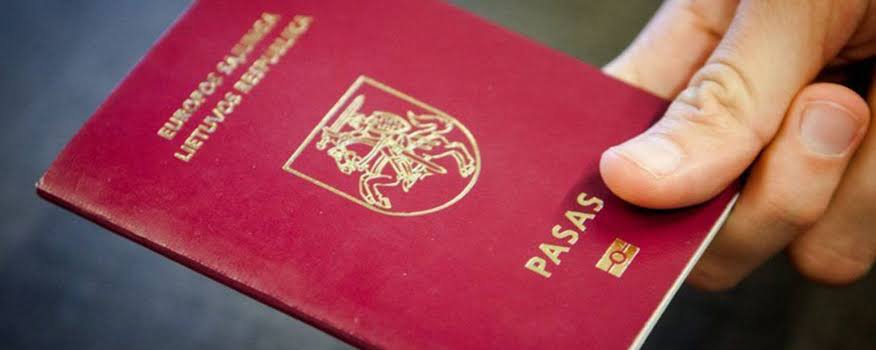
The largest expenses in complex cases often arise not from the passport itself but at the stage of confirming citizenship. If it is necessary to research several generations of the family, look for archival records in different countries, correct discrepancies in documents, and perform translations, the budget for the procedure may be significantly higher than the amount of official fees.
Therefore, before submitting documents, it is advisable first to determine the specific grounds for citizenship, compile a list of evidence, and only after that order any missing documents. This approach helps avoid spending money on certificates that do not have legal significance for the chosen procedure.
Overall, this is a good option for everyone, including Ukrainians. After all, in Lithuania, one can quickly get a job, pursue education, and migrate. All these advantages are provided by a passport issued according to all the required procedures.

Read also