Petra Pavel Reflects on Talks with Gerasimov, the Ukraine War, and Future EU-Russia Relations

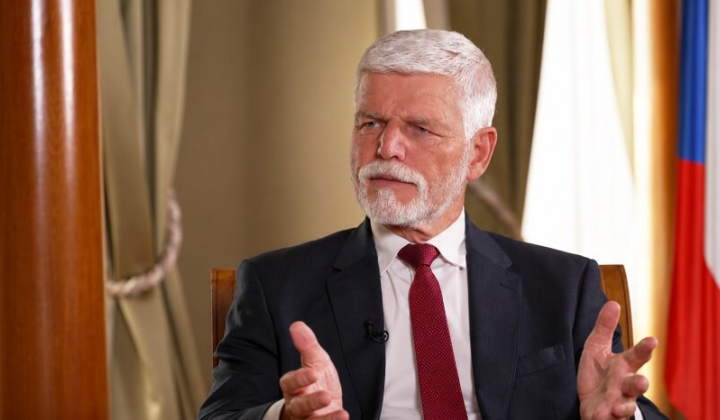
Exclusive Interview with Czech President Petra Pavel
According to ХВИЛЯ: In Prague, journalist Paul Ronzheimer sat down with Czech President Petra Pavel, a former high-ranking NATO general, to discuss crucial topics including his 2017 negotiations with Russian General Valery Gerasimov, the ongoing war in Ukraine, Donald Trump's stance on Russia, and the conditions for restoring ties between Europe and Moscow. Pavel recalled that the meeting with Gerasimov lasted two hours, followed by an additional hour over dinner. He described this experience as formative, highlighting that successful negotiations with Russians require meticulous preparation, transparency, and adherence to principles they themselves emphasize.
Pavel stressed that Russia has yet to demonstrate any genuine willingness to engage in talks. He emphasized that "Europeans must first work diligently to establish a clear and unified negotiating position." According to Pavel, Russia views the United States as its primary counterpart, while President Putin refuses to acknowledge the authority of the European Union. He also highlighted that achieving peace in Ukraine is a cornerstone for security across Europe.
Russia’s Domestic Climate and Putin’s Ambitions
Turning to Russia’s internal situation, Pavel noted that while large segments of Russian society are weary of the war, widespread protests comparable to those during the Afghan conflict have not materialized. He said, "Broad layers of the Russian population are fatigued by the war, much like citizens in any other European country." Pavel characterized the conflict in Ukraine as a war of attrition, where neither side is securing a decisive victory, likening it to a modern-day First World War.
He also reflected on the insufficient support Ukraine has received, resulting in territorial losses and thousands of casualties. Pavel argued that "we must strengthen our backing of Ukraine while maintaining pressure on Russia." He observed that "Donald Trump has likely been more open toward Russia than any European leader." Moreover, Pavel pointed out that military might alone cannot sustain Russia as a true great power.
Regarding Putin’s objectives, Pavel explained that the Russian leader aims to restore Russia’s former grandeur, reminiscent of the Soviet era. "Historically, Russian tsars believed that such a vast country could only be secured through territorial expansion," he noted. Pavel underscored Russia’s persistent claim that NATO poses a threat to its territorial integrity.
On the broader European response, Pavel called for a unified front and a clear strategic plan. He maintained that sanctions should only be eased following a ceasefire and the fulfillment of agreed terms. "First, the fighting must stop, and only then can we discuss a gradual easing of sanctions," he emphasized.
This conversation with Petra Pavel sheds light on the complex dynamics of international security and diplomacy surrounding Europe and Russia. His insights underline the importance of a cohesive European approach and sustained support for Ukraine, illustrating the need for coordinated action to address the ongoing challenges on the continent. The interview highlights the critical role of international cooperation and strategic planning in pursuing peace in Ukraine and stability throughout the region.
In light of President Pavel's insights on the complexities of negotiations with Russia, it's worth noting that a potential ceasefire was almost reached prior to the lifting of diesel sanctions by Trump. This development highlights the intricate balance of international relations and the impact of political decisions on peace efforts. For more details on this critical moment, see how it nearly changed the course of the conflict in our article on the ceasefire discussions with Russia.

Read also