Nearly 300 Ancient Sites Uncovered by Polish Archaeologists in Northern Sudan’s Meseida Region

Archaeological Survey in the Meseida Area
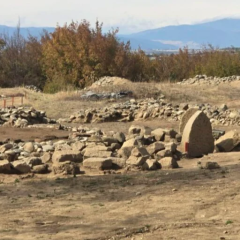
According to НВ — Техно: A team of Polish archaeologists from the University of Warsaw, Jagiellonian University, and the Polish Academy of Sciences conducted extensive research near the Third Cataract of the Nile in northern Sudan’s Meseida region. Their work documented close to 300 ancient sites in this historically rich but challenging area, notorious for its rocky river sections that hinder navigation.
Significant Discoveries and Artifacts
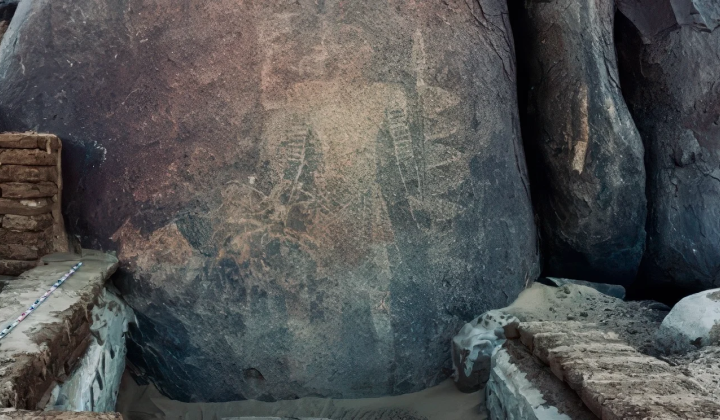
Among the remarkable finds is a granite boulder engraved with a human figure believed to represent a Nubian king, possibly dating back to the Kerma culture or the Kingdom of Kush. The site also features rock art depicting various animals, including:
- lion
- rhinoceros
- elephant
- livestock
Researchers documented remains of ancient dwellings and stone tool production sites, indicating that this area was inhabited for an extended period.
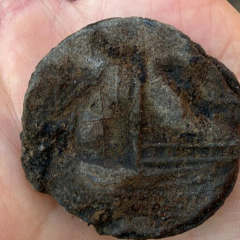
Dating to around the 7th century CE, a church was constructed near the boulder, surrounded by engraved crosses and boat images likely left by pilgrims. Pottery fragments found here range from the late 5th to the 7th century CE, representing both the early Nubian kingdom of Nobadia and the early phase of the Makuria kingdom, whose capital was Dongola. The earliest artifacts identified at this location date back to the Mesolithic era, spanning roughly 12,000 to 8,200 years ago.
The study also uncovered materials from the Late Neolithic and pre-Kerma periods (circa 3000–2500 BCE). However, evidence from the time between the Kerma culture and the decline of the Meroitic kingdom (approximately 1700 BCE to the 4th century CE) was less abundant. These findings were published in the academic journal Antiquity, highlighting their importance for deepening our understanding of Nubian history and the wider region.
These discoveries provide valuable insights into the prolonged habitation and cultural diversity of Nubia. Through petroglyphs, ceramics, and architectural remnants, researchers can gain fresh perspectives on the daily life, religious customs, and economic networks of the ancient civilizations that once thrived in this part of Africa.
The recent discoveries in northern Sudan echo similar archaeological efforts across North Africa, where significant structures have also been unearthed. For instance, in Morocco, researchers recently revealed ancient defensive walls dating back 4000 years, shedding light on the region's rich historical tapestry beyond the Nile. Such findings contribute to a broader understanding of ancient civilizations in Africa.

Read also