How One Person Breaking Rules Sparks Others—Especially Among Political Allies, Study Shows

Can One Rule-Breaker Encourage Many? Researchers Reveal Surprising Patterns in Human Behavior
According to НВ — Техно: Published: October 22, 19:31
A study from the University of Amsterdam has uncovered that when a single individual violates rules, it often triggers others to follow suit-particularly within groups sharing the same political beliefs. Conducted just before the 2024 U.S. presidential election, the experiment involved 750 participants evenly split between Republicans and Democrats. Findings indicate that negative behaviors spread faster and more powerfully than positive ones, and minor rule-breaking can escalate into more serious offenses.
Details of the Experiment and Key Findings
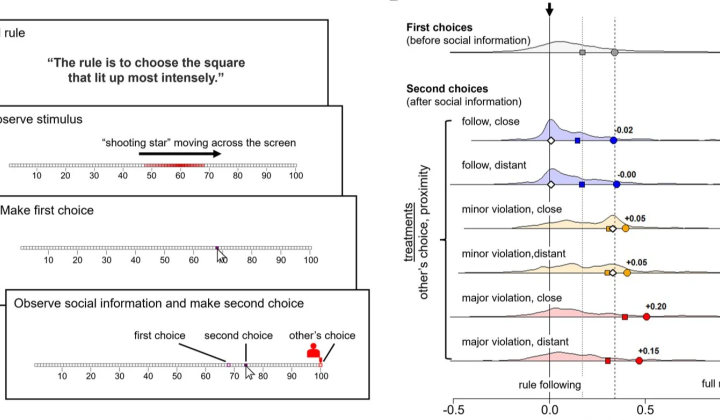
Participants watched an animation of a falling star on a screen divided into 100 squares. The task required pressing the brightest square on the left or center to earn monetary rewards. Pressing squares on the right was forbidden, despite offering the highest payout. Initially, 23% of participants chose to break the rules to gain more money.
After observing others’ actions, rule-breaking increased noticeably. This effect was strongest when the rule-breaker belonged to the participant’s own political party. Conversely, witnessing ethical behavior had little impact on participants’ choices. Approximately 4% who saw small infractions progressed to committing more serious violations.
Computer simulations supported the idea that individual breaches can evolve into widespread group misconduct. Researchers note that while rule-breaking can sometimes foster creativity, learning, and innovation, understanding its social dynamics is crucial-especially in the context of elections and civic behavior. Lucas Molleman, lead researcher, emphasizes this insight as vital for grasping political influence and voter conduct.
The study was published in the journal Proceedings of the Royal Society B: Biological Sciences. Its implications extend to election campaigns, where a single person’s actions can shift group dynamics and shape collective trends. This highlights the powerful role social influence plays during politically charged times.
These findings stress the importance of recognizing social mechanisms that impact electoral processes and citizen behavior within society.
In highly polarized political environments, even minor rule violations may produce unpredictable ripple effects on group conduct. This research lays groundwork for future studies in social psychology and political science aiming to better understand and address these complex influences.

Read also