Hungarian Prime Minister Peter Madar Seeks Return of Turul Sculpture to Palanok Castle in Mukachevo

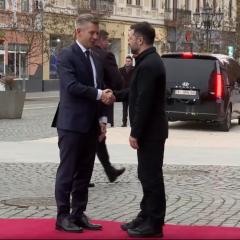
Hungarian Prime Minister’s Visit to Ukraine
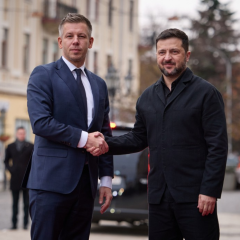
According to Рубрика — Політика: On November 24, 2026, Hungarian Prime Minister Peter Madar met with Ukrainian President Volodymyr Zelensky to discuss several key issues, including the hoped-for restoration of the Turul sculpture at Mukachevo’s historic Palanok Castle. The statue had been replaced by a Ukrainian trident emblem in 2022 following a decision by the Mukachevo City Council.
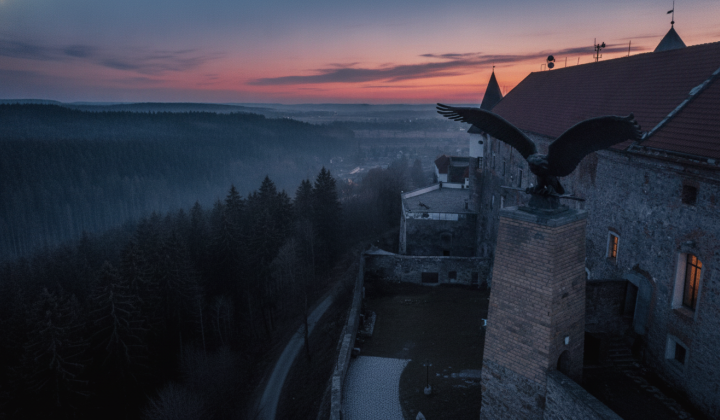
The Turul Sculpture’s History
The original Turul statue was installed on October 23, 1896, commemorating the 1,000-year anniversary of the arrival of Hungarian tribes to the Carpathian Basin. Created by Hungarian sculptor Gyula Bezerédi, the bird held a sword in its beak and featured wingspan measuring approximately five meters, perched atop a 33-meter memorial column. On December 17, 1924, the statue was removed from its prominent position and relocated to the castle’s inner courtyard.
During Soviet rule, the original monument was destroyed: it was cut apart and melted down to produce five-pointed stars. In 2008, a replica was installed in its place, crafted by Transcarpathian artist Mykhailo Belen. The restoration was funded by Imre Pak, a Mukachevo-born American businessman of Hungarian descent. Together, the Turul stood at Palanok Castle for a total of 42 years-28 years before removal and 14 years after the replica’s return.
At a press conference in Berehove, Madar emphasized that reinstating the Turul would be a significant symbolic gesture, stating,
“It doesn’t cost much, but it carries great meaning.”
He also highlighted the progress made in negotiations with Ukraine concerning ten issues related to the linguistic, cultural, and educational rights of the Hungarian minority in the country. Hungary has extended humanitarian aid to the Zakarpattia region, including medical equipment, medicines, generators, and vehicles.
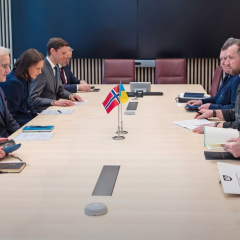
During their talks, Madar and Zelensky explored ways to deepen bilateral cooperation in energy, trade, humanitarian aid, and infrastructure. They agreed to address the supply of gas and diesel fuel to Ukraine, expand Hungarian companies’ use of Ukrainian gas storage facilities, and establish direct rail connections between the two countries. Prior to his Ukraine trip, Madar described Russia as an aggressor and Ukraine as a victim of war in the Hungarian Parliament, expressing solidarity with the people of Zakarpattia.
This visit underscores a renewed dialogue between Ukraine and Hungary, with the Turul’s potential return symbolizing a step forward in cultural collaboration and minority rights support. At the same time, ongoing humanitarian and energy partnerships highlight the strategic importance of cooperation amid current geopolitical challenges.
In light of these discussions, it is essential to recognize Hungary's ongoing commitment to supporting the Hungarian minority in Ukraine. Recently, the country has not only delivered humanitarian assistance to the Zakarpattia region but also established the Ilona Zrínyi Fund aimed at enhancing the welfare of the Hungarian community. This initiative underscores the significance of cultural and educational rights, further highlighting the importance of the Turul sculpture's restoration. For more details on Hungary's humanitarian efforts, visit Hungary's humanitarian efforts in Zakarpattia.

Read also