Russian Hand-to-Hand Combat Champion Killed by Ukrainian Defense Forces

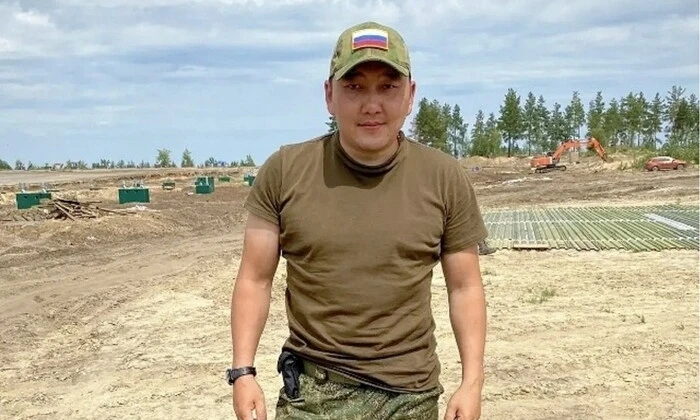
Elimination of Russian Occupier Chingiz Dodiev
According to Главком: Ukrainian defense forces have taken out Russian occupier Chingiz Dodiev, who joined the Russian invasion army in July 2023. Dodiev was killed on June 3, 2026. Born on December 1, 1993, in the village of Baragkhan, Kurumkansky District, Republic of Buryatia, Russia, he had a notable sports background.
Chingiz Dodiev's Athletic Achievements
Dodiev was a Master of Sports in hand-to-hand combat and a Candidate for Master of Sports in army hand-to-hand combat and universal karate Ukado/Kempo. He also held a black belt, 2nd dan, in self-defense. His accomplishments included:
- three-time champion of the Russian Cup in universal karate Ukado/Kempo;
- multiple-time champion of Saint Petersburg and Leningrad Oblast in hand-to-hand combat;
- two-time champion of the Northwest region in hand-to-hand combat among law enforcement agencies;
- three-time medalist of Zabaykalsky Krai in army hand-to-hand combat;
- medalist of the Republic of Buryatia in combat sambo.
Before enlisting, Dodiev worked as a children's sports coach and also performed as a stuntman in Russian films and TV series. He leaves behind a wife and two daughters.
Dodiev is not the only serviceman to have died in the conflict. Ukrainian forces also eliminated 46-year-old Georgy Kamalov, who played for the Era Vladivostok team from 2003 to 2011 and led the club Anri to the level of the Russian Cup.
“He was up to his ears in debt. That's why he signed the contract. He paid it off after receiving the payout. But then he had to go fight. And die. At the age of 46. Such is the grim reality. While some are waiting for the Champions League draw and the FIFA World Cup, a football coach from the Russian hinterland went and got himself killed.”
Dmitry Nizovtsev
These events highlight the complexity and tragedy of the situation in the region, where military conflicts directly impact many lives. The war continues to claim not only soldiers but also individuals who could have made positive contributions to their communities. The stories of Dodiev and Kamalov illustrate how personal circumstances can drive participation in conflict, underscoring the challenging socio-economic backdrop against which these events unfold.

Read also