Essential Insights for HR Leaders: Mastering Strategy and Business Influence

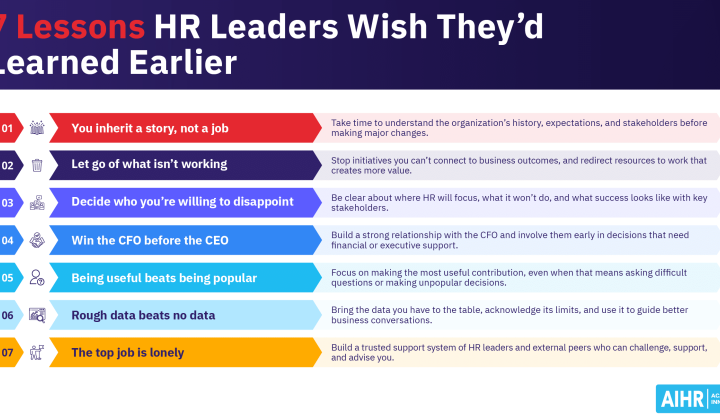
Seven Vital Lessons for Driving Effective HR Leadership
According to AIHR: This article distills seven crucial lessons for impactful HR leadership, drawing from over 50 episodes of the AIHR podcast series HR Dialogues. These discussions explore the evolving challenges within HR and strategic ways to develop the HR function. Historically, senior HR leaders focused mainly on personnel administration and had minimal involvement in shaping business strategy. However, today many Chief Human Resources Officers (CHROs) report directly to CEOs and actively participate in critical business decisions. This shift in HR leadership's role is particularly significant amid the rising influence of artificial intelligence in the workplace.
Core Principles for Effective HR Leadership
The following key principles emerge as essential for HR leaders aiming to elevate their impact:
- Respect Organizational Legacy: New leaders must recognize that they inherit the organization's history, not just a title. Understanding existing traditions and culture is fundamental.
- Abandon Ineffective Initiatives: Leaders should rigorously evaluate programs and discontinue those lacking measurable results.
Kaushik Srinivasan advises: “Eliminate at least one program each quarter that cannot demonstrate value. Retaining unjustifiable initiatives undermines the HR function’s credibility.”
- Embrace Tough Decisions: HR leaders need to accept that unpopular choices are sometimes necessary.
Claire Bonenfant emphasizes: “You won’t please everyone, and your role isn’t to make friends.”
- Win Over the CFO Before the CEO: Since financial understanding is crucial for influencing broader business outcomes.
- Prioritize Value Over Popularity: Courage to speak the language of business is more important than seeking approval.
- Leverage Data Wisely: "Having imperfect data is better than having none." Loes de Boer highlights: “Even limited data can be powerful if you ask for the right insights.”
- Build a Supportive Network: Developing strong relationships and listening carefully to the organization are key before taking action.
Ultimately, effective HR leadership demands adaptability to change, strategic vision, and readiness to make difficult decisions. These lessons empower HR professionals to define their role clearly, secure their mandate, set boundaries, and cultivate a collaborative community-fostering the growth of HR as a vital strategic partner. This evolution underlines HR’s increasing importance in driving organizational success in today’s dynamic business landscape.

Read also