As Global Power Shifts, Nations Must Rely on Strength Over International Law to Survive

The Dawn of a New International Era
According to ХВИЛЯ: The international landscape is undergoing a profound transformation where traditional legal frameworks and established norms are losing their influence, giving way to the dominance of raw power. Countries that once depended on U.S. security guarantees are now compelled to develop self-reliance. In his essay for Foreign Policy, Hal Brands, a professor of global affairs at Johns Hopkins University’s School of Advanced International Studies and a senior fellow at the American Enterprise Institute, explores this shift. He highlights the unraveling of the old world order, the evolving role of the United States, and the emerging survival tactics states must adopt.
Brands emphasizes that "we live in a world governed by power, strength, and authority," pointing out that these "iron laws of the world" have existed since humanity’s earliest days. He warns that nations relying solely on their alliance with Washington risk severe disappointment, potentially with fatal consequences. According to Brands, those who place their faith in international law, multilateral institutions, or moral principles may find themselves vulnerable to more powerful adversaries.
How Countries Are Adjusting
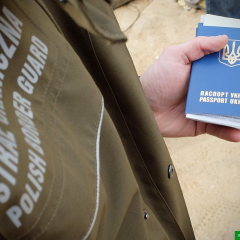
Poland and Japan serve as prime examples of nations adapting to this new reality. Poland is significantly boosting its defense capabilities and forging coalitions with other frontline European states. Meanwhile, Japan is establishing quasi-alliances with Australia and the Philippines, while strengthening defense partnerships extending from India to Vietnam. These efforts demonstrate that:
- clinging to past strategies is ineffective;
- self-reliance is a pragmatic necessity.
Brands also critiques the concept of a 'middle powers moment,' advocated by Canadian Prime Minister Mark Carney. He argues that the rise of Trump is merely a symptom of deeper global changes, asserting that regardless of who occupies the U.S. presidency in 2028 or 2032, a return to a fundamentally more cooperative international environment is unlikely.
"Our world risks becoming a gangster’s paradise, where rules matter far less than they once did, and brute force commands much more,"
Brands cautions.
This evolving reality demands that nations adjust to shifting rules of engagement where power increasingly dictates outcomes in international relations. Brands stresses that principles themselves are a source of strength, and that if Washington forgets this, it will pay a steep price.
The changes Brands describes underscore the need for countries to rethink their security and diplomatic strategies. With growing unpredictability and the declining influence of traditional international law mechanisms, states-especially those previously reliant on major powers-must explore new avenues to protect their interests. This shift may lead to the creation of new alliances and a significant rebalancing of global power.

Read also