Golden Greek Inscription Honoring Jupiter Dolichenus Discovered in Georgian Fortress; Donor Identified as Crimean Merchant Frasimed

Discovery at the Apsaros Fortress
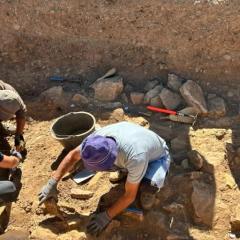
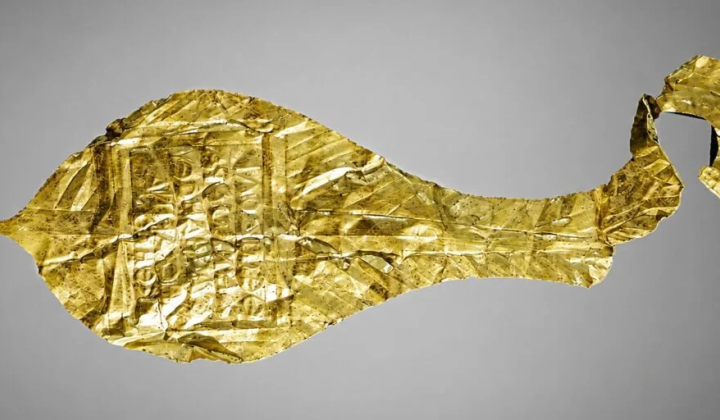
According to НВ — Техно: In 2026, archaeologists uncovered a gold plaque engraved with a Greek dedication to the god Jupiter Dolichenus within the Roman fortress of Apsaros, near Batumi, Georgia. This artifact reveals that the offering was made by Frasimed, a wealthy merchant from Crimea who supplied Roman legions almost two millennia ago. The find sheds new light on the commercial networks and military logistics of Rome in the Black Sea region.
The thin gold leaf plaque provides valuable insight into the cult of Jupiter Dolichenus, a deity originating from Doliche in present-day southeastern Turkey, widely revered by Roman soldiers. Historical records from Chersonesus in Crimea identify Frasimed as a privileged trader exempt from customs duties on maritime commerce. Archaeologist Radoslaw Karasevich-Shchipiorski emphasizes,
“Frasimed, known from Chersonesus, was a prosperous merchant involved in import and export.”
Significance of the Research
Scholars from the University of Warsaw and their Georgian colleagues propose that Frasimed may have had ties to the Fifth Macedonian Legion stationed at Apsaros during the 2nd century AD, a connection supported by stamped roof tiles found on-site. The presence of Roman military units linked to the Fifth Macedonian Legion in the Black Sea area highlights the strategic importance of this discovery for understanding Rome's regional influence.
Moreover, aerial photography surveys conducted in the 1960s and 1970s revealed 396 previously unknown Roman forts across Syria and Iraq. These discoveries have transformed historians' perspectives on the Roman frontier in these regions. The findings were published in the journal Antiquity, underscoring their academic significance and impact on archaeological scholarship.
The gold plaque from Apsaros, together with the fort findings in Syria and Iraq, illustrates the complexity and reach of Roman commercial and military networks, reflecting their efforts to dominate crucial trade routes in both the Black Sea and the Near East. These studies contribute essential perspectives for comprehending the extent of Roman control and interaction in these areas.
This remarkable find not only testifies to Rome's economic and cultural influence around the Black Sea but also opens new avenues for exploring ancient history. It reveals the intertwined nature of commerce and religious practices important to both soldiers and civilians of the era. Understanding these elements is vital for reconstructing the historical context of Roman expansion and its enduring effects on modern nations that once formed part of the empire.
Similar insights into the Roman trade networks have emerged from recent findings in Corsica, where a 4th-century rock-cut dwelling was discovered, revealing the island's role as a commercial outpost. These discoveries collectively enhance our understanding of Roman economic interactions across different regions, including the strategic Black Sea area highlighted by the recent Apsaros find.

Read also