Supreme Court’s Grand Chamber Begins Hearing Poroshenko’s Appeal Against NSDC Sanctions

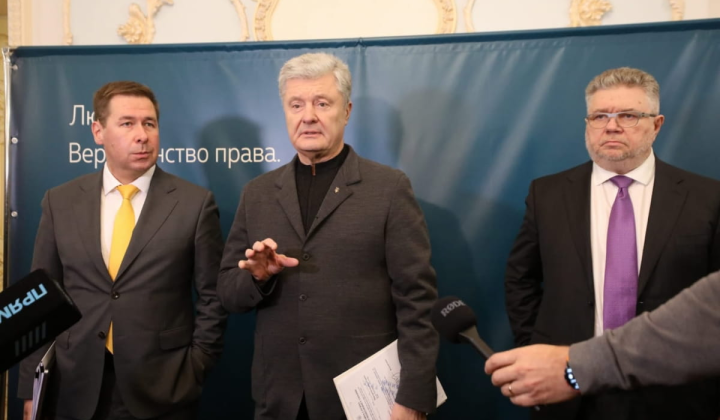
Supreme Court Reviews Sanctions Imposed on Poroshenko
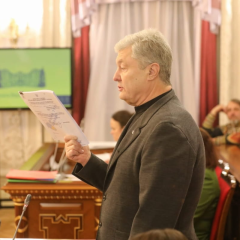
According to 5 канал: The Grand Chamber of Ukraine’s Supreme Court has commenced proceedings on the appeal filed by Petro Poroshenko, the country's fifth president, challenging the sanctions imposed on him by the National Security and Defense Council (NSDC). Poroshenko and his legal team dispute the legality and justification of these measures, arguing that the sanctions were introduced without a judicial hearing. Poroshenko highlighted that the case has been pending for 22 months and criticized the lack of clear explanations for the sanctions.
During the session, Poroshenko’s representatives revealed that they obtained access to National Anti-Corruption Bureau (NABU) recordings allegedly showing pressure exerted on Supreme Court judges by Iryna Mudra, the Deputy Head of the President’s Office. Poroshenko pointed to potential interference from the Presidential Administration in delaying the appeal process. He also emphasized that the sanctions fail to meet European legal standards, referencing resolutions from the European Parliament and guidelines from the European Commission.
Lawmakers’ Criticism and Courtroom Debates
Member of Parliament Rostyslav Pavlenko, representing the European Solidarity party, harshly criticized the arguments presented by representatives of President Volodymyr Zelensky during the hearing. Pavlenko described their reasoning as illogical, noting that the defense claimed no further evidence was necessary to justify the sanctions and that retroactive changes to the decree were permissible. Judges questioned the purpose of the sanctions and the grounds for their potential annulment throughout the session.
Several Supreme Court judges expressed individual opinions concerning the legality of the sanctions. Judge Mykhailo Smokovych stated that the sanctions were enacted with serious violations of the law and beyond the authority of the responsible state bodies, thus calling for their cancellation. Presiding Judge Olesya Radyshevska also voiced a dissenting view, noting the sanctions lacked substantive grounds and were based solely on a single letter from the State Financial Monitoring Service.
Poroshenko drew parallels with a 2004 Supreme Court ruling related to presidential election results, warning that ignoring this precedent could allow anyone to arbitrarily remove names from ballots, which he described as 'Putinization of Ukraine.'
After a delay of one and a half years, the Supreme Court announced its decision to reject Poroshenko’s lawsuit.
This ongoing legal battle over sanctions against Poroshenko continues to attract significant public attention and could have far-reaching consequences for Ukraine’s political landscape. The case holds importance not only for Poroshenko personally but also for establishing limits on the influence of government bodies over the judiciary and shaping Ukraine’s legal framework amid current challenges. The dispute highlights the growing tensions between political elites and the justice system, potentially affecting the country’s future trajectory.
In light of the ongoing legal battle, concerns have arisen regarding potential government influence that may disrupt the Supreme Court’s proceedings on Poroshenko’s appeal. Reports indicate that pressures could be aimed at undermining the integrity of the upcoming hearings, scheduled for the scheduled session on November 24, 2026. This situation adds another layer of complexity to an already contentious case, raising questions about judicial independence.

Read also