June 21 Marks the Year’s Longest Day for Ukrainians

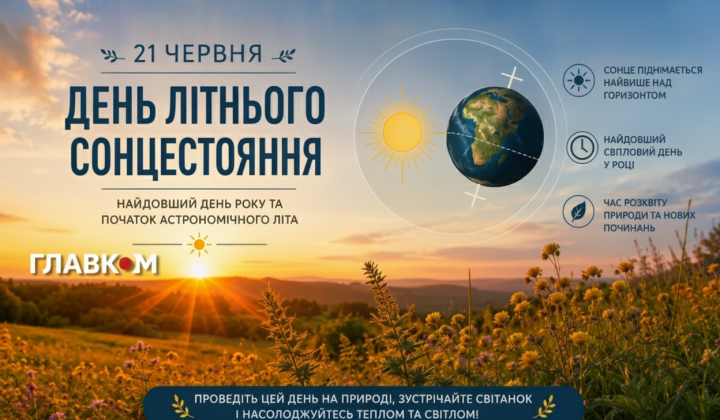
Summer Solstice in Ukraine
According to Главком: On June 21, Ukraine will experience the summer solstice-a key astronomical event when the Sun reaches its highest point above the horizon. This results in the longest daylight period and the shortest night of the year, after which daylight hours will gradually decrease. In 2026, the summer solstice will also fall on June 21. Across Ukraine, daylight on this day will last nearly 16 hours. Following the solstice, daylight will shrink by several dozen seconds each day, with the reduction increasing to several minutes as autumn approaches.
Cultural Significance of the Solstice
The summer solstice marks the beginning of astronomical summer in the Northern Hemisphere and astronomical winter in the Southern Hemisphere. Peak temperatures typically occur in July or August. In Slavic tradition, the festival of Kupala was celebrated, which later merged with the Feast of the Nativity of John the Baptist, known as Ivan Kupala. In various regions of Ukraine, people held folk festivities, wove wreaths, lit bonfires, sang songs, and greeted the sunrise.
Around the world, the summer solstice is observed in diverse ways. Thousands gather annually at Stonehenge in the United Kingdom to welcome the dawn. Scandinavian countries celebrate Midsummer, Latvia marks Jāņi (Līgo), and Finland observes Juhannus. Notably, within the Arctic Circle, the Sun may not set at all, while in the Southern Hemisphere, June 21 brings the longest night of the year.
Astronomers emphasize that the solstice has no mystical influence on human life. However, many folk beliefs in Ukraine are tied to this day. For example:
- A clear dawn is considered a sign of a bountiful harvest;
- Heavy morning dew indicates a good summer;
- Strong winds suggest changing weather;
- Rain on this day is seen as a sign of a wet summer.
On the summer solstice, people are generally advised to avoid arguments, offending loved ones, resolving conflicts, or wasting time indoors. Cutting down trees or harming plants is also discouraged. This day is viewed as an opportunity for positive actions, pleasant gatherings, and celebrating nature.
The summer solstice is not only an astronomical event but also a cultural phenomenon that unites people in celebration and respect for nature, inspiring new beginnings.
This event holds great significance not just from an astronomical perspective but also as an important part of the cultural heritage of many nations. Observed in Ukraine and other countries, the summer solstice fosters traditions linked to nature and seasonal changes, reflecting humanity's deep connection to the environment. This celebration can serve as a reminder of the importance of preserving natural resources and respecting ecology-a message especially relevant in the context of today’s global environmental challenges.

Read also