Ancient Peruvian Burial Reveals Infant with Rare Cyclopia Condition from Over 1600 Years Ago

Discovery of an Infant with Cyclopia in Peru
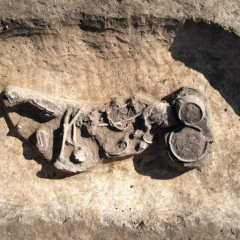
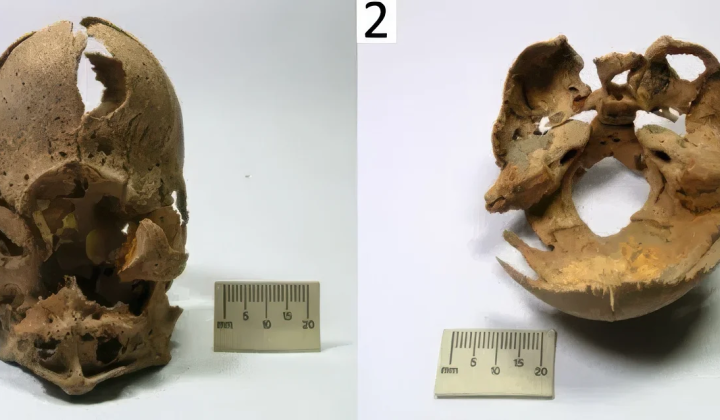
According to НВ — Техно: Archaeologists in Peru have uncovered the remains of a young girl who lived approximately 1600 years ago, exhibiting a rare developmental disorder called cyclopia. This represents the first documented archaeological case of an infant affected by this anomaly, which is linked to trisomy 13, also known as Patau syndrome. The remains were found at the Huaringa site in the Palpa Valley, inside a ceramic urn dated to the Middle Nasca culture period, roughly between 325 and 440 CE.
The urn contained two sets of remains: the girl with cyclopia and another infant girl without any developmental abnormalities. Cyclopia is characterized by a single central eye socket, resulting from trisomy 13. DNA analysis confirmed that the two infants had different mothers. Both children were buried simultaneously, with the infant affected by cyclopia placed at the bottom of the urn and the other on top. The burial site was a typical cemetery without notable grave offerings.
Significance of the Research
Bioarchaeologist Sean Halcrow noted that determining the lifespan of the girl with cyclopia was not possible, but estimates suggest she survived only a few weeks or months. Cyclopia is the most severe form of holoprosencephaly, a condition where the forebrain fails to divide into two hemispheres. Infants with this condition are typically stillborn or pass away within 10 to 12 hours after birth. The occurrence of cyclopia is estimated at about 1 in 100,000 births, although medical literature reports ranges from 1 in 13,000 to 1 in 20,000 newborns.
Interestingly, Lars Feren-Schmitz remarked,
“She was neither 'excluded' because of her condition nor treated in any 'special' way.”
This finding sheds light on how ancient societies may have perceived individuals with severe developmental disorders. The study was published in the journal PNAS.
The discovery of this infant with cyclopia highlights the valuable role of archaeological research in understanding genetic disorders and their social implications in ancient cultures. It offers fresh perspectives on medical knowledge and societal attitudes toward those with congenital anomalies in the distant past. Additionally, this research emphasizes how studying ancient burials can deepen our grasp of social and cultural dynamics in historical communities.

Read also