Nearly 100 Stone Hand Axes Unearthed in Kalahari Desert Shed Light on Acheulean Heritage

Ancient Ancestors' Weaponry
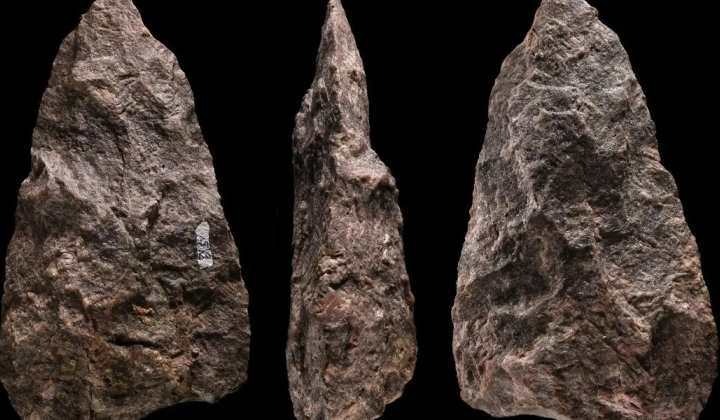
According to НВ — Техно: Archaeologists working in the Kalahari Desert's Okwa Valley have uncovered close to 100 stone hand axes along with evidence of their production. This remarkable find provides fresh insights into the early inhabitants of southern Africa and the Acheulean technological tradition, which spanned from roughly 1.7 million to 200,000 years ago. During the latest excavation season, about 40 hand axes were discovered concentrated in a single location, indicating extensive prehistoric human activity in the area.
The Acheulean hand axes found in Okwa Valley exhibit a characteristic design formed by flaking both sides of a stone core. Professor Miroslav Masojć explains that:
"The Acheulean tradition originated around 1.7 million years ago and persisted until approximately 200,000 years ago. Its defining feature is the production of large stone tools, specifically hand axes."
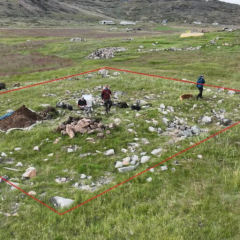
This discovery highlights the significance of Okwa Valley for understanding ancient technological developments. The region's dense shrubbery poses challenges for archaeological exploration. Professor Masojć adds:
"Okwa Valley is an exceptionally difficult area to study. Thick vegetation limits access to many sites and hampers systematic archaeological research."
Historically, the Okwa Valley was shaped by a complex network of rivers and lakes, factors that likely influenced the lifestyle of early human populations.
Plans for Future Research
Upcoming investigations will focus on:
- Detailed technological analysis of the tools
- Establishing precise chronological frameworks
- Reconstructing past environmental conditions
These findings not only enrich our understanding of Acheulean tool-making but may also offer clues about the early use of bows and arrows. While Homo sapiens first appeared in Western Europe around 40,000 years ago, ballistic studies suggest that bows and arrows could have been employed as early as the Upper Paleolithic. Organic materials like bow wood and strings, however, have long decayed, leaving only stone, horn, and ivory arrowheads behind.
Overall, the Okwa Valley discoveries contribute significantly to our knowledge of early human technological achievements and adaptations in southern Africa. They emphasize the ingenuity of prehistoric communities and have the potential to reshape perspectives on their lifestyles, ecosystems, and social structures. Continued research in this challenging environment promises to reveal how early humans adjusted to environmental changes and what tools enabled their survival. These artifacts serve as a vital key to understanding humanity's broader evolutionary history.
This recent discovery in the Kalahari Desert is not the only significant archaeological find that sheds light on ancient human history. In another remarkable excavation, over 2000 mammoth bones were unearthed in Germany, dating back 30,000 years. These findings provide a broader context for understanding prehistoric human interactions with their environment and the tools they used. To explore this fascinating connection further, read about the discovery of mammoth remains in Breitenbach.

Read also