New Freshwater Mosasaur Species Garamaudo bauciensis Discovered from 85 Million Years Ago

Introducing a Newly Identified Mosasaur Species
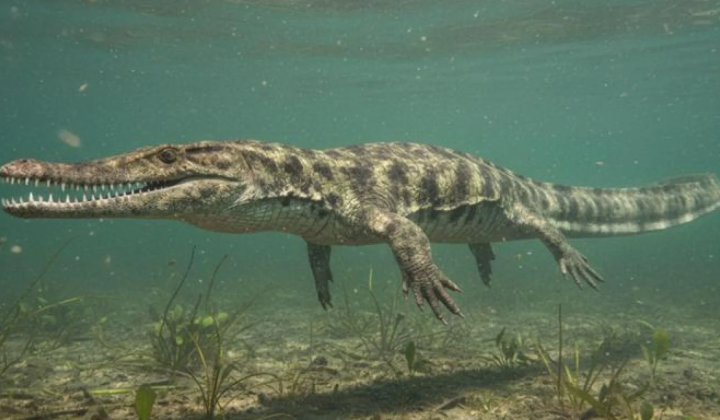
According to НВ — Техно: A team of researchers has unveiled a previously unknown mosasaur species named Garamaudo bauciensis, which inhabited a freshwater lake in what is now southeastern France around 85 million years ago. This discovery challenges the long-held belief that mosasaurs were exclusively marine creatures. Measuring approximately 2.5 meters in length, Garamaudo bauciensis was significantly smaller than its ocean-dwelling relatives, which could grow up to 15 meters long. Fossil remains, including parts of the lower jaw, vertebrae, ribs, pelvis, and humerus, were uncovered at the Bouc-Bel-Air – Susquier site and represent at least four individual animals.
Environment and Anatomical Adaptations
Evidence suggests that Garamaudo bauciensis lived in a moderately eutrophic freshwater lake, where carbonate deposits formed due to periodic flooding and drought conditions. The limbs of this species appear adapted for terrestrial locomotion, with a pelvis firmly connected to the spine. Its long, straight ribs combined with a narrow, laterally flattened body strongly indicate specialization for a freshwater habitat.
“The Bouc-Bel-Air – Susquier site represents a freshwater ecosystem, likely a moderately eutrophic lake producing carbonates and influenced intermittently by floods and low water levels within the continental deposits of the Aix-en-Provence basin,” explain Natalie Bardet and Alexandra Ussei.
CT scans revealed thick, dense bone structure in the vertebrae, ribs, and humerus of Garamaudo bauciensis, suggesting it was capable of shallow diving and may have used ambush tactics for hunting. The site also yielded fossils of freshwater mussels, snails, turtles, crocodiles, and fish, illustrating a rich and diverse ecosystem in which this mosasaur was likely a top predator.
The species name Garamaudo bauciensis derives from the Provençal phrase "Gara au maudo," meaning "Beware the cursed one." This mythical serpent was first mentioned in Frédéric Mistral’s 1859 poem Mirèio. This find adds to our understanding of mosasaurs, complementing the earlier discovery of Halisaurus auriculatus, a species that lived about 70 million years ago in Egypt. Mosasaurs are extinct marine reptiles from the Cretaceous period, and the new evidence from Garamaudo bauciensis highlights the complexity of their evolutionary history.
“Although these are small fragments that no longer retain their full anatomical configuration, the fact that they were found in a freshwater environment proves that mosasaur evolution was far more intricate and diverse than previously thought,” notes Alexandra Ussei.
The identification of Garamaudo bauciensis marks a pivotal advancement in paleontology, overturning traditional views of mosasaurs as purely oceanic predators. It opens fresh avenues to explore how reptiles evolved to thrive in varied habitats. Studying the ecosystem inhabited by this species may shed light on how environmental shifts influenced species development over geological time. As such, these findings offer valuable insights into past ecological changes and adaptive strategies among ancient reptiles.
In addition to this remarkable find, another significant discovery has been made in Egypt, where researchers identified a new mosasaur species, showcasing the diversity of these ancient reptiles. This recently uncovered species highlights the evolutionary adaptations of mosasaurs across different environments, further enriching our understanding of their ecological roles 70 million years ago.

Read also