How to Secure a Deferment from Mobilization to Care for an Ill Parent-in-Law: Steps and Required Documentation

Steps to Obtain a Deferment from Mobilization
According to Radiotrek — Світ: In Ukraine, the process for obtaining a postponement from military mobilization to provide care for an ailing mother-in-law or father-in-law is governed by the Law "On Mobilization Preparation and Mobilization." Under paragraph 13, part 1, article 23 of this law, eligible individuals may apply for a deferment if they submit the necessary paperwork and follow the established procedures.
To initiate the deferment request, applicants must gather original documents proving their right to care for the sick relative. The required documents include:
- Applicant’s passport and taxpayer identification number (RNOCPP);
- Passport and taxpayer ID of the applicant’s spouse;
- Marriage certificate;
- Passport and taxpayer ID of the mother-in-law or father-in-law;
- Medical certification from the Medical-Social Expert Commission (MSEC) or an expert opinion confirming disability of group I or II, or a relevant medical committee certificate;
- Notarized statement from the mother-in-law or father-in-law, or documentation from the Social Protection Department;
- Proof that no other caregivers are available, such as disability certificates, pension IDs, and civil registry extracts.
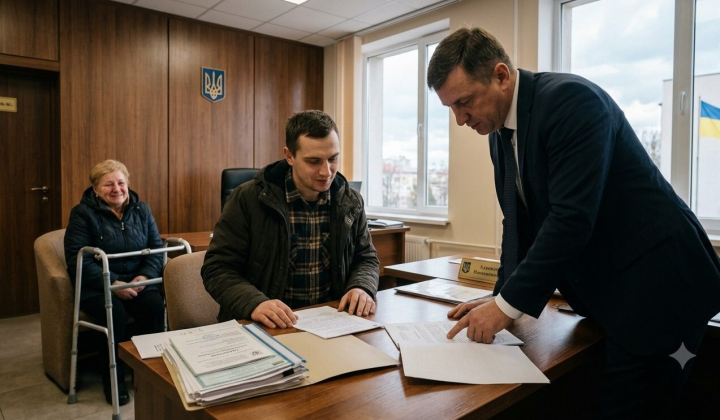
Once all documents are collected, they must be submitted to the Administrative Service Center (CNAP). The commission at the Territorial Recruitment Center (TCC) is required to review the application and attached documents within seven days from receipt; if additional information is requested from government bodies, the commission must complete its review within one day of receiving that information. According to official Procedure No. 560,
"the commission examines the submitted application and supporting documents and assesses the legality of the grounds for granting the deferment."
The commission’s decision is documented in a protocol, and the applicant is informed of the outcome by phone, email, or mail no later than the day after the decision is made. If approved, the individual receives a certificate based on Appendix 6. In case of denial, a written notification stating the reasons, following Appendix 7, is sent. Notably, until the commission makes its decision, the individual is exempt from conscription during mobilization or special periods.
Social Considerations in Deferment Processing
It is important to note that pensioners are not recognized as eligible caregivers under current legal interpretations, including the Supreme Court’s position. The pension certificate of the mother-in-law or father-in-law serves as evidence that they cannot provide care themselves. Additionally, Administrative Service Centers cannot refuse to accept original documents, even if the submission is incomplete or contains errors.
Overall, the procedure for obtaining a deferment from mobilization to care for an ill parent-in-law is strictly regulated and demands adherence to specific legal requirements and documentation standards.
This deferment process ensures legal protection for those fulfilling vital social responsibilities by caring for sick family members while balancing the state’s military mobilization needs. For those subject to conscription, understanding and complying with these steps is crucial to prevent adverse consequences that could disrupt family care obligations.

Read also