War 4.0. Strategy. Tactics. Scaling

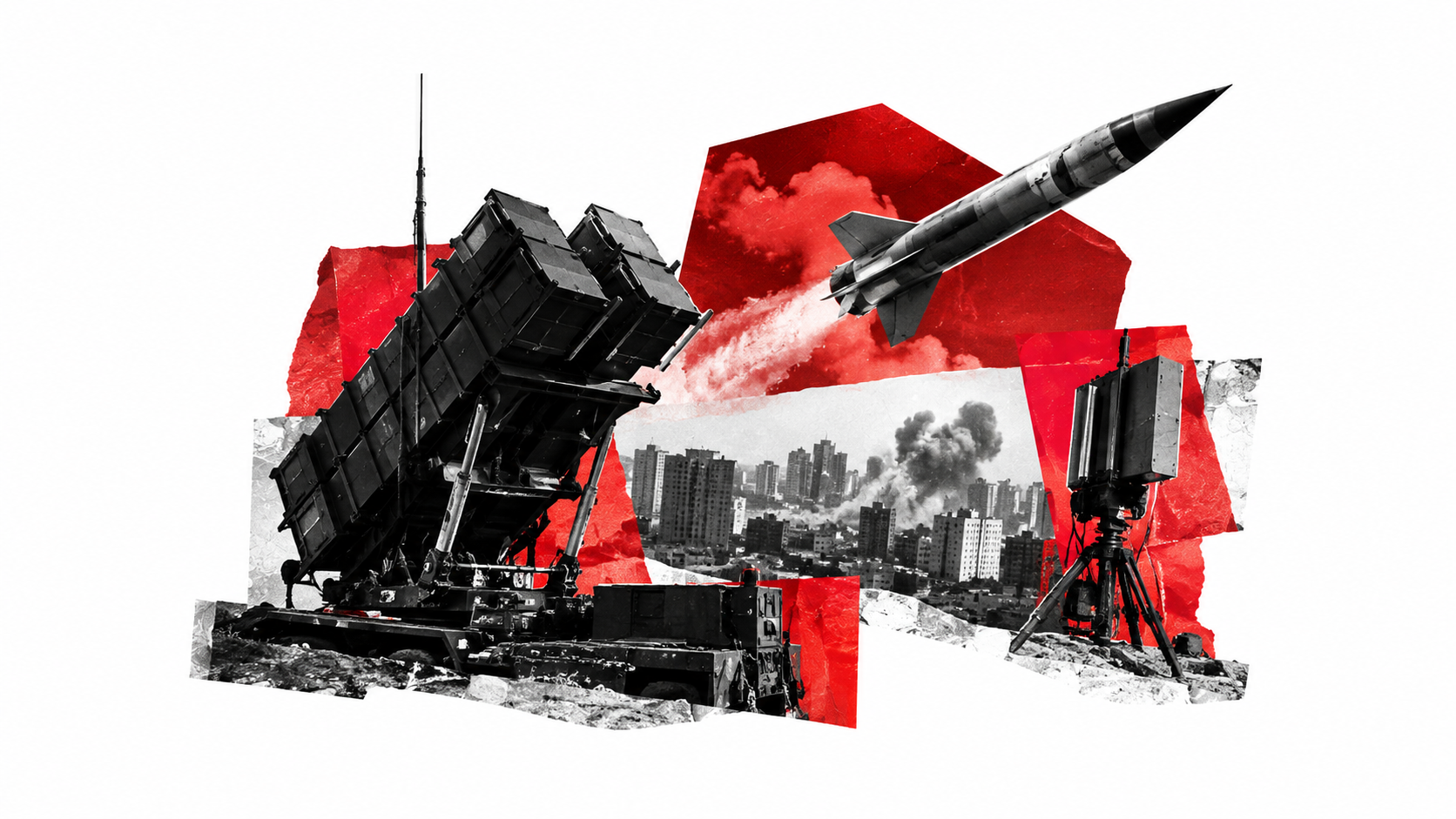
«Patriot on a budget»: what the Ukrainian Lima really means and why rockets are ultimately determined by industry
The Ukrainian EC has learned to do what seemed almost impossible not so long ago: forcing individual Russian ballistic missiles to miss without launching a multimillion-dollar interceptor. But Lima does not cancel Patriot. It simply shows what war looks like when expensive missiles are not enough for everyone.
When Kyiv ends up in Peru
The Wall Street Journal describes an episode that perfectly fits the textbook of War 4.0. Earlier this year, two Russian ballistic missiles were heading towards a key government facility in Kyiv but ultimately fell into the Dnipro. The Ukrainian electronic warfare unit Night Watch claims to have changed their trajectory using the Lima system. Around the same time, the navigation apps of Kyiv residents began to show that their owners were in Peru - a side effect of massive GPS spoofing.
This is indeed an important technology. Lima creates false navigation signals, causing guidance systems to receive incorrect coordinates. WSJ describes the range of such influence as approximately 190 km and cites claims from Ukrainian military officials about successful applications against missiles, guided bombs, and drones. Previously, Ukrainian specialists also reported Lima's impact on the «Kinzhal»: false navigation information could make the missile perform a correction, after which it lost stability.
However, the popular formula «Ukraine has learned to shoot down ballistic missiles without Patriot» requires an important clarification. A ballistic missile does not turn into an uncontrollable piece of metal immediately after the satellite signal disappears. Such missiles have inertial navigation, and satellite correction can be used to enhance accuracy in certain phases of flight. That is why the EC can degrade accuracy, disrupt correction, or, under certain conditions, cause the guidance system to make a fatal error. However, this is not the same as guaranteed kinetic interception.
The difference is fundamental. PAC-3 MSE is designed to physically destroy a target on the hit-to-kill principle. Lima attempts to convince the missile to go off course. In one case, the defender destroys the warhead in the sky, in the other - tries to change its point of impact. The EC can become another layer of missile defense. But a layer is not a shield.
The most expensive math in the sky
This is where the WSJ's technological story transitions into an economic one. The global shortage of modern interceptors is no longer a hypothesis. In August, Ukraine reported that in 2026 it was receiving approximately a third of last year's volume of missiles for air defense, and at the end of September, Kyiv requested another 300 Patriot interceptors from the USA. After extensive use of missiles in various conflicts, American stocks have also come under pressure.
At the same time, the assertion that the production of PAC-3 has physically «run out» is already outdated. Lockheed Martin delivered over 600 PAC-3 MSEs in 2025, and the new seven-year program anticipates increasing annual production capacity from approximately 600 to 2,000 missiles. In July 2026, the U.S. government concluded a multi-year agreement for PAC-3 MSE valued at up to $58.62 billion, and this week Boeing received a contract worth $14.7 billion to scale up the production of guidance heads for these missiles. The problem is not that the West has stopped producing Patriots. On the contrary - it is trying to produce them much more. The problem is that factories are scaling up more slowly than war consumes munitions.
Hence the appeal of Lima. If some of the «Shaheds,» guided bombs, cruise missiles, and even individual ballistic targets can be neutralized by electronic influence, the expensive PAC-3 can be reserved for those threats against which there is no cheaper alternative. This is not «Patriot on a budget.» It is an attempt to build an interception economy where the most expensive munitions are launched last, not first.
But this does not imply that the WSJ publication is a prepared «Pentagon alibi» for reducing assistance to Ukraine. There is no public evidence of such coordination. Moreover, the U.S. is currently investing tens of billions of dollars precisely in sharply increasing the production of PAC-3s. A much more interesting interpretation is that Lima has become prominent precisely because the shortage of interceptors forces the search for technologies that allow for their less frequent use.
Spring calculation
The same principle operates at the strategic level. Russia does not necessarily have to force Europe to abandon Ukraine with one political blow. It is enough to constantly raise the price of its support. Missiles force the expenditure of interceptors, strikes on energy - money for restoration, cyberattacks and diversions - internal security resources, and the very duration of the war - the political capital of governments.
European fatigue exists, but the picture is more complicated than the thesis of the inevitable «spring turnaround.» The WSJ indeed writes about increased political pressure on the governments of large European countries due to the cost of war and rising support for political forces advocating the reduction of assistance to Kyiv. At the same time, the EU continues funding: Brussels claims that Ukraine’s needs for 2026 are covered, a support package of €90 billion for 2026-2027 is in effect, and at the end of September the EU unlocked another €6.6 billion in military assistance-related funds.
Hybrid pressure is also real. European officials accuse Russia of cyberattacks, diversions, and other operations against European infrastructure and political systems; Moscow denies such accusations. However, the assertion that the Kremlin has a specific plan to «push Europe to spring» would require much stronger evidence. What can be seen already now is simpler: Moscow has a clear incentive to make supporting Ukraine as expensive as possible - militarily, financially, and politically.
Scaling matters more than wonder weapons
This is the main lesson from Lima. War 4.0 is increasingly unlike a competition of individual wonder systems. The Patriot can intercept a ballistic missile, but it needs to be produced. Lima can deceive the guidance system, but the adversary may alter algorithms, antennas, or navigation. After each technological solution, there is a counter-solution, followed by the next modification.
Therefore, real advantages arise not when one side creates the best system. They arise when that side can produce, refine, and deploy thousands of systems simultaneously faster than the opponent. This explains why the Pentagon is now spending tens of billions to increase interceptor production, while Ukraine is simultaneously building a cheaper electronic layer of defense.
Strategy determines what needs to be protected. Tactics determine how to do it. And War 4.0 again reminds us: in a prolonged war, scaling becomes decisive.

Read also