Study Reveals War Adds a Decade or More to Ukrainians' Biological Age

The Impact of War on Biological Aging in Ukraine
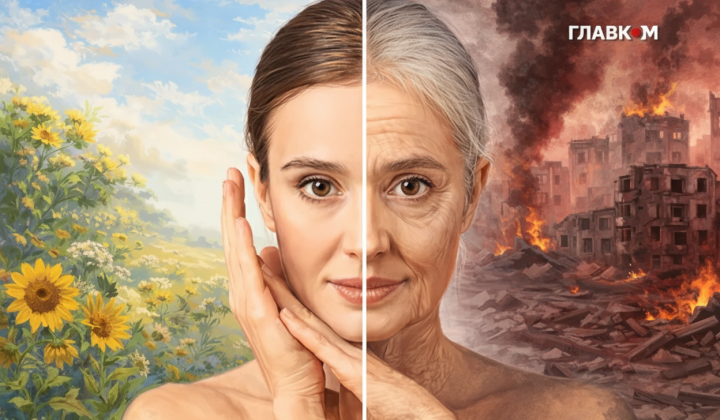
According to Главком: Research from the Chebotarev Institute of Gerontology of the National Academy of Medical Sciences of Ukraine has found that the war has caused accelerated biological aging in the population. The study reveals that a person's biological age now exceeds their chronological age by 10 to 15 years, a phenomenon observed in both civilians and military personnel, particularly among survivors of war-related stress. The cardiovascular system has been the most severely affected, and a high prevalence of anxiety and depressive disorders has been recorded.
Initial research was conducted in April-May 2022 following the de-occupation of the Kyiv region. A comprehensive, ongoing study in the Byshiv community involves analyses twice a month throughout 2024. The research is led by specialists Valentyna Chyzhova, Tetiana Kovtoniuk, and Iryna Samots. The results showed that civilians who endured occupation but did not participate in combat exhibit accelerated aging of 10-13 years, similar to military personnel with blast-related concussions.
"It turned out that people who did not participate in hostilities, but merely endured the negative psycho-emotional experience of the occupation of the Kyiv region, have the same accelerated, premature aging as soldiers who suffered a concussion from a blast injury during combat." - Valentyna Chyzhova
The State of Mental and Cardiovascular Health
The study focused on mental health, post-traumatic stress disorder (PTSD), and the state of the cardiovascular system. Among those with blast injuries, the rate of anxiety-depressive disorders reached 66%. In Byshiv, nearly 80% of people were found to have impaired vascular endothelial function, and over 40% of patients showed reduced kidney functional activity. Type 2 diabetes was also diagnosed for the first time in 8% of individuals. On average, military personnel with blast injuries are 10-13 years older biologically than their chronological age.
The study's results also indicated that for middle-aged people, the gap between chronological and biological age is 10 years, while for those aged 60-70, it is 5 years. The prevalence of PTSD varies significantly by location:
- 18.6% in areas outside combat zones,
- 27.5% in evacuation zones,
- 43.1% in active combat zones.
Among women with signs of PTSD, the difference between biological and chronological age was 8.9 ± 1.4 years; for those without signs, it was 4.46 ± 1.06 years.
It is noteworthy that the Institute of Gerontology and the Byshiv community have signed a five-year memorandum of cooperation. According to Valentyna Chyzhova, "men require a longer recovery time." This research provides stark evidence of the war's profound consequences for public health, highlighting the urgent need for continued study and support for those affected. The findings underscore a hidden, long-term health crisis that will require sustained medical and psychological intervention for years to come. Currently, approximately one in three people in Ukraine has a vitamin D deficiency, which may also impact overall health.
According to the conducted research, the war has a significant impact on the physical and mental health of Ukraine's population. The high levels of anxiety and depressive disorders, coupled with cardiovascular problems, point to the necessity for urgent measures to support the health of survivors. The signing of the memorandum between the Institute of Gerontology and the Byshiv community could be a crucial step in providing necessary aid and conducting further research in this field.

Read also