Victor Davis Hanson on the 'Counterrevolution': Trump’s Fall, Comeback, and Vision for a Second Term

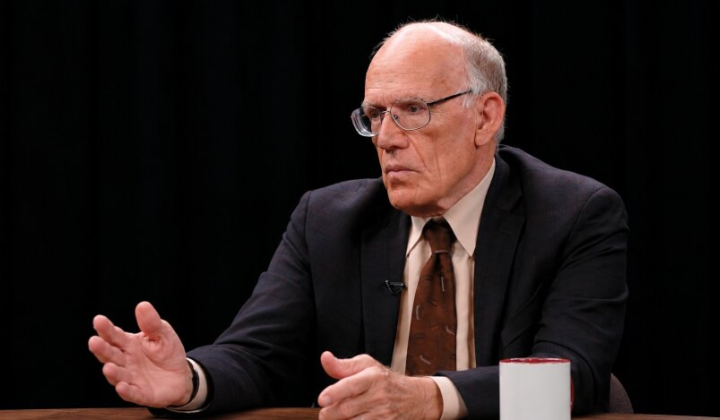
Interview with Victor Davis Hanson
According to ХВИЛЯ: On October 19, 2026, Peter Robinson sat down with Victor Davis Hanson on the Hoover Institution’s Uncommon Knowledge program to discuss Hanson’s book, Counterrevolution: The Fall and Rise of Donald Trump and the MAGA Movement. The conversation explored not only Trump’s political setbacks but also his prospects for returning to the presidency. Hanson examined the forces driving this potential comeback and shared insights into Trump’s agenda should he secure a second term, focusing on immigration, higher education, and media reform.
Victor Davis Hanson, a historian specializing in antiquity, is also a political analyst, senior fellow at the Hoover Institution, and a farmer in California’s San Joaquin Valley. His book Counterrevolution has achieved bestseller status on the New York Times nonfiction list. During the interview, Hanson highlighted the significant obstacles Trump has faced, such as the January 6 Capitol riots, which resulted in seven Republican senators joining Democrats in voting to impeach him.
Political Landscape and Economic Trends
By December 2022, polls showed Trump trailing Ron DeSantis by 16 points in the race for the Republican presidential nomination. Despite this, Trump officially announced his 2024 presidential bid on November 15, 2022. Shortly after, federal prosecutor Jack Smith was appointed to lead investigations related to Trump’s activities at Mar-a-Lago. Throughout this period, Trump continued to cultivate strong support among his base; according to NBC exit polls in 2024, he garnered 21% of the Black male vote and 54% of Latino men.
Hanson’s book pays close attention to the economic performance during Trump’s presidency, noting that in the first three years, U.S. economic growth averaged nearly 3% with inflation at 1.8%. However, inflation surged to 9.1% in 2022. Drawing a comparison to Franklin Delano Roosevelt, Hanson emphasized Trump’s approach to steering the economy through crises. Toward the interview’s end, Hanson pointed out that Trump’s second-term plans include sweeping reforms aimed at curbing the influence of left-wing forces in media, universities, and education as part of a broader counterrevolution.
During the Trump administration, discussions around stricter immigration policies included measures such as:
- Imposing taxes on immigrants’ remittances to reduce incentives for illegal immigration;
- Addressing a shifting voter demographic, largely composed of economically disadvantaged immigrants from non-Western countries who heavily rely on social services;
- Recognizing that 70% of votes in the U.S. are now cast by mail or through early voting.
Hanson’s book also explores changes in U.S. universities, where historical names are being removed. Using Silicon Valley as an example, he observes that immigration policy has remained a critical issue for the past 15 years. Hanson stresses the effectiveness of merit-based immigration while noting the existence of sanctuary cities that do not cooperate with immigration enforcement agencies.
The interview and Hanson’s book highlight the complexity of the American political environment, particularly surrounding Donald Trump. They shed light on both the challenges he faces and the strategies he might employ to regain power. Considering the evolving demographics of voters and the crucial role of economic indicators, these elements are poised to significantly shape the outcome of upcoming elections.
As the political landscape continues to shift, the implications of Trump's actions are becoming increasingly apparent. His recent support for controversial figures and international stances could significantly impact the Republican Party's future. To understand the broader context of these developments and their potential consequences, explore how the GOP might struggle to maintain its grip on Congress amid these challenges in our detailed analysis of Republican prospects under Trump's influence.

Read also