Legislative Barbed Wire of the Capitol: What Schumer's Winning Rhetoric Really Means

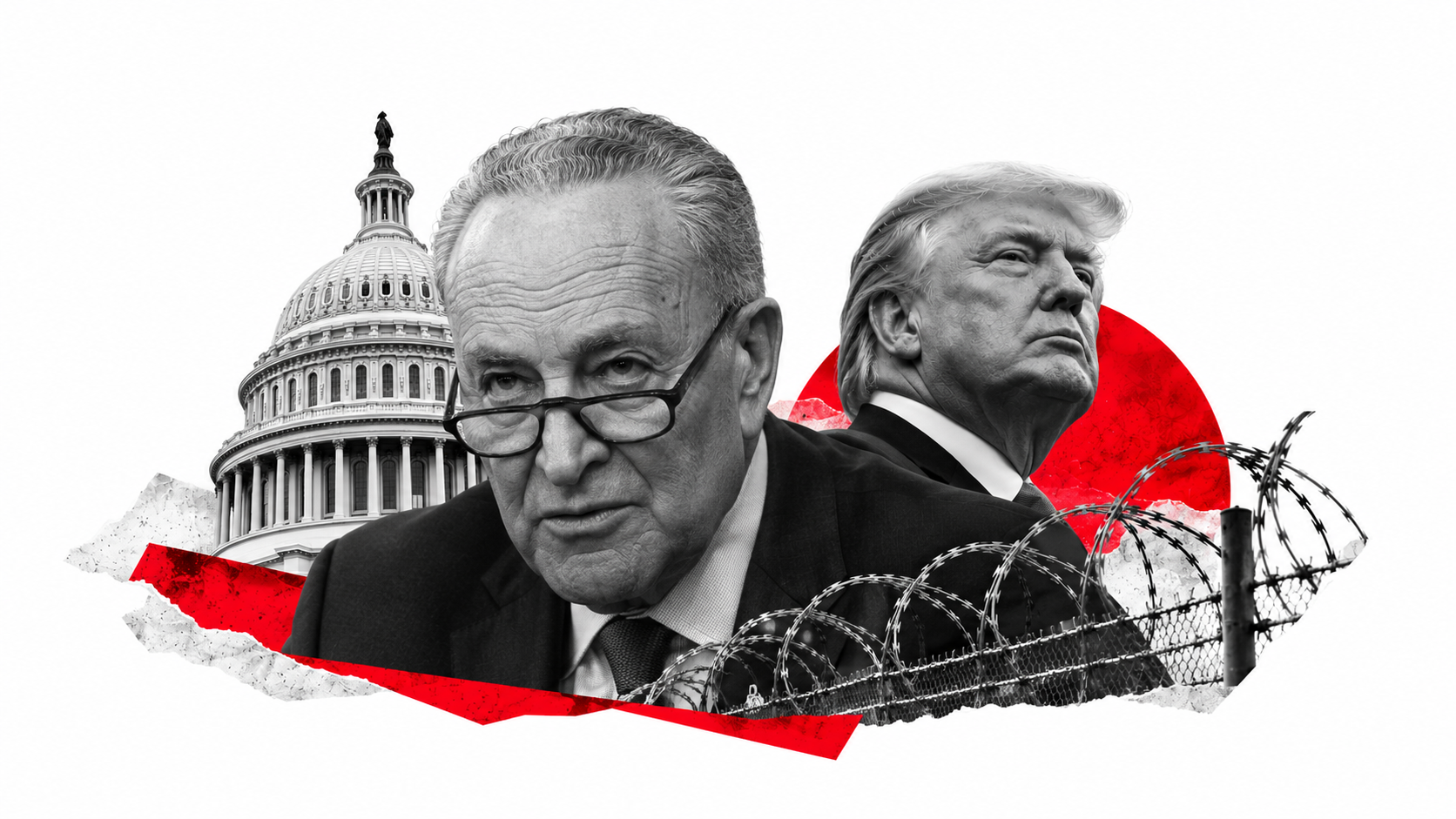
After the midterm elections in the U.S., political attention once again focused on the balance of power between the White House and Congress. Senate Democratic Leader Chuck Schumer promises tougher oversight of the Donald Trump administration. However, there is a significant distance between the loud statements about the end of the era of presidential dominance and the actual powers of legislators. Even control of the Senate does not mean control of the American state. It merely opens a new phase of political confrontation, in which investigations, budget negotiations, and procedural blockades become the main weapons.
“In Washington, winning an election does not always mean being able to govern the country. Sometimes it merely gives the right to more effectively obstruct the political opponent from doing so.”
Capitol Declares War on the White House
In the statement, Chuck Schumer declares the end of the Senate era that unconditionally supports Donald Trump. According to him, the Democrats are ready to respond to the president's actions with investigations, legislative restrictions, and parliamentary oversight.
The precise wording of this quote requires confirmation with an official transcript of the speech. However, the described political strategy entirely corresponds to the mechanics of the American system of checks and balances.
The constitutional architecture of the U.S. is designed so that no branch of government can impose its will on others unimpeded. The president leads the executive branch, Congress passes laws and controls government spending, while courts define the limits of law enforcement.
When the White House and one of the chambers of Congress come under the control of different parties, this system turns into a constant bargaining mechanism.
For the opposition, this is an opportunity to limit presidential initiatives. For the administration, it is a necessity to seek compromises or use those powers that do not require new legislation.
That is why Schumer's political rhetoric sounds significantly more radical than the actual constitutional changes that a new distribution of seats in the Senate may cause.
The Right to Investigate: Congress's Most Unpleasant Tool
One of the most significant consequences of the shift in parliamentary majority may be the strengthening of oversight over the executive branch.
Senate committees have the right to conduct hearings, demand documents, and summon officials to provide testimony. Within the limits of their legal powers, they can use compulsory subpoenas.
For the president's administration, this means a potential increase in the number of audits, public hearings, and legal disputes.
Investigations can focus on government contracts, personnel decisions, the use of budget funds, activities of federal agencies, and potential conflicts of interest.
However, even a parliamentary majority does not get unlimited access to information from the White House. The administration can challenge Congress's demands, cite presidential communication privacy protections, or seek judicial review of subpoenas.
Moreover, the powers of committees depend on their regulations, and control over the Senate does not automatically mean control over House committees.
Parliamentary investigation can create a political crisis. But it itself is not a judicial sentence and does not automatically mean the termination of presidential powers.
Staff Filter: President Proposes, Senate Decides
The second area of potential confrontation is appointments to key government positions.
The American Constitution stipulates that a significant portion of high-ranking federal executive officials, federal judges, and ambassadors are appointed by the president with the advice and consent of the Senate.
If the opposition controls the upper chamber, the candidate confirmation process can become significantly more complicated.
Senators can delay hearings, demand additional information, and reject nominees they find unacceptable.
Particularly sensitive may be appointments to federal courts, the Department of Justice, and key regulatory agencies.
However, there are limitations here as well. Not every position requires Senate approval. The president also has certain mechanisms for temporarily filling vacancies, although their application is regulated by legislation and can be challenged.
Thus, even an opposition-controlled Senate cannot completely paralyze the White House's personnel policy. But it can significantly increase its political and administrative costs.
Legislative Stalemate: When Victory Does Not Mean Power
The most important limitation for the Democrats is that even control over both chambers of Congress does not give them the ability to unilaterally pass laws contrary to the president.
Donald Trump retains the right of veto. Overriding it requires a two-thirds majority in both the House and the Senate-much greater than the ordinary parliamentary majority.
In addition, in the Senate, advancing the majority of legislative initiatives effectively requires support from 60 senators to overcome procedural blockades-filibuster. Exceptions exist, particularly for certain budget procedures.
As a result, the American political system may enter a phase of gridlock, where both sides can block each other’s initiatives but do not have sufficient support to implement their own agenda.
For financial markets, this means increased uncertainty regarding taxes, government spending, and regulation. For federal agencies, it poses a risk of budget conflicts. For international partners, it means a more complex process of coordinating long-term American commitments.
Foreign Policy Remains in the White House
Even under an opposition-controlled Congress, the president retains significant powers in foreign policy and national security.
He heads the executive branch, is the commander-in-chief of the armed forces, manages diplomatic relations, and can issue executive orders within the framework of existing legislation.
However, presidential powers are not absolute either. Congress controls appropriations, enacts laws regulating the activities of federal agencies, and can impose limitations on the use of government funds.
This balance will be particularly important in matters of funding military operations, international aid, and defense programs.
Trump will be able to continue negotiations with foreign leaders and set the administration's diplomatic priorities. But the implementation of decisions requiring new budget expenditures or legislative changes will depend on cooperation with Congress.
Two Years of Political Gridlock
The midterm elections on November 3, 2026, brought the Democrats control of both chambers of Congress. However, the new composition of the legislative body will not begin work until January 3, 2027. Until then, formal authority remains with the outgoing Congress.
For Schumer, the victory creates an opportunity to turn parliamentary oversight into a central instrument of confrontation with the administration. For Trump, it means the necessity to adapt his political strategy to the new balance of power.
However, the outcome is not necessarily reduced to continuous blockage. The American system has repeatedly demonstrated that even amid acute partisan confrontation, Congress and the president can negotiate on specific budget, defense, and economic issues.
The question is whether both sides will have sufficient political incentives to compromise.
Schumer gains the ability to control, investigate, and block. Trump retains the ability to manage the executive branch and wield veto power. Neither side obtains a monopoly on the political outcome.
This is the main paradox of American democracy: voters can change the balance of power but do not necessarily obtain a quick change in government policy.
If the next two years turn into a standoff between parliamentary investigations and presidential vetoes, it will not be the destruction of the American constitutional system, but one of the possible outcomes of its operation.
Schumer's barbed wire can limit Trump's political space. But it cannot replace either a legislative program or the necessity of reaching agreements.

Read also