US Early Warning System Failure in October 2023: Risks for Ukraine and Europe

US Early Warning System Breakdown
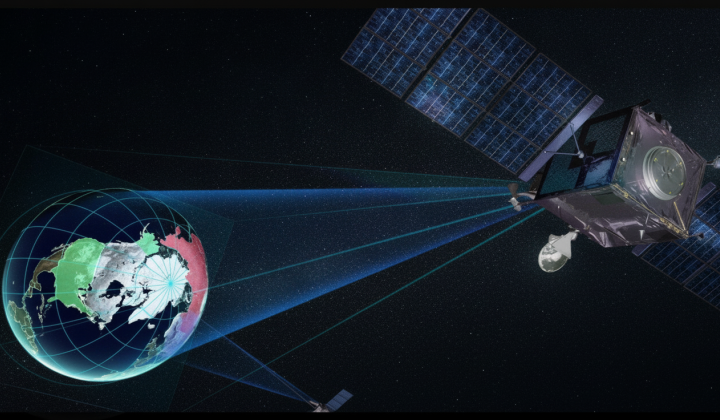
According to ХВИЛЯ: In October 2023, a malfunction in the United States’ early warning system for Russian ballistic missile launches exposed the heavy reliance of Ukraine and Europe on American satellite technology. The Space-Based Infrared System (SBIRS) includes six satellites positioned in geostationary orbit approximately 35,800 kilometers above Earth, alongside four additional infrared sensors on other satellites. This network provides crucial early alerts about ballistic missile launches, transmitting data to allies through the SEWS system, operational since the 1990s. Although Ukraine is not an official SEWS partner, it receives processed intelligence via secure American communication networks.
Irregularities in Warning Signals
Between October 12 and 19, 2023, Ukraine experienced inconsistencies in receiving missile launch warnings. On October 12, Kyiv was targeted by Russian missile strikes using S-400 systems, most likely the 48N6 variant. Fabian Hoffmann, a missile technology analyst, suggested that dense cloud cover may have obstructed backup satellite observation bands, contributing to the missed alerts. Earlier in 2023, US officials attributed gaps in warnings for Ukraine to prioritizing resources focused on the Middle East. Additionally, Russia’s daily use of S-400 missiles against Ukrainian drones may interfere with the system’s signal processing.
Warning reliability improved starting October 14, but following a nighttime attack on Kyiv on October 19, Ukrainian President Volodymyr Zelensky reported a renewed absence of alerts from allied sources. Hoffmann noted that while the exact reasons for the system failure remain unclear, technical explanations are plausible, and some speculate that US officials might have deliberately limited early warnings as a form of political pressure on Ukraine.
The Future of Early Warning Capabilities
Looking ahead, Europe has initiated the JEWEL program launched in October 2025, aiming to develop its own early warning capabilities by the early 2030s. France plans to deploy its satellite by 2035, and Germany intends to invest €35 billion in space security by 2030. However, these efforts will not fully cover emerging threats such as hypersonic weapons or missiles with short engine burn times.
Consequently, until the end of this decade, Ukraine and Europe will continue to depend heavily on Washington’s willingness to share satellite intelligence.
This situation highlights the critical need for Ukraine and European nations to achieve greater technological independence. Reliance on US satellite data poses strategic vulnerabilities amid ongoing threats from Russia. Developing indigenous early warning systems and advancing space technology have become essential priorities for Europe to enhance regional security and strengthen national autonomy.

Read also