In Berlin, Zelensky and Merz Confirm Ukraine’s Rejection of Putin Invitation Ahead of Trilateral Talks in Abu Dhabi

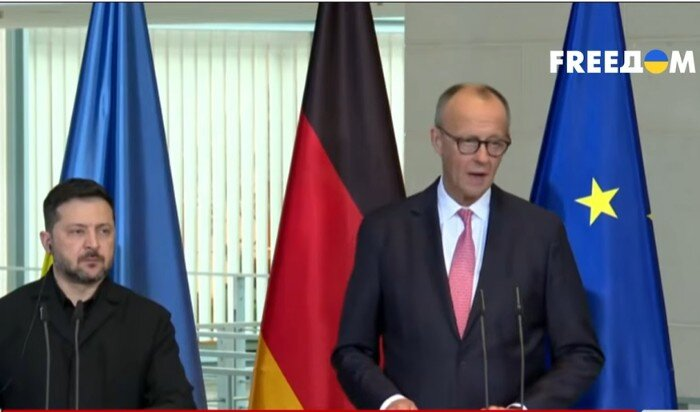
Key Points from Ukrainian President’s Berlin Press Conference
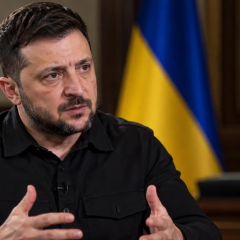
According to ХВИЛЯ: During a joint press briefing in Berlin with German Chancellor Friedrich Merz, Ukrainian President Volodymyr Zelensky dismissed the idea of inviting Russian President Vladimir Putin to Kyiv, calling such gestures pointless. Zelensky emphasized that phone calls with Putin have yielded no progress, as Russia remains unwilling to engage in genuine peace negotiations.
“Inviting them when they won’t come is counterproductive. Just as it would be counterproductive for me to visit Moscow.” – Volodymyr Zelensky
Trilateral discussions involving Ukraine, the United States, and Russia are scheduled for November 10-11 in Abu Dhabi. These talks will focus on critical issues such as:
- security guarantees for Ukraine,
- plans for national recovery,
- ceasefire arrangements,
- unblocking the Black Sea,
- prisoner exchanges.
Zelensky highlighted that the U.S. has already expressed strong interest in addressing Ukraine’s security guarantees, which he described as a top priority.
Germany’s Support and Impact of Recent Russian Attack
Chancellor Merz reaffirmed Germany’s commitment to backing Ukraine, stressing that no decisions about Ukraine’s future should be made without its involvement. Germany and NATO plan to provide €70 billion in military aid to Ukraine in 2026, including advanced air defense systems like PAC-2, PAC-3, and IRIS-T missiles. Discussions are also underway regarding additional support for Ukraine’s F-16 fighter jets.
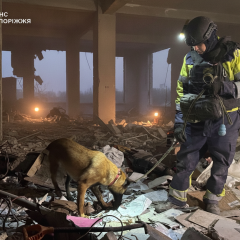
Zelensky reported the devastating consequences of a Russian strike on Komyshuvakha in Zaporizhzhia, where 33 people lost their lives, five survivors were rescued, and over 50 remain trapped under rubble. He described the attack as "one of the deadliest Russian atrocities of this war."
He also revealed that Russia suffered heavy casualties estimated at 54,000 during its recent offensive, while intensifying assaults on civilian infrastructure, energy facilities, and railways.
Chancellor Merz suggested that the localized ceasefire in Oleshky could serve as a model for agreements concerning the Black Sea and energy sectors. He reiterated the necessity of Ukraine’s participation in all negotiations about its future.
Further talks involving Ukraine, the U.S., Europe, and NATO are planned for November 4 in Brussels to address other vital matters.
This press conference underscores the crucial role of international support for Ukraine amid the ongoing conflict with Russia. Zelensky’s remarks about the lack of constructive dialogue with Moscow highlight escalating tensions and reinforce Ukraine’s call for international security guarantees. Meanwhile, Germany’s strong military backing illustrates its active engagement in promoting stability in the region.
In light of Zelensky's firm stance against any engagement with Putin, it is noteworthy that he remains open to a potential meeting under specific conditions. This position contrasts sharply with his outright rejection of territorial concessions, highlighting the complexities of Ukraine's diplomatic strategy. For a deeper understanding of these dynamics, explore how Zelensky navigates the possibility of dialogue while firmly upholding Ukraine's sovereignty in our detailed coverage of the topic regarding his potential meeting with Putin in Turkey.

Read also