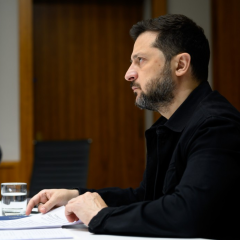
Zelensky Imposes Sanctions on 95 Russian Entities Supporting Ballistic Missile Production

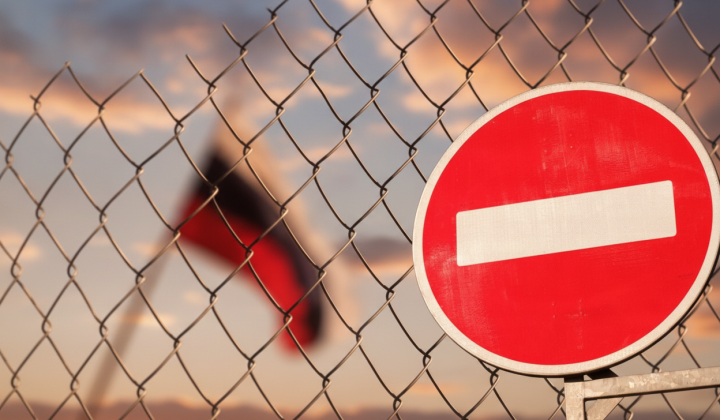
Sanctions Targeting Russia
According to 5 канал: Ukrainian President Volodymyr Zelensky has enacted sanctions issued by the National Security and Defense Council (NSDC) against 95 Russian individuals and organizations involved in the development and manufacturing of ballistic missiles and military equipment. The initial sanction list includes 51 individuals and 44 companies linked to producing ballistic rockets that Russia employs to strike Ukraine’s critical and civilian infrastructure.
Among the major enterprises supplying raw materials, components, and tools for long-range weapon systems such as Iskander, Kalibr, Kh-101, and Kinzhal are:
- The G.S. Petrov Plastics Institute
- Kometa Corporation
- VitaReaktiv
- Promenergo
- Kirov Biochemical Plant
- The D.I. Mendeleev Metrology Research Institute
The sanctions extend to 32 Russian citizens and 35 companies. Notably, members of the RUSAL group supply critical materials to Russia’s defense sector, supporting the production of aircraft, missiles, armored vehicles, and drones. Two firms from this group imported aluminum oxide worth approximately 150 million rubles within a year. Zelensky emphasized that these measures aim to curtail Russia’s capacity to manufacture weapons:
“The first sanction list includes 51 individuals and 44 legal entities involved in producing ballistic missiles that Russia uses to attack critical and civilian infrastructure, bomb Ukrainian cities and communities, killing people.”
European Union’s Sanctions Strategy
The European Union has also been actively imposing sanctions on Russia since the full-scale invasion began, adopting 22 sanction packages to date. The latest package, approved on October 12, 2023, added 1,600 individuals and organizations, bringing the total to nearly 4,600 sanctioned Russian persons and entities. Adoption of EU sanctions requires unanimous agreement from all 27 member states. However, upcoming political developments, such as the 2024 presidential elections in France, could influence the EU’s approach to sanctions against Russia.
These new sanctions from Ukraine and the EU represent a coordinated effort to limit Russia’s warfighting capabilities and bolster Ukraine’s defense. By targeting key elements of Russia’s military-industrial complex, these measures may significantly reduce Moscow’s ability to produce advanced weapons and equipment, potentially altering the dynamics on the battlefield. Given the evolving nature of sanctions, close attention should be paid to Russia’s responses and further international actions.
In addition to Ukraine's recent sanctions, the European Union has ramped up its own efforts against Russia, implementing a substantial expansion of its sanctions list. This move, which includes over 1,600 new individuals and entities, reflects a coordinated strategy to undermine Russia's military capabilities. For more details on these significant developments in sanctions, you can read about the latest EU sanctions expansion.

Read also