Engineers in the US Develop Nature-Inspired Metamaterials Stronger Than Conventional Designs

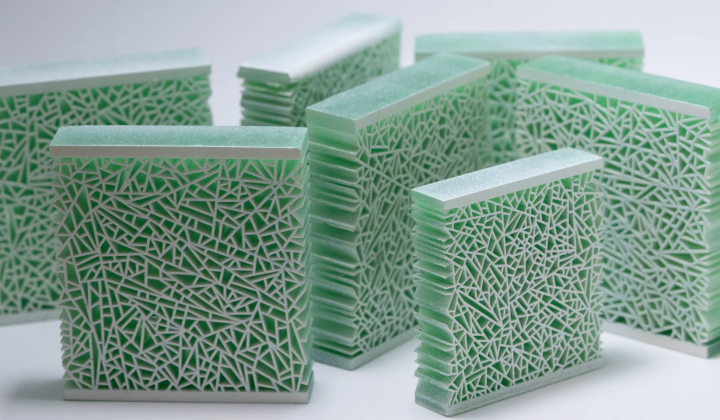
Innovative Metamaterials Inspired by Nature
According to НВ — Техно: Researchers from the Massachusetts Institute of Technology and Northeastern University have engineered a groundbreaking class of metamaterials featuring internal structures modeled after natural networks. These materials, produced using advanced 3D printing techniques, exhibit superior resistance to mechanical damage compared to traditional counterparts. Their findings were published in the journal Nature.
The design of these metamaterials draws inspiration from natural systems such as:
- leaf vein networks
- dragonfly wing patterns
- interconnected biological organism systems
At their core, the new materials consist of interconnected polymer beams varying in thickness and length, ranging in size from micrometers to centimeters. This architectural variety contributes to their enhanced mechanical properties.
Testing and Potential Applications
Mechanical testing involved compression assessments and impact resistance trials, including dropping heavy weights onto the samples. Results demonstrated that these metamaterials outperform traditional lattice and honeycomb structures in withstanding mechanical stress. This architecture, termed "scalable metamaterials," is created using an algorithm that generates a network of beams with diverse dimensions.
Edges of the material feature a denser beam network, similar to the thick rind of a pomelo fruit, which helps absorb impacts more effectively. This innovation holds promise for a wide range of applications, such as:
- protective helmets
- body armor
- soundproofing and vibration damping materials
This advancement marks a significant step forward in the development of metamaterials that surpass the performance of conventional materials. By leveraging design principles derived from nature, these innovations could be transformative across industries like healthcare, construction, and automotive manufacturing. Continued research is expected to yield materials with even greater durability and functionality, opening new frontiers in technological development.
As researchers continue to explore the intersection of nature and technology, advancements such as the new nanoparticle control methods from MIT are opening exciting avenues in fields like photonics and medicine. These innovations highlight the potential of biomimicry in creating materials that not only enhance performance but also broaden the scope of applications in various industries.

Read also