American Patriots will protect Kyiv

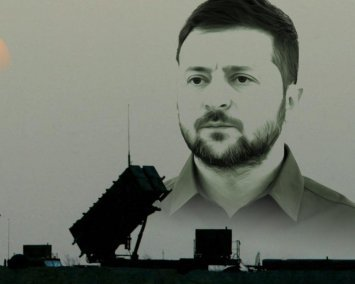
After 301 days of war and 100,000 dead Russian soldiers, President Volodymyr Zelensky left Ukraine for the first time. He flew to Washington, where he met with the most important supporter of Kyiv, US President Joe Biden, and Congress. Even before the visit, the White House hinted that America would elevate support for Kyiv to a new level by providing Patriot missile systems and a new weapons package worth $1.85 billion. It is also now more likely that Congress will support the 2023 spending bill that includes $44.9 billion in aid for Ukraine and NATO allies. Gazeta.ua investigated what we will receive from the US, how, where, and when the Patriots will start operating, and how much military assistance Ukrainians have received from Western partners over the past 10 months.
$13 billion for the Ukrainian budget from Uncle Sam
In the coming days, Congress will vote on a $1.7 trillion spending bill. Of this, about $45 billion is earmarked for Ukraine. This amount includes military and humanitarian aid. It is approximately $8 billion higher than what the Biden administration previously requested. NPR reports this.
About $9 billion will be directed to direct assistance under the Ukraine Security Assistance Initiative. Another provision in the bill expanded Biden's authority to transfer defense weapons. Most of this amount is directed to replenish weapon stockpiles.
In 2022, the US sent a massive amount of ammunition and weapon systems to Ukraine. The Department of Defense will allocate nearly $12 billion to replenish these stocks. The bill also includes the allocation of more than $900 million to the Pentagon for expanding defense industrial capacities. Another $7 billion will be allocated to support US military command in Europe.
Humanitarian aid includes $13 billion for budget support to Kyiv, as well as $2.5 billion for 'addressing acute humanitarian needs in Ukraine' and $2.4 billion for supporting Ukrainian refugees.
Total US assistance to Ukraine may exceed $100 billion
If these $45 billion are approved, total US assistance to Ukraine will exceed $100 billion.
American Patriots may close the sky over Kyiv in spring
The US Army and 16 NATO allies use the Patriot system. This is an air defense complex. Newer variants are primarily used to defeat ballistic missiles. NPR reports this.
Currently, the US will send one Patriot battery to Ukraine. The system consists of three main components: a launchers' set, a control center, and a sophisticated radar. The battery sent to Ukraine is likely to be transferred from systems already deployed in Europe.
Depending on which missiles are used and what the target is, the range of the battery is up to 160 km. This is not enough to cover all of Ukraine. However, it can protect a city like Kyiv from some threats. The cost of batteries and associated missiles is about $1 billion.
READ ALSO: 'We struck the most protected nuclear facility in Russia' - Valery Ryabykh
Ukrainian soldiers will need weeks, if not months, to learn how to operate it. Typically, about 90 people are required to operate one battery. Training courses range from 13 weeks, which is three months for a launch station operator, to 53 weeks, which is a year for a maintenance technician. These are the norms of the US Army.
It is expected that Ukrainian troops will be trained by Americans in Germany. Hundreds of Ukrainian soldiers are already traveling to Germany monthly for weapon training. The Pentagon announced that they will increase their number to 500 per month at the beginning of 2023.
READ ALSO: 'Russia will lose, but will not want to sign any peace agreement' - Valentin Krasnopеров
One Patriot battery has up to eight launchers. Each can carry between 4 to 16 missiles, The Washington Post reports.
Patriot systems will not be operational until February or March
Even with an accelerated timeline, training requirements mean that the Patriots are unlikely to be operational until late winter or early spring. They may start in February or March. The desire to launch the system as quickly as possible may have adverse consequences – ineffective operation caused by hasty training. This may reduce the system's effectiveness. In the worst case scenario, Ukrainians may not be able to prevent its destruction by the Russians. This, in turn, could undermine America’s willingness to assist Ukraine in the future.
'If Ukrainians had a year or two to master the system, there would be no problems. The problem is that they do not have a year or two. They want to do it in a couple of weeks,' says Mark Cancian, a retired Marine Colonel and senior advisor at the Center for Strategic and International Studies.
Fighter jets and long-range missiles are needed to finish the Russians
In 10 months of war, Ukraine has successfully prevented Russia from achieving air superiority over its airspace, depriving the Russians of key firepower and reconnaissance capabilities, NPR reports.
Ukraine manages to shoot down most missiles and drones. However, the stockpiles of the systems that Ukrainians have relied on so far are depleting. Soviet S-300 missile systems were key for Ukraine, but their missiles are difficult to source. The US has regularly provided air defense assistance, including more than 1,600 Stinger air-to-air missiles and eight NASAMS missile defense systems. The US also provided more than 10 HIMARS mobile rocket launchers in addition to a range of other military equipment and weapons, including Javelin anti-tank missiles, helicopters, howitzers, and drones. But these supplies are also running low.
Russian missile and drone strikes against Ukraine's infrastructure have prompted the US and allies to do more. In addition to the Patriots, the new assistance package worth $1.85 billion also includes munitions for HIMARS, mortars, artillery shells, and tens of thousands of GRAD rockets and tank munitions.
Kelly Greico, a military analyst at the Stimson Center, called this a 'sign that the US is deeply concerned about Ukraine's air defense capabilities.'
PAC-3 missiles heading to the Patriots cost $4 million each. They are much more expensive than Stingers or HIMARS missiles. They are costly enough that Ukrainians must be prudent in how they use them.
READ ALSO: 'Victory next year is an optimistic prospect' - Konrad Muzyka
Until October, Ukrainian air defense was focused on protecting frontline troops in the east and south, as well as key government buildings and military facilities in Kyiv and several regional centers. Now Ukraine is trying to defend the energy system across the country.
As the war nears its one-year mark, the types of weaponry supplied to Ukraine persistently grow. Retired Air Force Lieutenant General Dave Deptula states that more is needed.
Wars are not won solely through good defense. The US must now provide Ukraine with fighter jets, advanced precision munitions, and longer-range ground-to-ground missiles
'Wars are not won solely through good defense. The US must now provide Ukraine with fighter jets, advanced precision explosives, and longer-range land-to-land missiles. It is very important to provide Ukraine with more powerful weapons now to defeat Russian forces, not just to hold them back,' said Deptula.
After the Patriots, F-16, Abrams, and Leopard may follow
The US and NATO countries are reluctant to deepen modern weapons supplies for fear of Russia's response, but providing Patriots may signify a turning point, according to American ABC.
'The reluctance to supply Western aircraft or battle tanks will also significantly diminish. If the US also wants to provide F-16 fighter jets, Abrams tanks, and so on, it will obviously have a significant impact on the course of the war,' says Professor Stefan Fröhling from the ANU Center for Strategic and Defense Studies.
READ ALSO: 'Russia's latest attack is an argument for providing more air defense' - Juliusz Sabak
Ukraine has not yet received Western-designed battle tanks, but the US has stated that it will not oppose the transfer of Leopard 2 tanks by Germany. The Leopard 2 and Abrams are among the most modern battle tanks in the world.
'We may very well see the provision of European-designed tanks, likely Leopard 2, which are stored in NATO countries. This may happen in the coming weeks if there is broader change,' says Professor Fröhling.
Aside from nuclear weapons, Moscow has nothing to respond with
How will Russia react? Loudly, but that's about it. Kremlin watchers love to analyze Vladimir Putin's latest statements each time US arms supplies improve Ukraine's posture. Kremlin spokesman Dmitry Peskov stated on Wednesday that the latest tranche 'leads to escalating the conflict and brings nothing good for Ukraine.' According to CNN.
Russia is struggling to equip its conventional forces, and except for its nuclear forces, it seems to be running out of new cards to play
However, Russia is struggling to arm and consolidate its conventional forces, and except for its nuclear capabilities, it seems to be running out of new cards to play. China and India joined the West in making open statements against the use of nuclear force, making this option even less likely.
Western analysts point out that Russia has consistently grumbled about these supplies but has reacted fairly restrained regarding the crossing of what could have been termed 'red lines' as recently as January.
Which countries provide the most?
As for total military support expenditures since the beginning of the war, the US has allocated $18.5 billion, which is significantly more than any other country. Germany, the UK, and Poland occupy the second, third, and fourth places in this conditional ranking. According to the BBC.
President Zelensky has called for increasing these amounts and stated that defense spending for Ukraine amounts to about $5 billion a month.
Military experts say that success on the battlefield requires vast amounts of weaponry, as well as training, spare parts, and other support.
The Soviet S-300 air defense system has been widely used against Russian attacks, but Kyiv has repeatedly called for more advanced weapons for its protection. Before the war began in February, Ukraine had about 250 S-300 systems, and there were attempts to replenish with similar systems stored in other countries of the former Warsaw Pact. Some were received from Slovakia.
NASAMS and Iris-T increased the percentage of intercepted Russian missiles from about 55% to over 80%
Western partners supplied Ukraine with NASAMS and Iris-T air defense systems, which increased the percentage of intercepted Russian missiles from about 55% to over 80%.
Analysts say that Ukraine is in urgent need of improving artillery and ammunition supplies. The US has sent at least a dozen HIMARS rocket launchers to Ukraine. Their munitions have a range of about 80 km. They are much more accurate than comparable Russian systems. Ukraine is requesting ATACMS missiles, which can hit targets at 300 km. But America is currently resisting.
In early July, Australia, Canada, and the US sent more than 100 M777 howitzers and 300,000 155mm shells to Ukraine. Their range is similar to that of the Russian 'Hiačin-B' howitzers and much greater than that of the Russian towed D-30 cannon.
Ukraine received over 230 tanks from Poland and the Czech Republic. Warsaw's donation of tanks was partially compensated by alternative weaponry from allied countries, including Challenger-2 tanks from the UK. The Armed Forces of Ukraine have used T-72 tanks for decades and have the capacity for their maintenance and spare parts, as well as trained crews.
Drones continue to play an active role in the war. Many were used for reconnaissance, targeting, and strikes. Turkey sold Ukraine Bayraktar TB2 combat drones. This drone was extremely effective, flying at about 7600 m before descending to attack Russian targets with laser-guided bombs. These drones destroyed helicopters, military ships, and missile systems. They were also used to determine the exact location of Russian positions for precision artillery strikes.
President Zelensky makes his first trip abroad in 10 months of invasion to the US. At stake are Patriot systems from America, congressional voting on $45 billion in aid to Ukraine in 2023, continued bipartisan support for Kyiv, and the possibility of pushing Russia in the war before it regrouped. But Ukraine is unlikely to receive long-range weapons for the offensive. Here’s something the global media wrote about us.

Read also