Discovery of a 6,000-Year-Old Flint Site and Defensive Ditch Unveils Hidden History in Horodok Nadbużanski, Poland

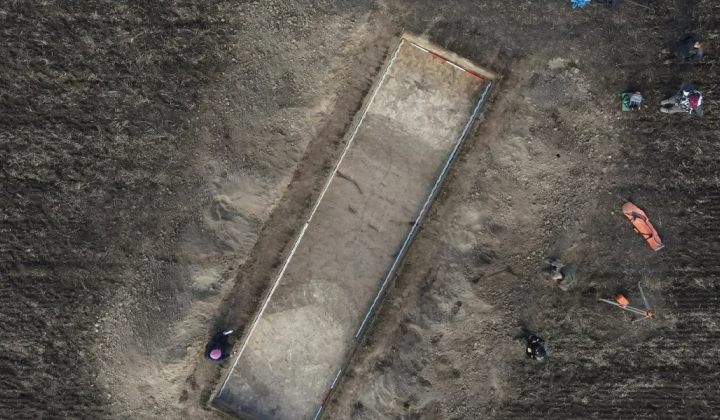
Uncovering Ancient Secrets in Horodok Nadbużanski
According to НВ — Техно: Recent archaeological excavations in the village of Horodok Nadbużanski, located in eastern Poland, have brought to light remarkable discoveries that challenge previous understandings of the area's past. Among the finds is a flint deposit dating back 6,000 years, burial sites from the Iron Age, and an extensive defensive ditch spanning over ten hectares. What was initially interpreted as an ancient roadway has now been identified as part of a sophisticated defensive system, opening new avenues for interpreting the region’s archaeological heritage.
The burials uncovered in the eastern sector belong to an early medieval cemetery and represent the oldest known Slavic graves found in Poland. Additionally, the western part of the site revealed a wealth of artifacts including:
- numerous Roman denarii coins,
- fragments of clothing,
- personal adornments,
- pottery shards, and
- animal bones linked to the Goths.
The flint deposit, originating from the Neolithic period, consists of partially worked pieces or blanks that have remained preserved in the soil for around six millennia. The archaeological site, designated as Site 29, forms part of a rich historical landscape offering valuable insight into prehistoric human activity.
Significant Finds and Their Broader Impact
In connection with the Horodok Nadbużanski discoveries, another notable find emerged in 2026 near the village of Sniatycze-a treasure trove containing 18 Bronze Age bracelets. Weighing a total of 3.6 kilograms, this hoard dates to the late Lusatian culture period (550–400 BCE) and includes arm and leg rings. The treasure was uncovered by an amateur archaeologist with the landowner’s permission and approval from the Lublin Voivodeship authorities.
Archaeologists have noted that 'Lusatian bronze casting reached its peak mastery in metalwork.'
The area also preserves numerous First World War trenches, but the linear feature identified during the recent excavations does not correspond to these wartime defenses, highlighting its unique ancient origin. This suggests that the history of Horodok Nadbużanski and its surroundings runs far deeper and is more complex than previously recognized. Growing scholarly interest promises further investigations that could shed light on unknown aspects of the ancient cultures inhabiting this region.
These findings from Horodok Nadbużanski expand our understanding of Eastern Poland’s historical landscape, emphasizing the region’s role as a significant cultural and trade hub in antiquity. The emergence of new artifacts has the potential to reshape our knowledge of population movements and interactions, especially between Slavic and Gothic peoples who once lived here. Continued archaeological research is expected to refine the chronology and development of human communities in this part of Europe.
As the archaeological investigations in Horodok Nadbużanski continue to reveal significant insights into early human settlements, similar intriguing discoveries are being made elsewhere in Poland. For instance, a recent excavation has uncovered a rare boat burial from the early medieval period, shedding light on burial practices and maritime culture of the time. These findings collectively enhance our understanding of the region's rich historical tapestry.

Read also