Bronze Age Settlement of La Almolola Reveals Massive Defensive Walls Featuring Six Towers

Major Archaeological Find at La Almolola
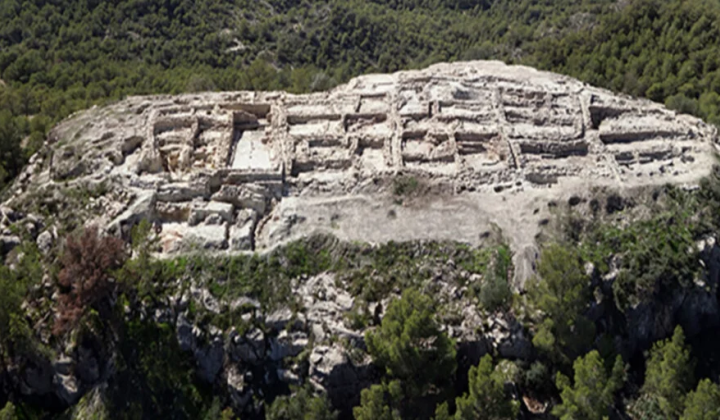
According to НВ — Техно: Excavations at the Bronze Age site of La Almolola in southeastern Spain have uncovered enormous defensive walls reinforced by six towers, encircling the ancient settlement. Positioned on a rocky hill approximately 585 meters above sea level, this site was a key hub of the El Argar culture, which thrived between roughly 2200 and 1550 BCE. The discovered fortifications, measuring between five and seven meters thick and extending about 40 meters, showcase sophisticated construction techniques that highlight the advanced labor organization, military capabilities, and political authority of this Bronze Age society.
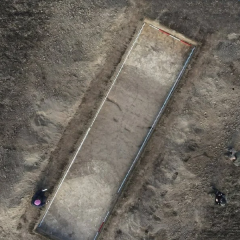
Researchers from ASOME at the Autonomous University of Barcelona conducted the digs over an 11-square-meter area. The walls were built using stone masonry bonded with dense clay mortar. Archaeologists identified two distinct segments of the defensive barrier, one of which adjoins two substantial buildings-one shaped as a trapezoidal rectangle and the other showing signs of fortification at its northern end. Evidence of violent destruction on the walls further underscores the site’s historic significance.
Context and Importance of the Discoveries
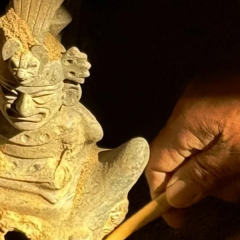
Back in 2014, a richly furnished burial containing artifacts made from gold, silver, copper, and amber was uncovered at La Almolola, attesting to the settlement’s prominence. Residential areas covering around 300 square meters consist of clusters of structures with 8 to 12 rooms, narrow streets, and drainage systems. A large hall or reception room measuring approximately 70 square meters points to the community’s political and administrative role.
In an interview dated October 29, 2026, excavation leaders Vicente Lull and Rafael Mico remarked, "The new information we have uncovered indicates the defensive line is more extensive than previously believed."
These findings highlight the rich archaeological potential of the region, where similar discoveries have been made elsewhere in Spain. For instance, studies in Galicia on Ons Island revealed an Iron Age wall beneath a Roman-era structure, illustrating the long-standing human occupation in this area.
The La Almolola site provides invaluable insights into the social hierarchy and defensive strategies employed by Bronze Age communities in Spain. The artifacts and architectural complexity reflect a highly organized society with a probable intricate political framework. Such archaeological work plays a crucial role in reconstructing regional history and exploring the interactions between ancient cultures.
The recent discoveries at La Almolola not only shed light on the advanced defensive strategies of the El Argar culture but also echo similar archaeological findings across Spain. For instance, the recent unearthing of an Iron Age wall beneath a Roman settlement on Ons Island highlights the rich tapestry of historical layers present in the region, revealing how ancient societies adapted and fortified their environments over time.

Read also