Unearthing a 1300-Year-Old Imperial Residence in Saiku, Japan

Could This Have Been a Palace for Imperial Princesses? Archaeologists Discover Remains of the Main Hall in Saiku
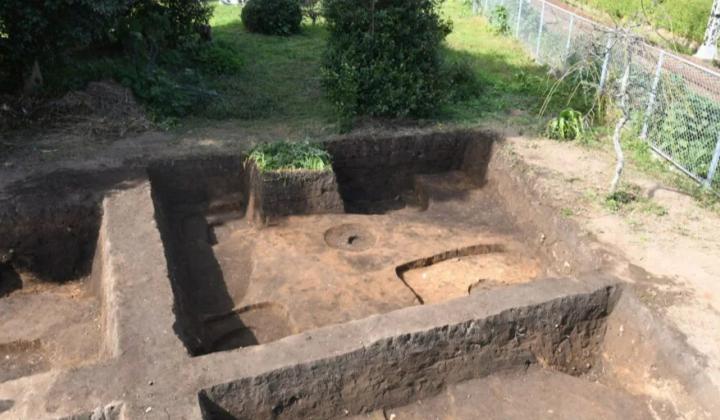
According to НВ — Техно: In Saiku, located in Mie Prefecture, Japan, archaeologists have uncovered the remains of the main hall from an imperial residence dating back approximately 1300 years. This significant discovery sheds new light on the architectural design and daily life within Saiku, a settlement historically known to house imperial princesses entrusted with religious duties at the revered Ise Shrine. Excavations took place from June to September 2026, with additional work continuing into October 2026.
During the dig, two large buildings were uncovered within the same site, positioned to the north and south. Postholes for wooden pillars ranged between 1.7 and 2 meters in diameter, spaced roughly 3.2 meters apart in the first building and 3 meters apart in the second, with 1.7-meter spacing between posts. The system that supported the residence and service of the Saio princesses lasted about 660 years, spanning from the late 7th century to the 14th century. Historical records identify over 60 Saio princesses who participated in major ceremonies at the Grand Ise Shrine three times a year. Besides the princesses, the Saiku palace was also home to their attendants, administrative staff, and various workers.
Highlights from the Archaeological Discoveries
The architectural traits of these structures have been compared to those of the Heijō Palace in Nara. Ichimi Katsuyuki, governor of Mie Prefecture, emphasized the importance of these similarities in understanding Saiku’s role within the imperial administration:
“Finding a complex in Saiku that mirrors the architectural layout of palaces in the capital offers valuable insights into the settlement’s place in imperial governance.” - Ichimi Katsuyuki
Additionally, archaeologists uncovered a 2900-year-old clay earring adorned with spiral patterns and traces of red pigment during excavations at the Shinpukuji Tumulus in Saitama, north of Tokyo. This find, made in late summer 2026, adds another dimension to the region’s archaeological record.
These discoveries not only enrich our understanding of the Japanese imperial family’s history but also highlight distinctive architectural features that illuminate the sociopolitical structures of ancient Japan. The unearthed remains of Saiku’s main imperial hall open fresh avenues for research into the country’s historical and architectural heritage, underscoring the region’s significance in the broader context of imperial administration. Such findings are crucial for reconstructing a more accurate picture of life and culture during that era.
In addition to the recent discoveries in Saiku, Japan, archaeological efforts continue to reveal fascinating artifacts from the region's rich history. For instance, a remarkable 2900-year-old clay earring adorned with red pigment and a spiral design was recently unearthed, highlighting the artistic skills and cultural significance of ancient Japanese craftsmanship.

Read also