No Operator Required: The U.S. Military Moves Forward with an Autonomous Rocket Launcher

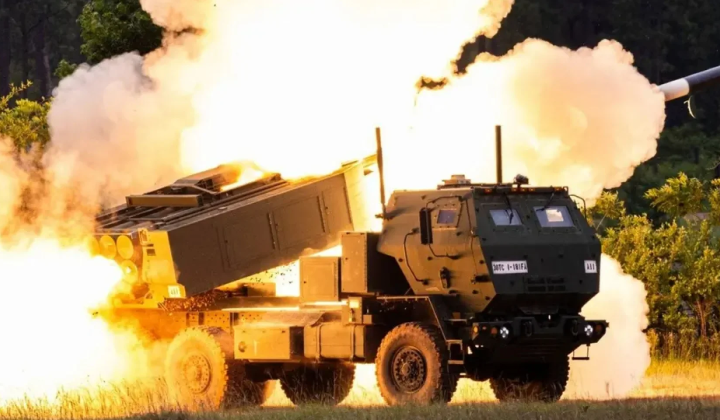
No Operator Required: The U.S. Military Moves Forward with an Autonomous Rocket Launcher
According to НВ — Техно: The U.S. military is pressing ahead with autonomous systems to reduce risk to troops and keep pace with rapid advances in drone and robotic warfare. Under a $33.4 million agreement with the Georgia Tech Research Institute (GTRI), the U.S. Army has begun work on the Common Autonomous Multi-Domain Launcher (CAML) and expects the prototype effort to last about 36 months.
Design Approach and New Capabilities
CAML will be built around a modular architecture, letting the Army pair an autonomous mobile platform with interchangeable ammunition pallets. Engineers can therefore develop the mobility and weapons components separately and connect them through standardized interfaces. GTRI will be responsible for systems engineering, interface integration, modeling and simulation, and full prototype testing. It will also write the acceptance-test plan and carry out physical trials.
Lieutenant General Frank Lozano, who leads U.S. Army acquisition efforts for fire support, described CAML as an enabler for experimenting with different launcher concepts.
Separately, during the Army's Convergence-Capstone 6 exercise, L3Harris Technologies and ARX Robotics showcased a robotic ground vehicle equipped with a counter-drone system. Rather than placing soldiers and electronic-warfare gear close to a threat, the developers propose mounting sensors on the remotely controlled robot.
Projects like CAML represent a significant step toward autonomous combat support. By taking human operators out of the launch vehicle and automating more of the kill chain, the Army hopes to cut risks to personnel while improving responsiveness. The broader move toward robotics in defense also mirrors a global trend in military modernization, with possible implications for future conflicts and great-power competition.
As the U.S. Army continues to innovate with autonomous systems like the Common Autonomous Multi-Domain Launcher, it is also exploring other advanced technologies in the field. For instance, a recent trial featured a robotic vehicle designed to counter aerial threats, showcasing the military's commitment to enhancing operational safety and efficiency. To learn more about this cutting-edge development, check out the details on the robotic counter-drone system tested by the U.S. Army.

Read also