The Missile Hunger of Europe: Why Italy May Suspend Aster Supplies for Ukrainian Air Defense

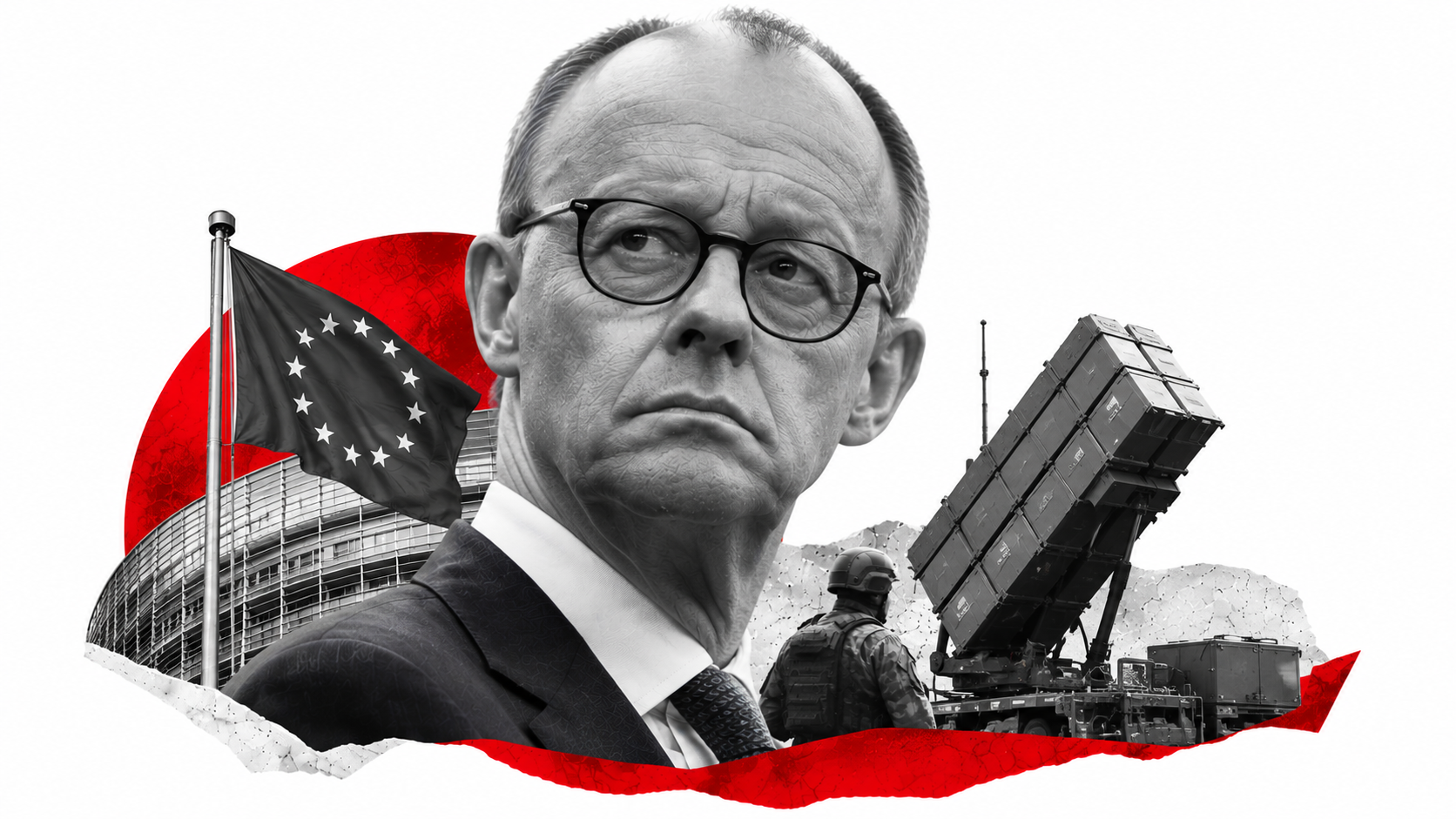
Italy is faced with a choice that increasingly confronts European allies of Ukraine: to supply Kyiv with scarce air defense missiles or to keep them for their own security. An ANSA agency report about a possible restriction on Aster missile supplies for the SAMP/T systems highlights a problem that cannot be solved with new financial packages. Europe can allocate billions of euros for defense, but money cannot immediately be converted into missiles. Especially when production capacities have been calibrated for completely different scales of war for decades.
“European defense has faced simple arithmetic: missiles are consumed in minutes, produced in months, and decisions to expand factories are made over years.”
An Italian Reserve That Can No Longer Be Ignored
According to Italian media reports, Rome is considering the possibility of limiting further supplies of Aster 15/30 missiles, which are used in the SAMP/T family of air defense systems.
The reason is the depletion of its own stocks and the need to maintain national defense capabilities.
Italian Defense Minister Guido Crosetto has repeatedly emphasized the limitations of military resources and the complexity of simultaneously supplying Ukraine and meeting the needs of the Italian armed forces. At the same time, the specific volumes of Aster stocks remain classified information, making it impossible to assess their actual level based on open data.
For Ukraine, SAMP/T is of special importance. It is one of the few European systems capable of countering a wide range of aerial threats, including certain types of ballistic missiles.
But the effectiveness of the system depends not only on the availability of launchers and radars. Without a sufficient supply of missiles, even the most advanced system gradually loses its combat value.
This is why the possible reduction in Aster supplies matters far beyond the bilateral relations between Rome and Kyiv.
Why European Factories Cannot Keep Up with the War
Aster missiles are produced within a European industrial cooperation involving MBDA and Thales. The Eurosam consortium is responsible for the development and supply of SAMP/T systems.
This production model was created under conditions where European states did not expect a prolonged high-intensity war directly at NATO's borders.
Orders were relatively limited, production cycles were long, and stocks were formed according to peacetime defense planning.
Since 2022, the situation has changed radically.
Ukraine requires constant replenishment of interceptor missile stocks. European states are simultaneously trying to rebuild their own arsenals, expand air defense, and prepare for possible future crises.
Manufacturers are receiving new orders, but expanding the production of complex missile systems takes time.
It is necessary to increase the production capacities for engines, electronics, guidance systems, and other components. Some suppliers operate within narrowly specialized technology chains that cannot be quickly scaled up.
The European industry is already taking steps to accelerate Aster production. However, there remains a significant time gap between a new contract and the physical appearance of additional missiles.
The biggest problem for Europe is not the lack of technology but the insufficient speed of converting industrial potential into serial military production.
Assistance Without Missiles: A New Structure for the Italian Package
Reports suggest that in preparing a new Italian aid package, Rome may focus on spare parts, maintenance of already delivered systems, generators, and equipment for restoring Ukrainian energy infrastructure.
This approach has practical logic.
Maintaining the operability of existing air defense systems is an important part of defense capability. Without regular maintenance, repairs, and component replacements, even systems with sufficient ammunition can lose effectiveness.
Energy equipment also has strategic significance amid Russian strikes on Ukrainian infrastructure.
However, spare parts cannot replace interceptor missiles.
If the intensity of aerial attacks remains high and the replenishment of ammunition slows down, the Ukrainian command is forced to define defense priorities more carefully.
This creates a complex situation: existing systems may remain technically operational, but their capabilities will be limited by the number of available missiles.
The Political Factor: Meloni's Coalition and the Cost of Supporting Ukraine
Military-industrial constraints are compounded by internal political contradictions in Italy.
The government of Giorgia Meloni generally supports Ukraine and maintains a course for cooperation with NATO. At the same time, there are differing views within the ruling coalition on the scale and duration of military assistance.
Deputy Prime Minister Matteo Salvini and his League party have repeatedly expressed more skeptical positions regarding certain aspects of support for Kyiv.
However, political disputes should not be automatically considered the main reason for a possible shortage of Aster missiles. Even with complete agreement within the government, Italy would remain limited by its own stocks and the production capabilities of European enterprises.
The issue of defense funding in 2027 also extends beyond the Ukrainian context.
Italy must simultaneously consider budget constraints, NATO commitments, the modernization of its own armed forces, and the necessity to support Ukraine.
As a result, each new supply of scarce weapons becomes not only a military but also a political decision.
Brussels Has Money. But Where to Get Missiles?
The situation with Aster reflects a broader problem in European defense policy.
Since the onset of full-scale war, the EU and member states have increased defense spending, initiated joint procurement programs, and started encouraging the expansion of military production.
However, financial decisions are made much faster than factories are built.
Producing complex missiles requires skilled engineers, specialized equipment, verified suppliers, and long-term contracts.
Even if funding is secured, the industry is not always able to meet demand immediately.
Additionally, there is another problem: Europe produces several types of air defense systems that use different missiles and are not always compatible with each other.
This means that Ukraine must maintain a complex supply system, where each type of weapon depends on separate production chains.
Thus, the Aster shortage cannot automatically be compensated by increasing the production of other missiles.
2028: When Will Production Catch Up with Demand?
European defense companies are already working to expand their production capacities. However, the effects of these investments will manifest gradually.
2028 may become an important milestone for assessing the results of the current industrial expansion, but there is no reason to consider it a guaranteed date for fully overcoming the deficit.
Much will depend on the volumes of government orders, the availability of components, the speed of modernization of enterprises, and the stability of funding.
No less important will be the issue of distributing new missiles between Ukraine and European armies.
Indeed, increasing production does not necessarily mean that all additional volume will be directed to Kyiv. Part of the output will be used by states to replenish their own stocks.
Europe is gradually ramping up arms production, but at the same time, it is trying to compensate for decades of insufficient investments in military stocks.
A War of Attrition Shifts to the Industrial Sphere
For Ukraine, the situation with Italian Aster missiles serves as a reminder of a fundamental feature of modern warfare: defense capability is determined not only by the number of available systems but also by the ability to constantly replenish their ammunition stocks.
For Europe, it is a test of the ability to convert political support into stable production.
For Italy, it is a necessity to find a balance between aiding an ally and safeguarding its own national security.
In the coming years, three key questions will arise: can manufacturers significantly increase missile output, will governments ensure long-term orders, and will it be possible to create an arms distribution system that does not leave individual countries without critical reserves.
The problem is not limited to SAMP/T systems. Similar challenges confront manufacturers of other air defense systems, precision munitions, and complex military equipment.
This is why the European defense strategy will increasingly depend on industrial performance rather than just budget declarations.
A war of attrition will be won not by the number of announced aid packages, but by the ability to provide the necessary weapons faster than they are consumed.
If reports about restrictions on Italian Aster supplies are confirmed, it will be another testament that the European military support system is approaching a threshold beyond which political decisions can no longer compensate for physical shortages.
Brussels can agree on new billions. Rome can prepare another aid package. Paris can accelerate production contracts.
But none of these steps, by themselves, will create a missile that is not currently in stock.
This is the most difficult lesson of European defense: financial resources can be mobilized in weeks, while industrial capacity takes years to build.

Read also